
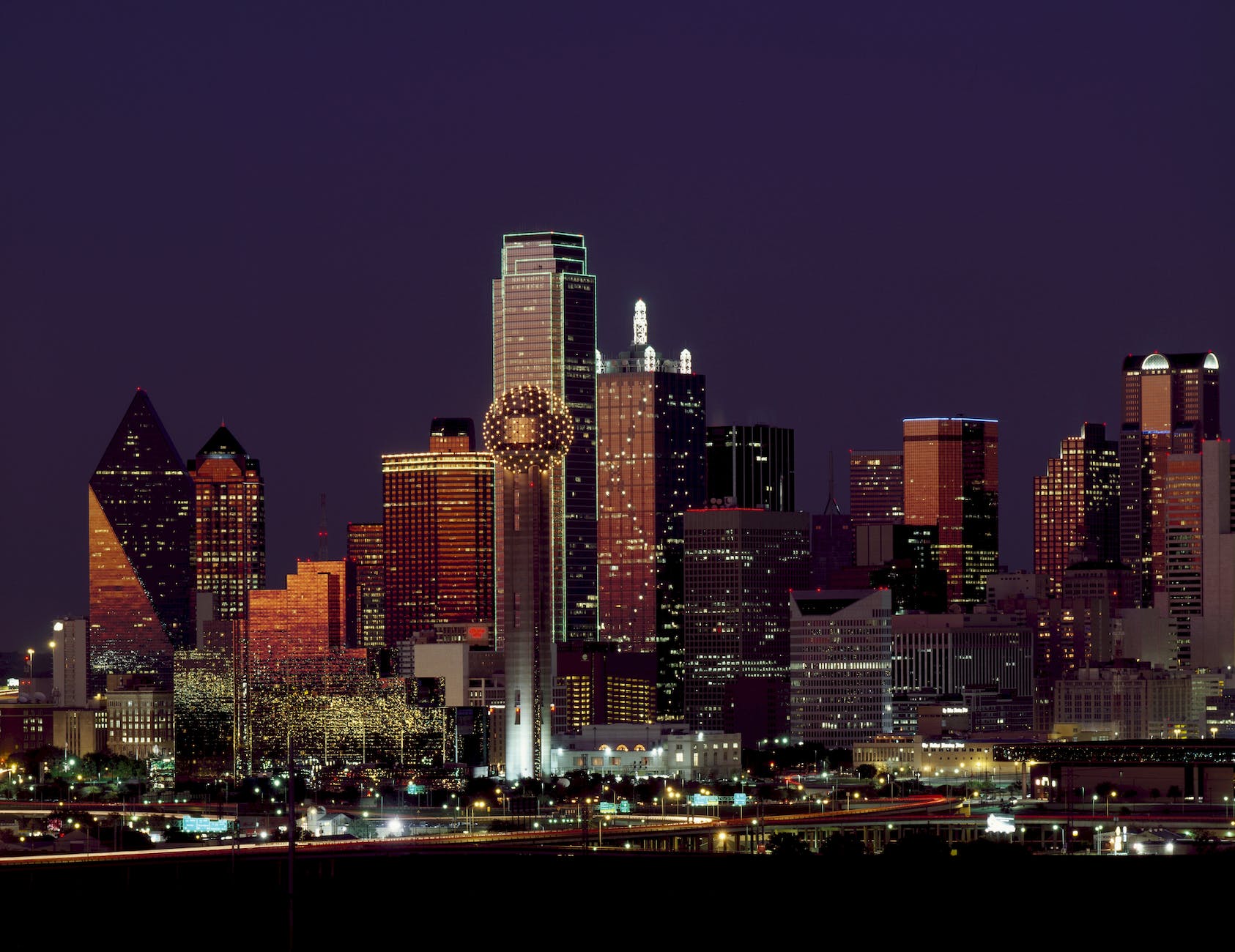
- The future belongs to Texas. America’s three biggest cities by 2100 will be #1 Dallas, #2 Houston, and #3 Austin. Fast-growing San Antonio also ranks at #11.
- The Sunbelt keeps rising. Phoenix is projected to be the 4th-biggest U.S. city by population in 2100. Other Sunbelt cities in the top 10 are #6 Atlanta, #9 Orlando, and #10 Miami.
- NYC and L.A. are currently the top two biggest U.S. cities, but they’re projected to fall to #5 and #7, respectively, by the year 2100.
The methodology to arrive at this?
We wanted to know at moveBuddha what U.S. metropolitan areas would see the biggest population growth by 2100. We did this by using the compound annual population growth rate of the biggest U.S. metro areas (250,000 residents or more) between the 2010 and 2020 U.S. Census estimates and extrapolating it over 80 years.
This was an inexact science, and growth rates are bound to change. But it gave us a rough idea of which American cities may rise to the top by the dawning of the 22nd century. Climate change effects, migration patterns from climate change, and other unforeseen events could change things.
Two parts of this projection seem implausible to me. First, extrapolating the current rates of growth to last for more than seven decades. Growth rates will likely rise or fall across different metropolitan regions. It is hard to imagine many places will be able to keep up high rates of growth for that long. Second, the size of these regions. There is no US region currently near the predicted populations in 2100. Would this come from significant increases in density in the central areas or even more sprawling regions? It would be interesting to see where all those people would live and work.
Of course, at this point it is hard to bet against the ongoing population growth of the Sunbelt.
And what would this do to the status of New York City and Los Angeles? Chicago has some experience with this but could NYC handle this well?
 Legally Sociable
Applying this methodology to the 1910 and 1920 census, I can confidently predict the US’s largest metro areas come 2000:
1. Detroit (452M)
2. LA (83M)
3. New York (25M)
4. Chicago (17M)
5. Cleveland (15M)
How’d I do?
LikeLike
Good point. Might want to check 1810 to 1820 as well.
LikeLike
Pingback: South accounts for 87% of US population growth from 2022 to 2023 | Legally Sociable
Pingback: A declining urban population does not necessarily lead to a “ghost town” | Legally Sociable