DuPage County the first Illinois county to adopt zoning

DuPage County, Illinois had 91,998 residents in the 1930 Census. Suburban growth had begun as the county had more than doubled in population since 1920. The county soon added another mark of suburbanization:

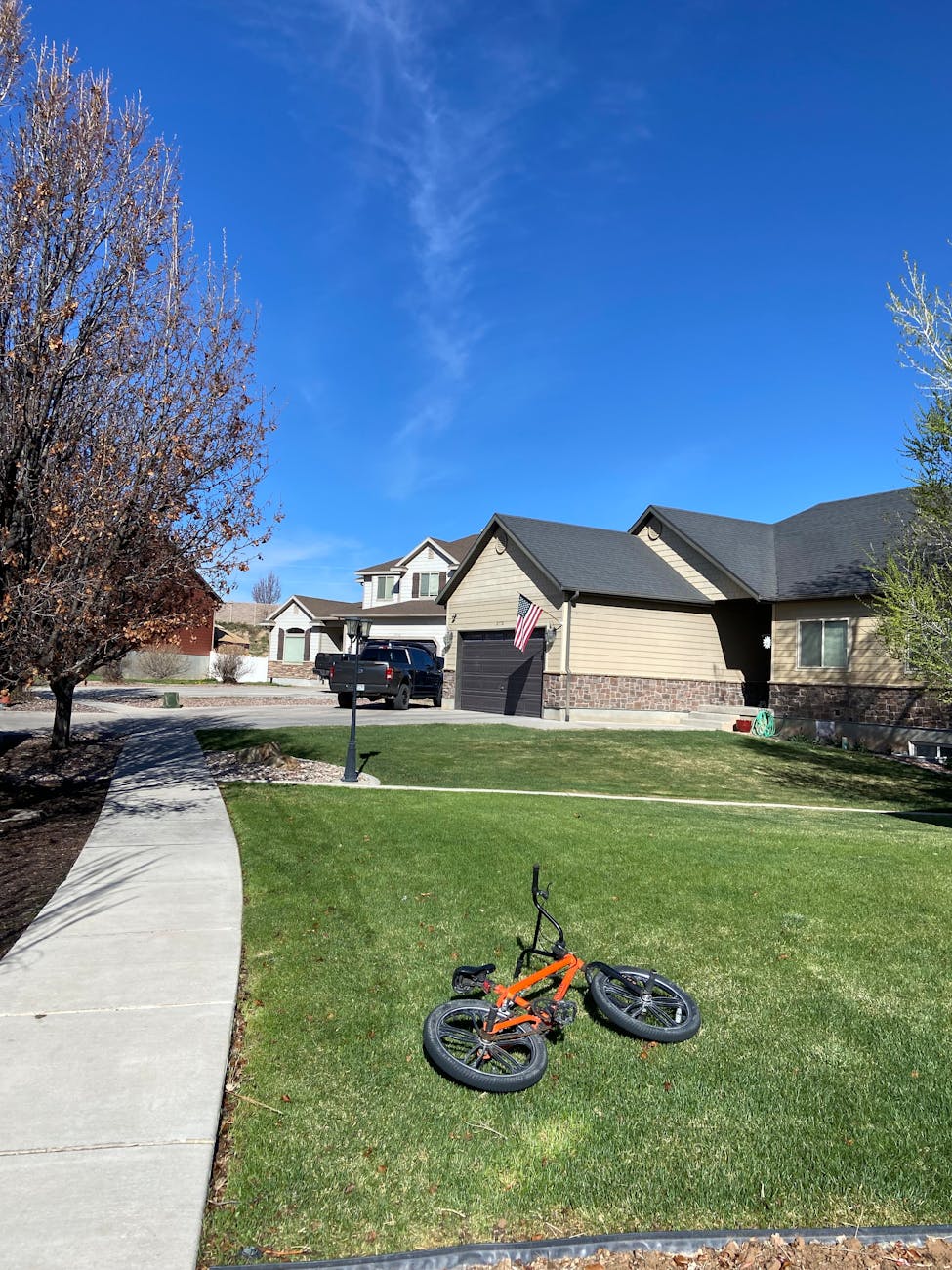
Photo by Jeswin Thomas on Pexels.com

In 1933 the Chicago Regional Planning Association induced Du Page County to adopt a zoning resolution. First county in Illinois to pass such legislation, Du Page was influential in getting the State legislature to pass a county zoning act in 1935. Gaining thereby the legal means to enforce its own ordinance, Du Page County revised its law and made it more strict. Through the zoning ordinance, the use of both buildings and land is regulated to prevent the encroachment of business and industry upon residential areas outside the limits of incorporated cities and villages and to keep the highways free from unsightly dumps and automobile “graveyards.” (Knoblauch, 1951, Du Page County Guide, 4)

This passage highlights the perceived advantages of zoning: it limits what can be near single-family homes. Homeowners and residents do not want to be next to businesses, industry, dumps, and lots filled by old vehicles. This is a primary focus of zoning throughout the United States. A quiet residential setting with certain appearances, neighbors, and noise levels should be protected.

Even as the county would experience much more growth, topping 900,000 residents in the 2000 Census, the region had plenty of non-residential land use in the suburbs. In addition to farms and small communities, the areas in the region outside of Chicago had plenty of industry. Locating factories and plants out in the suburbs could make sense with cheap land and fewer concerns from neighbors. This could be in communities like Lake Township that were later annexed into Chicago or in industrial suburbs like Gary and Aurora that were further from the city that benefited from access to water and had railroad connections.

Today, it would be hard to imagine American suburbs without zoning. Would the reasons Americans love suburbs still exist or be the same if the valued single-family homes were next to undesirable land uses? DuPage County and many other suburban counties and communities depend on zoning to help create the day-to-day suburban experience Americans prize.

Zillow makes the majority of its money from real estate agents

Zillow changed how many people find and view real estate but it makes more of its money from real estate agents:

Photo by Kindel Media on Pexels.com

Not everyone agrees Zillow is good. Like Uber, the company has weathered a barrage of industry resistance, naysayers and litigation in its conquest. But its dominance is unquestionable. Arizona’s Kris Mayes, one of five state attorneys general suing Zillow over alleged anticompetitive practices, has called it “a gorilla-sized company.” In 2024, Zillow reported annual revenue of $2.2 billion; analysts estimate it will be even higher in 2025 and 2026.

People associate Zillow with homebuyers, but it actually makes around 70% of its revenue from agents, who pay the company for customer leads. Wacksman thinks a lot about how to keep the agents happy (hence tonight’s Musgraves concert). He knows many of them have reason to loathe Zillow, which has empowered consumers with market data and property history previously known only to licensed agents. Many of these “information arbiters,” as Wacksman describes pre-internet agents, were ruined during Zillow’s rise. “Our original mission statement was ‘power to the people,’ because it was about giving the nonprofessional access to data that only the professionals had,” he says. “It obviously worked.”

So Zillow opened up possibilities for potential homebuyers but then makes its money by providing their information back to the people who used to exclusively have this information? I am trying to think how this might work in other industries. Car listing sites that then provide leads to dealers looking for buyers or sellers? Ride sharing companies selling info to taxis for riders? Online marketplace sites selling user info to sellers?

If anything, this is a reminder of one of the revenue drivers of the online/social media world: data and information about users. Websites and platforms have information about users. What they see and linger on. What they engage with. Personal information they offer as part of accounts and profiles. How they interact with other actors. This is valuable for companies and organizations who have products or services to offer.

At the same time, is this revenue model similar to how other real estate websites operate? Does realtor.com make money off customer leads? Or Redfin? Are there other ways to make money off real estate listings available to a broad audience?

Research related to the size of houses and the happiness of residents

Does having a larger house lead to the residents being happier? A summary of some research related to this topic:

Photo by Mikhail Nilov on Pexels.com

On one side, living alone or with one other person can promote isolation or loneliness. On the other, excessive crowding (about 140 square feet per person, one study in Asia suggests) leads to stress, anxiety and depression. Happiness peaks somewhere in the middle, said Gerardo Leyva, an economist and researcher at Iberoamerican University in Mexico City.

Leyva analyzed data from tens of thousands of households in Mexico and Europe. He found that people living alone report the most satisfaction with their financial lives. But when it comes to overall happiness, the happiest households had about four to six people in them, regardless of home size.

This aligns with previous research: After crossing a minimum threshold of space for safety and comfort, every new bedroom or second floor yields less and less benefit. A brief spike in housing satisfaction from moving into “larger accommodations” produces no durable effects on overall life satisfaction. It may even erode it….

In his 2024 peer-reviewed study in the Journal of Public Economics, the assistant professor at Erasmus University Rotterdam in the Netherlands found that just the presence of bulky domiciles down the street virtually erased any satisfaction people gained from moving into their own bigger homes. “Larger homes do not increase well-being per se,” Bellet wrote me. “What matters most is how close [the size of one’s house] is to the largest houses in the neighborhood.”…

A 2012 study by UCLA researchers found up to 60 percent of homes sit largely unused. Position-tracking data reveal that families — even in large homes — cluster in a few small high-traffic rooms, usually the dining, kitchen and family rooms. That means a 1,200-square-foot home with a central hub may outperform (from a happiness perspective) a 3,000-square-foot home with a fragmented layout.

It sounds like happiness and home size is connected to multiple factors: having a bare minimum space per person, the number of people in the space, how the residence’s home size compares to nearby residences, and how the interior space is used.

Each of these factors suggest that the absolute size of homes matters less than relative size. If new homes are about 2,400 square feet on average, the experience of that 2,400 square feet is affected by the number of people living there or what other housing in the neighborhood. In one setting, it might be too small. in another, it is large.

This might all fit with something I wrote about years ago: Americans have large houses, in part, to store lots of stuff. Don’t want to throw things away? Like to collect things? Have a series of hobbies or interests? That bigger house could have space for it. The additional space is not for people or social connection but for stuff.

If happiness and house size is related to other factors, how does happiness about house size rank compared to other life factors that affect happiness? For example, what is the difference in effect size on happiness between having satisfying social connections compared to house size?

Evidence from the past and future that suggests religious revival is not happening in the United States

I appreciate this part of Ryan Burge’s approach to examining whether a religious resurgence is happening in the US: he looks at past patterns and he considers possible changes in the future.

Photo by Arina Krasnikova on Pexels.com

First, the present data:

The General Social Survey, for instance, reported a steady rise in the “nones” between the early 1990s and 2020. In 2018, the figure was 23%, rising to 28% in 2021. The two most recent estimates are slightly lower — 27% in 2022 and 25% in 2024. Similarly, the “headline finding” from Pew’s Religious Landscape Survey was that both the decline of Christianity and the rise of the unaffiliated have paused in recent years.

As Burge and others have noted, recent data seems to show a stopping/slowing/plateauing of two trends: fewer people affiliating with Christian traditions and more Americans identified as “religious nones.”

But these patterns are also related to aging and whose activity researchers can examine. Burge next turns to the future:

When you compare generations, the pattern is obvious. The youngest members of the Silent Generation were born in the early 1940s, and just 7% report no religious affiliation. In less than a decade, they — and a growing share of Baby Boomers (18% unaffiliated) — will disappear from survey samples.

Meanwhile, millennials are moving solidly into middle age, and 36% of them say they have no religion. Generation Z, all of whom will soon be adults, are even less religious: 43% are nones. That’s 25 points higher than the Boomers they’re replacing. So if the overall share of nones sits around 28% now, it will inevitably rise as generational turnover continues.

Could millennials and Gen Z find God in the years ahead? Possibly — but it would require a transformation unlike anything seen in modern times. Roughly 10 million millennials would have to reaffiliate with religion, followed by another 18 million Gen Zers. There’s no sign of that happening in any dataset.

In other words, for the percent of people in the United States to identify as Christian in the future at the same rates as now would require more young people to become Christian. For the percentage of Christians to grow, even more religious change would need to take place.

By looking at past, present, and future possibilities, Burge concludes: “I can say without equivocation that there’s no clear or compelling evidence that younger Americans are more religious than their parents or grandparents.”

When trying to understand what is happening in a social group or society, one data point or set of evidence is often not enough to fully understand what is happening. Patterns can change over time or the way we understand the world can change over time but a compelling case needs to be made. Seizing on new evidence that does not fit what we know about something might hint at significant change – or it could be a sampling outlier. Good steady research can help reveal these patterns even if there are multiple actors wishing that we could have identifiable patterns more quickly.

Quantifiable running + big cities = “run-every-streeters”

If you like to track your running and live in a large city, you could try to run every street:

Photo by Andrew Durkin on Pexels.com

What began as a means for Barbosa to get his muscles moving following an injury has since grown into a year-plus pursuit, spurred on by the 25-year-old’s inclination to get to know more of the city after moving to the area more than three years ago.

As of the year’s end, Barbosa had just over 79% of Chicago’s more than 4,000 miles of street covered. He plans to finish by the spring, then eventually move on to other cities and repeat the venture on a new maze of streets…

He isn’t the only one. For years, from coast to coast, “run-every-streeters” have been taking on their version of the challenge, turning their metropolitan areas into bona fide treadmills. In 2018, a man ran every street in San Francisco over a span of 46 days. A couple years ago, another runner spent the better part of 12 months jogging every street in Manhattan, a 750-mile endeavor…

But he does like to expand his horizons. He started to use running as a means to explore new neighborhoods and the more he ran, he questioned just how much ground he was covering. Barbosa found an app to track his progress and when he saw there was a leaderboard of others doing the same, with the top contender hovering at about 55% of the city completed at the time, he thought, “‘I wonder if I can beat him?’” He’s been gaining traction since, both in mileage — and followers.

It would be interesting to know whether this was a thing before the ease of tracking movement via apps and GPS. It would be one thing to track running on a paper map. This is certainly doable. On the other hand, if a phone or a watch will track someone with no effort, now all the participant has to do is move. They could do their normal run or walk or bicycling and their route is captured. Their movement is quickly mapped and quantified. They just have to follow through with moving along every street.

Furthermore, they can compare their results to others. A leaderboard is referenced above. Does this mean the app or tracker is providing every street/mile as a goal? This is another step toward more people covering every street: their movement is tracked but it can become a competition to meet this goal. There will be a winner!

Any runner want to take on every mile in cities with more square miles than Chicago, like Nashville or Jacksonville or Juneau?

Changing a college’s name from referencing a region (North Central) to pointing to its suburban home (Naperville)?

Would changing the name of North Central College to instead reference Naperville help the institution? Here is why a change might work:

Photo by Beate Vogl on Pexels.com

Historically, North Central College’s location has not always been at the center of its identity, according to Gòkè-Paríolá. When a survey from 2019 showed the university had low name and brand recognition from people outside of the Naperville area, the institution started to reconsider how it markets itself.

Now, as the third largest city in Illinois, North Central College’s location in Naperville is increasingly advertised as a major part of the student experience…

Naperville has made national headlines as it garners attention for such things as safety and quality of life. In 2025, Naperville was named the best city to live in America by online rating database Niche for the second consecutive year. It also consistently ranks as the best city to raise a family in America by Niche…

“If they are in Maryland and you try to recruit them and say, ‘Come to North Central College,’ well, you got your work cut out for you,” Gòkè-Paríolá said. “But when you tell them, ‘Where is it?’ ‘Naperville.’ (They say) ‘Oh, Naperville. I know Naperville’ or ‘I read something about it.’”

As someone who has studied Naperville, my sense is that it is generally well regarded by residents and outsiders. The rankings referenced above help (see posts from recent years here, here, and here) but so does (1) population growth, (2) white-collar jobs, (3) wealth, and (4) a vibrant downtown.

Additionally, the current name hints at a broader region. The college was initially located in and named after the small town of Plainfield, a community southwest of Naperville and one that was small until growing from 4,557 residents in 1990 to over 44,000 in 2020. Before moving to Naperville, the college’s name was changed to “North-Western,” referencing the Northwest Territory from which Illinois and several other states were founded. In 1926, the name became “North Central,” which more accurately reflects the location outside of Chicago with the United States spanning from the Atlantic to the Pacific.

There are numerous colleges that reference suburbs in their name. I wonder how many of these names were selected prior to mass suburbanization in the postwar era. How many are named after sizable suburbs today? How about University of Santa Ana or Plano or Aurora (Colorado – the large Illinois suburb has Aurora University but it was renamed for the community prior to World War Two) or Hialeah?

Related to this, is there a sense that a certain kind of learning or college experience happens in growing, wealthy suburbs compared to what is available in big cities or smaller communities? Research universities are often in big cities or college towns, not necessarily suburbs.

How big is the market for properties over $100 million?

Properties costing over $100 million filled all the top spots in a recent analysis of the most expensive property sales in 2025 in the United States. How many people are realistically in this market? This passage provides some hints:

Photo by Cara Denison on Pexels.com

Affluent buyers are scooping up luxury real estate as a way to diversify their portfolios, store wealth or as a hedge against inflation. “People feel the stock market is trading high, so they are investing in hard assets,” said Ryan Serhant, of real-estate brokerage Serhant. “Luxury real-estate is recession resistant.”…

Throughout the U.S., agents said domestic buyers are dominating the luxury market. In Palm Beach and Miami, deep-pocketed buyers are chasing the same properties, resulting in off-market deals being struck for astronomical sums. “It isn’t as much comp driven as it is, ‘This is what we’re willing to pay,’” said Miami agent Danny Hertzberg of the Jills Zeder Group at Coldwell Banker Realty.

I suspect that more than just listing the most expensive properties sold – is more expensive better or more noteworthy? – it would be interesting to know about how this exclusive market works. It sounds like the market involves wealthy people from the United States who are looking to avoid the swings of the stock market. They want an investment with a good return and assume real estate will provide this. They need to have the funds to make such a purpose. In the meantime, they might get some use out of the property.

Some searching suggests there are around 1,000 billionaires living in the United States. The Forbes 400 for 2025 says all the people on the list have a net worth of over $3.8 billion. It would be interesting to see how many of those on this list own properties worth more than $100 million or even $50 million. Do see they see as expensive real estate as a good deal?

And then there is the matter of how such properties are known. I imagine they are not on regular listing services. Either online or in real estate magazines, I do not remember seeings listings over $10 or so million. These tend to be expensive waterside properties or big city residences. How big is the network of agents who work with such properties? How do they contact prospective buyers or let them know that an expensive property is available? What kinds of fees are generated by agents, brokers, and other actors involved with real estate when one of these expensive properties is sold? Are there showings of these properties and what are these like?

Since these sales are still rare, it might not be hard to identify them and try to track down more information. On the other hand, operating at this level likely involves lots of behind the scenes activity and quiet operators and methods.

The most viewed post of 2025: “giant white houses” and the subsets of McMansions

The most popular post on Legally Sociable in 2025 involved a particular kind of house that arrived on the scene in twenty-first century. Posted on March 7, the quoted Slate article used these terms to describe “giant white houses:

Photo by Designecologist on Pexels.com

-jet-black accents

-giant

-swollen

-unnaturally tall

-mishmash of architectural features

I realized I had seen at least a few of these homes when I analyzed 349 teardowns constructed in Naperville, Illinois between 2008 and 2017.

In addition to seeing the particular local embodiment of these broader patterns, I wonder if these “giant white houses” also speak to the evolution of the McMansion. As McMansions emerged in the late 1990s, they were something new. They represented a change from existing housing styles. At the same time, I argued they were difficult to define because they could cover so much architectural and design ground. For those critiquing the McMansions, were they referring to the absolute size, the relative size, the design choices, or sprawl and luxury housing?

“Giant white houses” can now be a separate housing style. It has its own distinct set of characteristics as listed above. Some of these traits may be shared with some other McMansions but it also is its own category. Is someone concerned with “giant white houses” also concerned about other McMansions? Or might they like modernist McMansions or Victorian McMansions but not these “giant white houses”?

This is a common issue encountered in sociology and related disciplines: at what point is a larger category like McMansions better split into multiple categories? When do these emerging concepts become worth their own definitions and analysis?

I do not have all these answers but I imagine we will see more work in the coming years on substantial McMansion variants.

The recent rise in housing costs in Boston through the lens of generations – and other options

Owning a home in the Boston area now requires more resources than it did just a few years ago:

Photo by Luana Scorsoni on Pexels.com

The typical house in Greater Boston sold for $833,900 in the second quarter of 2025, more than 7.5 times the region’s median household income. Five years ago, a household needed to earn $126,519 a year to afford the median-priced single-family home in this region, according to an analysis by Harvard University’s Joint Center for Housing Studies. Today, that figure has more than doubled, to $259,648.

The result is people who 20, 10, or even 5 years ago would have been able to purchase a home — teachers, nurses, and academics — can hardly even conceive of it

The consequences are being felt by an entire generation, forced to make a choice their parents did not: Stay in Massachusetts, and rent forever, or leave, and put down roots somewhere less expensive

In 2010, for example, the median home price was $360,800, but the average on a 30-year fixed-rate mortgage was 4.75 percent, meaning the mortgage payment on that median-priced house was only $1,816 a month, almost the same as it was in 2000. Now, with a median house price of $833,900, and a 30-year fixed-rate mortgage around 6.79 percent in the second quarter of the year, the monthly mortgage payment on that median-priced house is $5,240 a month — before homeowners insurance, property tax, and mortgage insurance, which can tack on $1,500 more each month.

This is quite a rise in median home prices in a short amount of time. A typical lens through which to consider these changes, including in this story, is to focus on generations. One group born before a certain point could reasonably expect to own a home; those born later have a tougher time doing so. There is at least some truth to this, particularly since Americans have told a story for decades that people who reach middle-class status are able to buy houses and enjoy all the benefits that come with this.

Is this the best lens to use or the only worthwhile one? Here is another option: as prices have risen, who is now buying and selling houses compared to a decade or two ago? Who benefits from the higher prices or is able to live with the higher prices and who cannot? Where is this housing wealth concentrated? Is this just about generations or are there other patterns present?

Or another option: these median house prices are for a whole region. Even if the whole region has high housing costs compared to other places, how big is the variation within neighborhoods and communities? Why have values in some places gone up so much more than other places? How have communities been impacted by these higher prices, either in raising their status or limiting opportunities?

If younger Americans see that they have a much harder time in buying a house, they may change their behaviors and attitudes for the long-term. But they are not the only actors affected; people of all ages, organizations and industries, and communities are also affected. Housing affordability affects many other areas of life and leaders who do not address the need for cheaper housing with concrete action will impact many people and places.

Where is my wrapped academic work summary for 2025?

With different apps and platforms offering year-end summaries, who offers one of these for academics? Alongside my listening, watching, and reading, I want to see a count of emails sent, meetings attended, assignments graded, class sessions prepped, and more.

Photo by George Dolgikh on Pexels.com

The one platform that could do that for me would be Microsoft products, specifically Outlook or Microsoft 365. Outlook offers insights into my time through the calendar and email activity, could report on who I sent the most emails to (and who received them from me), and could look at the text of the calendar and emails to figure out what I was working on.

Expand this to Microsoft 365 and even more data is available. What did I type into Word? What did I track in Excel? What did I present through Powerpoint? What conversations and groups was I part of in Teams?

I suppose I could do this work myself. At various points I have tried to track my time and activity. This work can be helpful, particularly when filling year-end reports or updating my CV. But there is also a lot to keep track of and I have not found that knowing the contents of every or nearly every minute is useful. I do not need everything quantified; seeing general patterns can help me keep address my top priorities.

Is this what AI will offer in the near future? Could it make a to-do list for each day anticipating what I need to do based on previous activity? Or will it take work to manage the manager?

(Other contenders for helping prepare my 2025 year in academics wrapped: Google Photos, our learning management software, my library records, my key card.)