
What long-term answers do leaders and residents have to the issue of more traffic in the Chicago region?
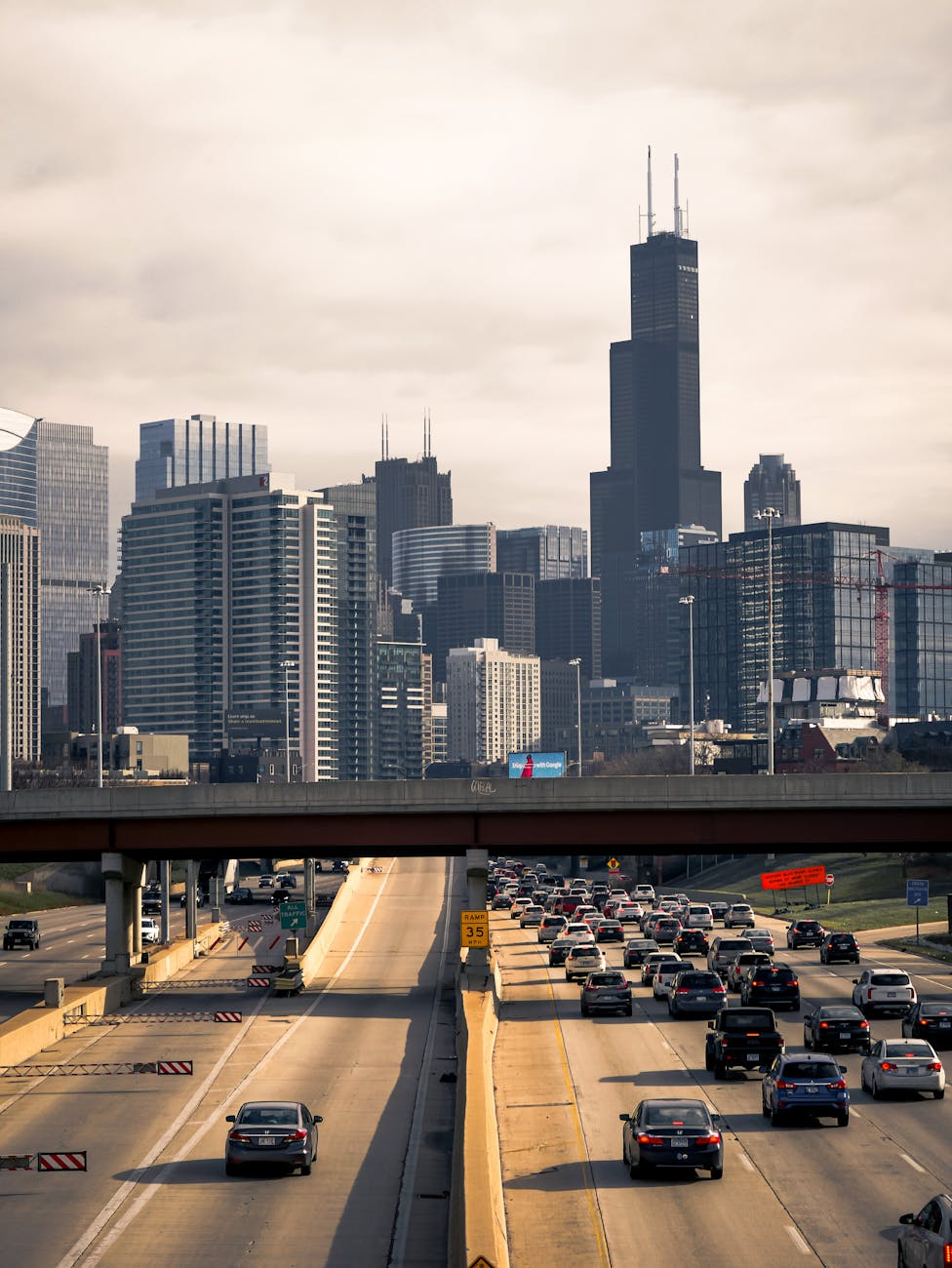
Chicago is one of the most congested cities in the country, ranking second only to New York City last year for the severity of traffic, a recently released annual study found.
The region also had one of the biggest jumps in traffic congestion in 2023 compared with pre-pandemic, according to the new report from mobility analytics firm Inrix, made public Tuesday. Traffic was up 18% over 2019 levels, tying for the highest growth among the cities studied…
Chicago’s traffic woes could be exacerbated by construction, or by drivers taking more trips at the same time, Pishue said. Inrix found traffic around Chicago, like in other cities nationwide, no longer revolves around peak morning and evening rush hours, but instead can tick up around midday and through the evening.
And adding to the traffic is continued low transit ridership, he said.
Addressing the growing traffic requires a comprehensive approach tackling multiple issues at once. This includes:
- Online shopping deliveries.
- Truck and freight traffic within the region and through the region.
- Getting more people to use mass transit (trains, buses, etc.).
- Planning for changing work schedules, whether is more work from home or more people returning to the office or more flexible hours in the office.
- Ride sharing.
- Alternative modes of transportation, including walking and biking.
- Shifts in population and business centers throughout the region.
This involves numerous municipalities, counties, the state, the federal government, and private actors throughout the region. Would the local government actors rather fight over whether the mass transit agencies should merge? Would suburbanites prefer someone else tackle these issues and leave them – and their tax monies – out of it? How many people will be willing to budge from driving when they want to help address the larger issues?
The time to address traffic is now so that the problem does not become worse.
 Legally Sociable