
A new paper suggests monkeys will have a hard time coming up with the works of Shakespeare:
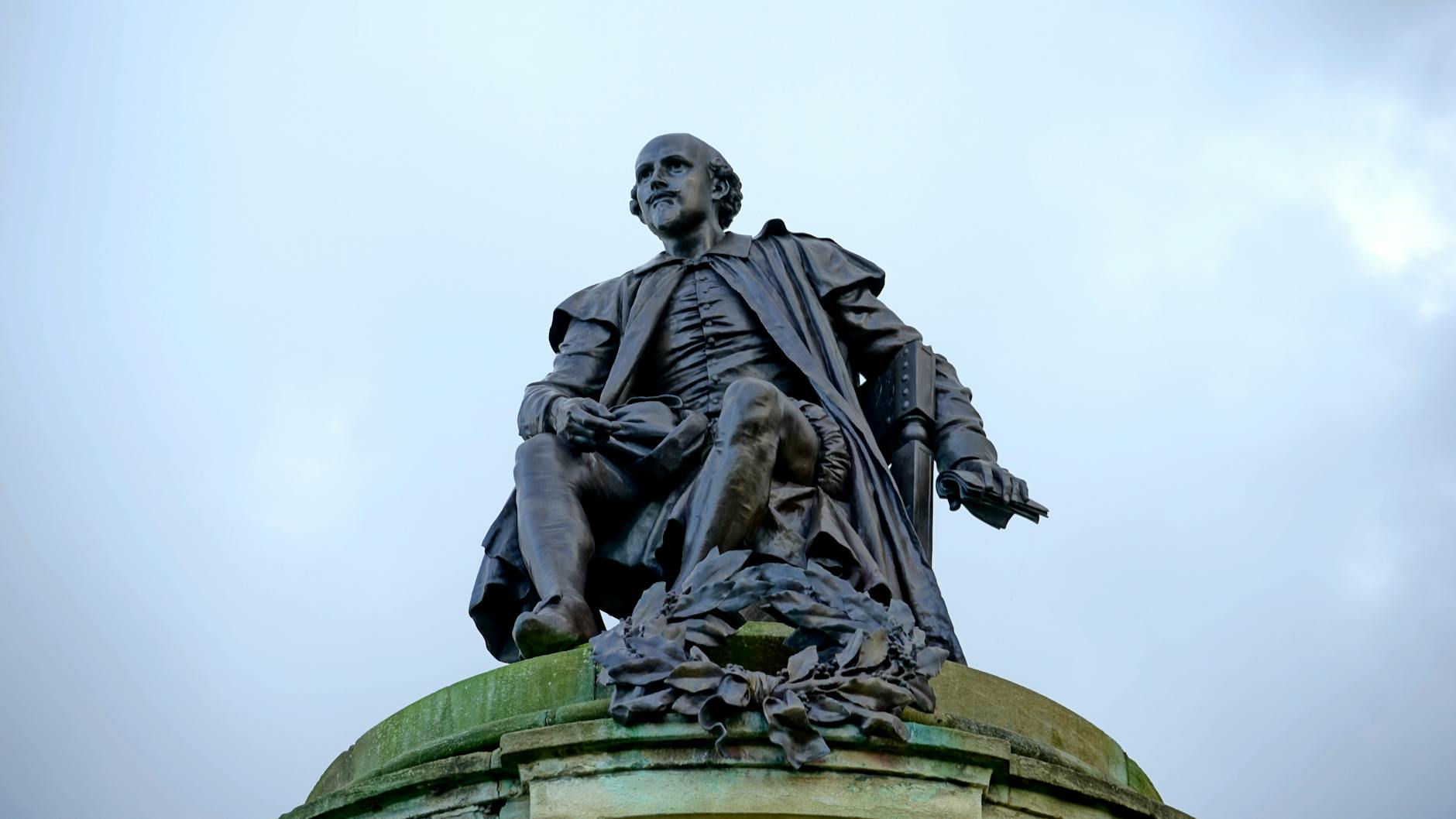
The Infinite Monkey Theorem is a famous thought experiment that states that a monkey pressing random keys on a typewriter would eventually reproduce the works of the Bard if given an infinite amount of time and/or if there were an infinite number of monkeys.
However, in the study published in the peer-reviewed journal Franklin Open, two mathematicians from Australia’s University of Technology Sydney have rejected this theorem as “misleading” within the confines of our finite universe…
They took the assumption that the current population of around 200,000 chimpanzees would remain the same over the lifespan of the universe of one googol years (that’s 1 followed by 100 zeros). They also assumed that each chimpanzee would type one key per second for every second of the day, with each monkey having a working lifespan of just over 30 years.
Using these assumptions, the researchers calculated that among these randomly-typing monkeys, there is just a 5% chance that a word as simple as “bananas” would occur in the lifespan of one chimpanzee…
“By the time you’re at the scale of a full book, you’re billions of billions of times less likely,” he continued.
Perhaps this needs to be updated for today’s world: instead of animals, why not consider an infinite number of machines randomly producing text? Could they do the work of monkeys much faster and eventually converge on Shakespeare?
I also wonder how this parallels thinking about what humans or societies can accomplish. Given infinite or finite sets of resources, what can be produced? If humans have X amount of resources over X amount of time, how likely is it that a particular issue can be solved or a particular innovation will emerge or a particular problem will arise? Such predictions would rely on estimating probabilities, something that is very hard to do given forecasting future conditions and possibilities.
 Legally Sociable