
In its early history, Chicago’s shoreline with Lake Michigan was marked by railroad lines and activities. Trains pulled right up to the Chicago River, moving goods to the center of the city and its thriving port. You can see a late nineteenth century images of the lines of the Illinois Central right along the water here and here.
Today, it is harder to see evidence of the bustling railroad activity. The city still has sizable railyards and a large amount of railroad traffic. But it is now largely outside of the Loop and more railroad activity has been pushed to the edges of the metropolitan region.
I recently found a spot where an observer can still get a hint of the important railroad activity that marked the lakefront:
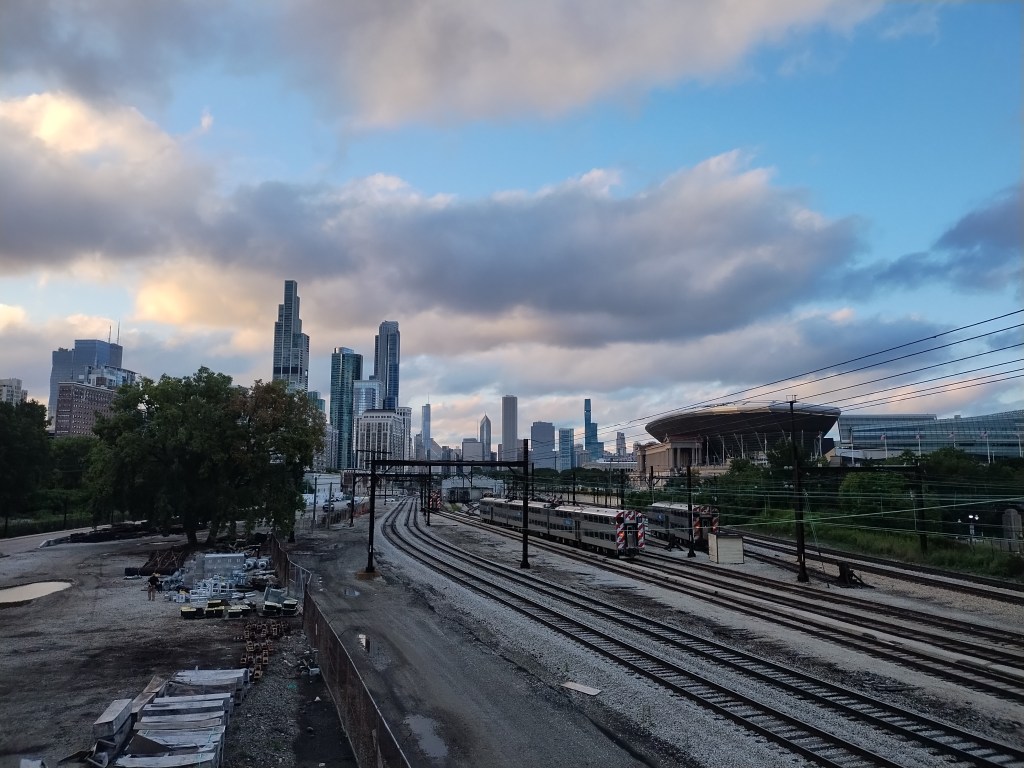
This passenger line comes into the central part of the city from the south and its station is underground. This angle gives a broader view of the tracks and the infrastructure needed to move trains and people.
The major cities of the United States, including Chicago, are still dependent on railroad lines. The average resident of a region may only travel via car and visitors from further away may primarily arrive via airplane but the railroad lines continue to deliver large amounts of goods and resources. Their presence may be less visible but keeping the trains running on time in and around cities still matters.
 Legally Sociable