
Starbucks recently announced they will close some locations:
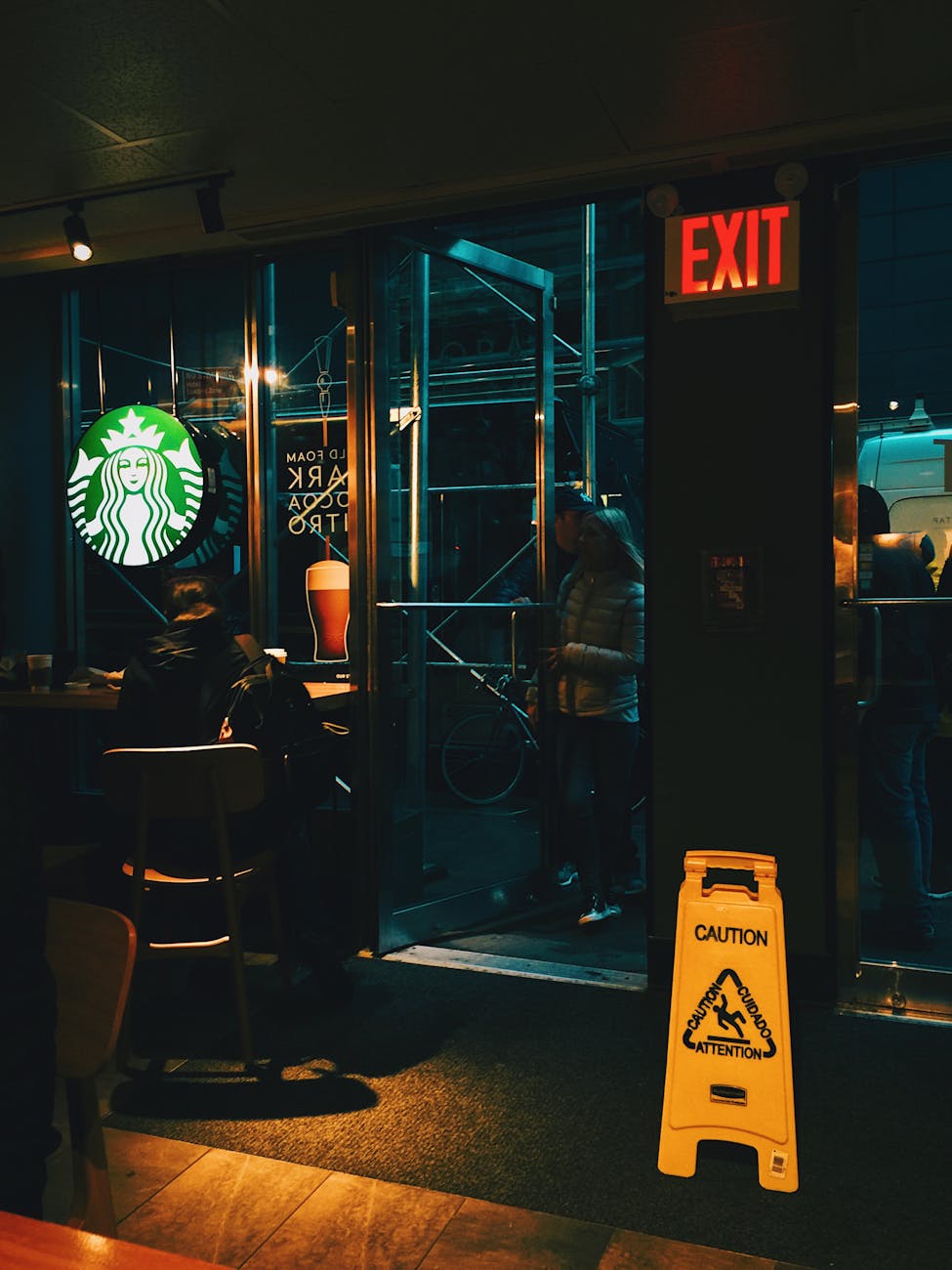
While Starbucks has yet to disclose the total number of closings or the specific locations, Niccol said in his open letter that the company would end the fiscal year with nearly 18,300 stores in North America, which is down from 18,734 at the end of the third quarter, according to financial filings.
This is national news but it also has local ramifications. For several decades, having a Starbucks in a neighborhood or community signals some level of local success. Starbucks does not locate just anywhere – even with over 18,000 locations in North America – and each location hints at the potential local customers who purchase coffee and other goods. And closing locations also involves local jobs.
Workers rallied Thursday at the Starbuck’s store at Clark Street and Ridge Avenue in Chicago’s Edgewater neighborhood, one of the locations targeted for closure, according to the union. The store is set to work its coffee grinders and espresso machines for the last time Saturday…
On a crisp and sunny fall Saturday morning, a few customers filtered into the Glencoe Starbucks to get their last coffee at their local shop, and to say their goodbyes to the baristas. The store was set to close for good that evening. The store employees will find out Sunday if they’ve been transferred to another store or laid off, a barista said while whipping up a coffee.
Even as the number of store closings appears to be relatively small – perhaps several hundred out of more than 18,000 – it will be interesting to see how local communities are affected. If a Starbucks closes in a city neighborhood or in a suburb, does this then mean a loss of status or hint at decline? Some of this might depend on what goes into where the Starbucks was located. Will another national chain move in? Could a local business fill the gap? Will whatever ends up there provide the same status and tax revenue?
On the other hand, some people have concerns about Starbucks. It is a national brand and some prefer to see local businesses do well. Starbucks can be viewed as part of gentrification, changes to communities that displace long-term residents in favor of new residents with more resources and new expectations. A closed Starbucks presents a new opportunity.
Five or ten years from now, following up on these closed locations could provide a look at the brand and communities. Where are they expanding, where are they leaving? If they continue to move to drive-thru locations, how does this affect places?
 Legally Sociable