An airport as an economic engine, Pittsburgh edition

Reflecting on the opening of a new terminal at Pittsburgh International Airport, one writer looks back at what the city and region expected the airport to be:

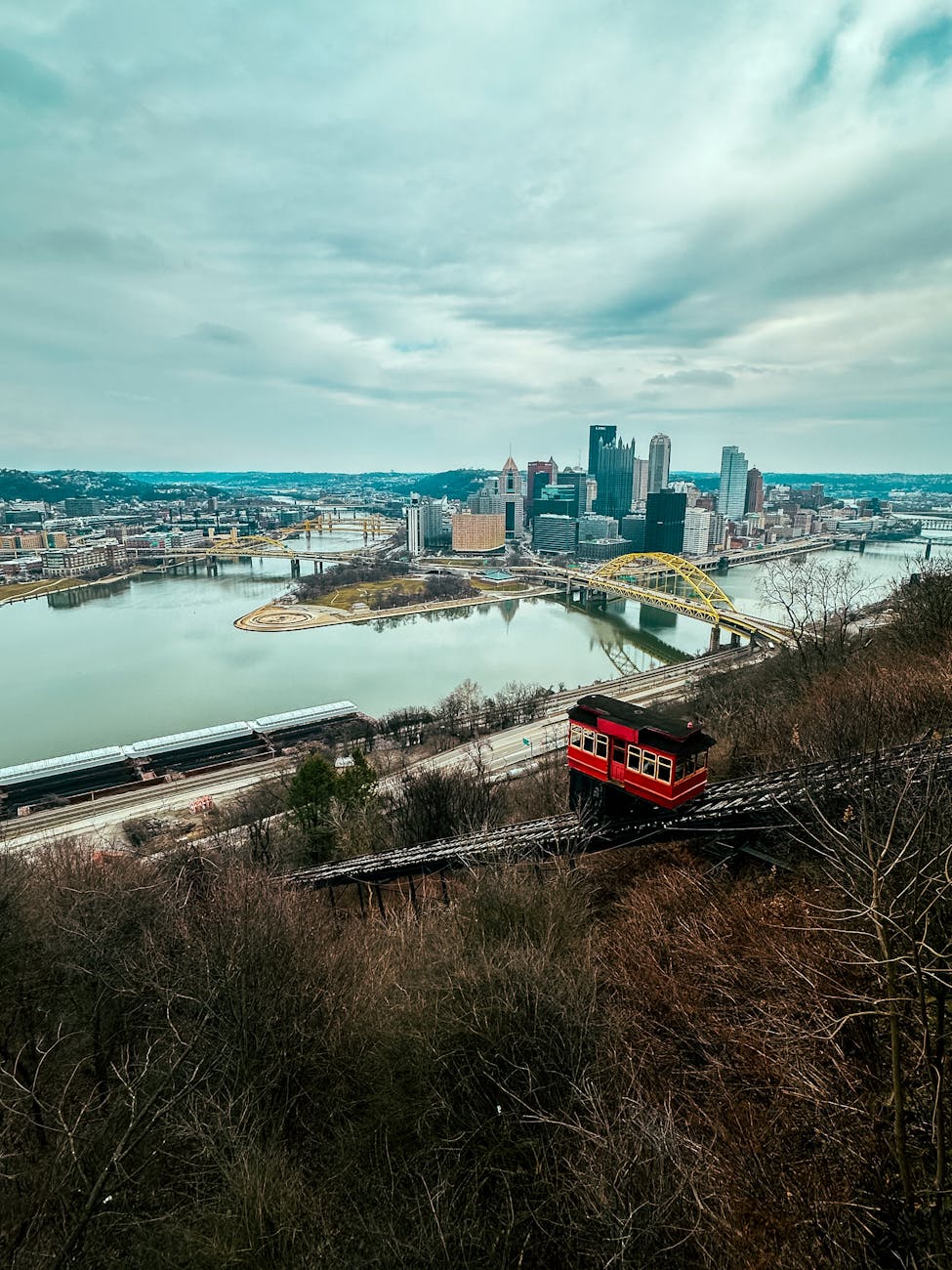
Photo by Enes Tu00fcrkou011flu on Pexels.com

The airport was to be a driver and symbol of the whole region’s evolution. “Planners hope the terminal, with its vaulted ceilings and driverless underground trains, will complete an image transformation begun decades ago,” the Times story said. “Once known as a gritty old steel town of blue-collar workers, Pittsburgh has become a commercial center of office towers and high-technology industries.” That reinvention has continued apace in the 33 years since the terminal opened. But even as a tech, robotics, and health care hub, the area has three-fourths the population that it did in 1970. And no place was a worse reminder of what Pittsburgh had lost than this airport 20 minutes west of downtown…

As a major airline’s biggest hub, Pittsburgh would be taking a piece out of millions of travelers who weren’t even staying in Pittsburgh, and it would also get a tourist boom from people who suddenly had an ultra-easy way of visiting. Before Sept. 11, 2001, the Pittsburgh Post-Gazette reported, USAir was running 542 daily flights in or out of Pittsburgh. As airline-airport relationships go, this was a huge one. (Today, for example, Delta peaks with about 330 daily flights leaving Minneapolis, its No. 2 city.)…

But the oversized airport was a bleak metaphor for a city that was once more bustling and then got let down—first by the shriveling of the steel business, then by USAir itself. The cavernous, quiet terminal created a bad feeling upon landing at home, like you had just entered a place that wasn’t what it used to be. It wasn’t a good way to be welcomed to a city, whether you lived there or not.

It can’t be overstated how much the point of the new airport is to simply move Pittsburgh past this corporate pantsing by US Airways. Yeah, there are practical logistics reasons for an update. As the airport authority chairman said in announcing the project back in 2017, airlines would face lower costs, and the facility would be “very efficient and modern.” But then he got to the point: “And, finally, this is most important for me, the people of Pittsburgh finally get an airport that is built for them, and not USAir.”…

A major city needs a decent airport. It offers travel opportunities to residents and businesses. It connects a place to other places. It is what people see when they arrive in or leave a city.

Can an airport be an economic engine on its own? Pittsburgh is a smaller big city. According to Wikipedia, it is the 67th largest city in the United States with over 307,000 residents and it is the 28th largest metropolitan area. How much air traffic can be expected to go through an airport in such a city?

The story of this airport seems tied up with the fate of the city. It once thought it could be an airline hub. It has a proud history of industry. But the world changed: industry jobs went elsewhere, the airline industry changed, and the large airport did not live up to its potential.

Having effective and inspiring infrastructure is helpful in many ways. It enables other important activity. Pittsburgh may not have a large airline hub or a standalone economic powerhouse but perhaps it now has an airport that serves the region well for decades.

Delta shows you how your airline luggage travels

Delta Airlines put together an interesting 2:34 video about what happens to your luggage from check-in to coming off the luggage belt at your destination.

I know plenty of people have lost luggage (it has happened once to me as well, delivered by UPS two days later) but this video brought an idea to mind: large systems like this which require a large number of employees and machines across cities around the world might also be considered quite efficient and remarkable. Perhaps we could argue about what constitutes an acceptable rate of error or delivering luggage to your final destination and weigh this against alternative forms of delivery such as paying to ship the luggage by private companies. More broadly, we could ask whether it is fair or realistic to expect mechanized/large-scale systems of today to be perfect 100% of the time (or perhaps we don’t mind until it is our luggage that is lost). Indeed, the luggage delivery systems of today for the tens of millions of airline passengers might have been unimaginable even 60 years ago.

Could someone design a better and cheaper system?

Also: is an app for tracking your luggage simply a means to help reassure passengers and to show them that most of their luggage does indeed make it to the right place?

The importance of perceptions: thinking about the golden age of flying

There seems to be a lot of grousing about air travel these days, particularly with a flood of recent stories about full-body scanners and more aggressive pat-downs. These complaints raise a question: is flying today more troublesome and less glamorous than in the past? Some experts say today is actually the golden age for flying:

Whether it’s fees, crowded planes, no food or surly service, people will complain about the current state of air travel.

They’ll talk wistfully about the good old days of flying, of a bygone era when a glamorous stewardess delivered white-glove service with a smile, they had meals with real silverware and a courtesy cocktail was offered free on such carriers as Pan Am, TWA, Braniff or Eastern.

The so-called golden age of air travel in the 1950s, ’60s and ’70s has passed, they’ll say, just as those airlines have.

But has it? No, say some veteran fliers and industry analysts. With historically affordable fares to nearly everywhere, greater options for service if you’re willing to pay, and new information and entertainment technology, there’s never been a better time to fly, they say.

So some experts that suggest by some objective measures, such as price and service level, flying is now better than it was in the past. But the issue really seems to be whether passengers feel that this is the case. And this is what matters for airlines – if potential customers perceive that flying is difficult and then choose other forms of travel, these perceptions are real indeed.

What could be going on here? A few thoughts:

1. Memories and nostalgia are tricky things. People can romanticize the past and forget the troubles they experienced then.

2. Some of the security procedures instituted after 9/11 seem to irritate people. It adds an extra level of hassle and can make people feel like they are not trusted. On the other hand, there has not been a major airline incident in the US since 9/11.

3. Service and entertainment options may have increased but perhaps passengers expect even more. Does having more entertainment options offset sitting in cramped airplane seats?

4. I would be curious to know how many people actually enjoy flying versus feeling that it is the best, or perhaps only, transportation option to get them where they want to go.

h/t The Infrastructurist

Extra airline fees are here to stay

All those fees recently enacted by airlines are adding up and they are likely here to stay. The Chicago Tribune reports that ancillary revenues reached $13.5 billion in 2009. United Airlines led the way by collecting $1.9 billion.

On our recent trip to California, we paid $25 a piece for two bags on each leg of our American Airlines flight. The fares were reasonable – but adding on the extra $100 for luggage squelched any joy produced by finding a decent deal.

Graphing flight delays by airport and airline

The Infrastructurist displays a great graphic that summarizes flight delays at major US airports. A quick interpretation: be prepared to be behind when traveling to New York, San Francisco, and Philadelphia or when flying on Northwest, JetBlue, AirTran, and American.