
Why did Concord, Massachusetts, become the site of an opening battle in the American Revolution and later become identified with the transcendentalists? It was a favorable spot for human settlement:
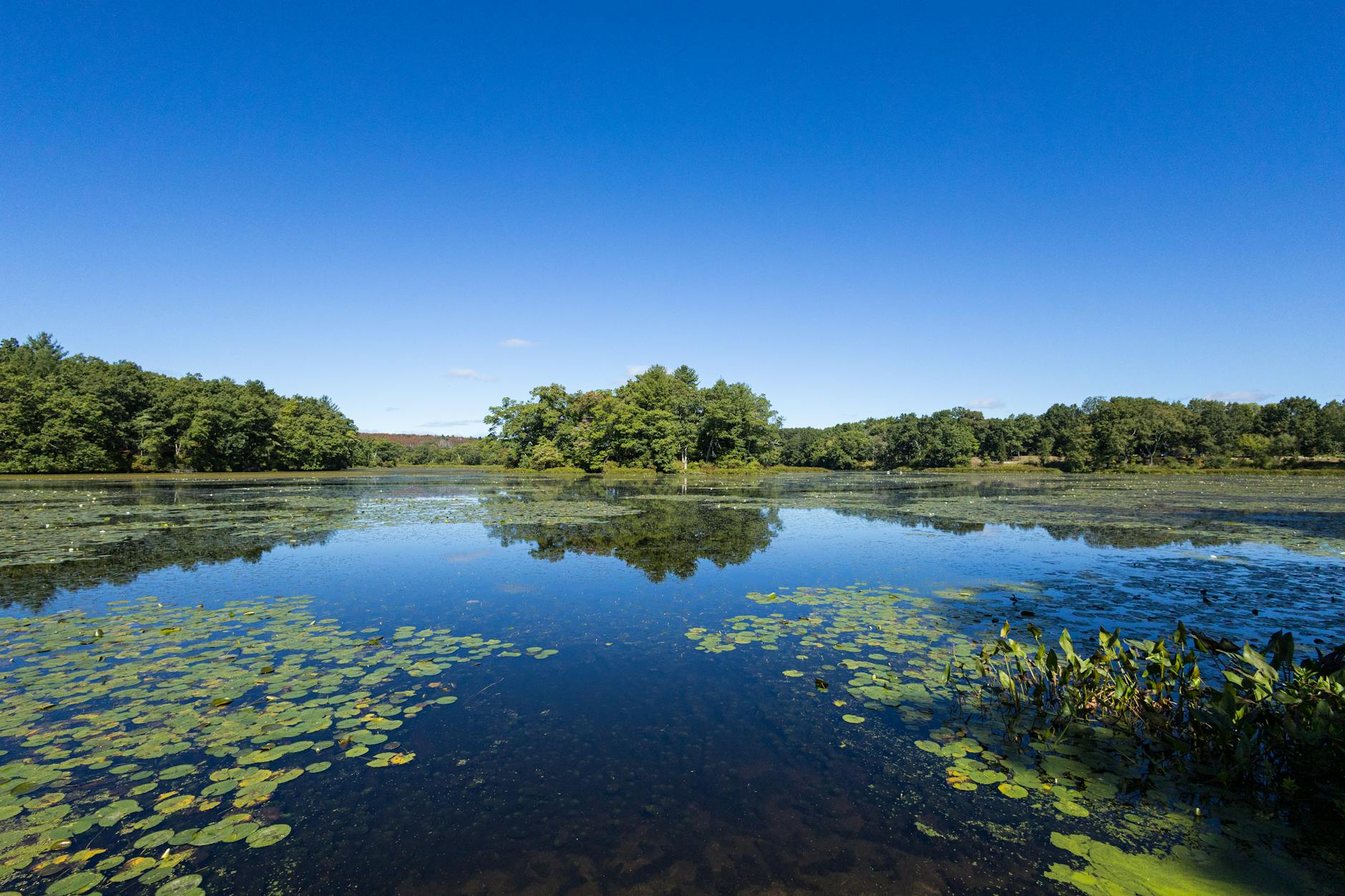
The Concord River runs north, rather than southeasterly down the regional slope toward the sea. When the edge of the great ice sheet began to retreat from the area about 17,000 years ago, the Concord River was dammed up by the ice to create a ribbon-shaped glacial lake with a muddy bottom. Eventually the lake drained away, allowing the Concord River to cut an inner valley beneath a moist and fertile lowland.
This process set the stage for the creation of what the Indigenous Massachusett, Nipmuc, and Pawtucket peoples called Musketaquid, meaning “grass-ground river,” a marsh about 20 miles long and so flat and so uninterrupted that Thoreau skated the entire round-trip distance one freezing day—January 31, 1855. The languid stream passed through broad meadows to create a northern version of the Everglades (without the alligators). Nathaniel Hawthorne lived along the bank for three weeks before he discerned which way the river flowed.
This riparian ecology attracted colonists: Concord became the first English town in North America above tidewater, beyond the sight and scent of the sea. Here the lush growth of freshwater hay would undergird a system of English husbandry dependent on livestock. Here migrating shad, herring, and salmon thrived in the aquatic richness, furnishing plentiful protein sources, vitamins, and minerals. Here the firm, muddy banks made an ideal habitat for the freshwater mussels on which other animals depended: muskrat, otters, turtles, human beings. On July 3, 1852, Thoreau estimated that more than 16,335 freshwater clams lay along 330 feet of the riverbank. Migrating waterfowl followed the meadows. Songbirds nested along their edges…
The physical separation between Boston and Concord involves more than the linear distance between two points. The population centers occupy different watersheds—the Charles River watershed to the east and the Concord River watershed to the west. In fact, they lie on different bedrock terranes that originated in different places in different eras. The terrane boundary coincides with the Bloody Bluff fault, named for a rocky notch where British troops were trapped by ferocious provincial fire. Here the land leans toward the security of the sea. To the west, it leans toward a hinterland where pioneering residents looked to one another for community support. Without the Lexington Road and its regular stagecoach traffic, 18th-century Concord would have remained an agricultural village. Instead, it became a prominent node in an expanding trade network. The significance of the watershed divide between country and city diminished only after the Fitchburg Railroad reached Concord in 1844.
I cannot remember who said it but I recall a quote where someone says if someone wanted to start a great city today, it would be really hard because all of the good locations have been taken. The geology and ecology of Concord made it good spot for humans to settle.
To take into account the geography and ecology of land and places will continue to be important, even in an era when it is easy to ignore the physical features of places. In the world of Internet and airplanes, everything seems accessible from anywhere. But this is not true: certain places have particular advantages with access to water, protected settings, mineral resources, land for farming and livestock, good spots along trade routes, and more. Some of this can shift over time; does it matter as much today as it did in the past that Chicago was a key portage location between the Great Lakes and the Mississippi River watershed? And this could change in the future: particular locations might have new advantages in the future as the earth and societies around the world change.
 Legally Sociable