An ongoing negative Trump narrative about cities

President Trump and his political allies continue to discuss cities in particular ways:
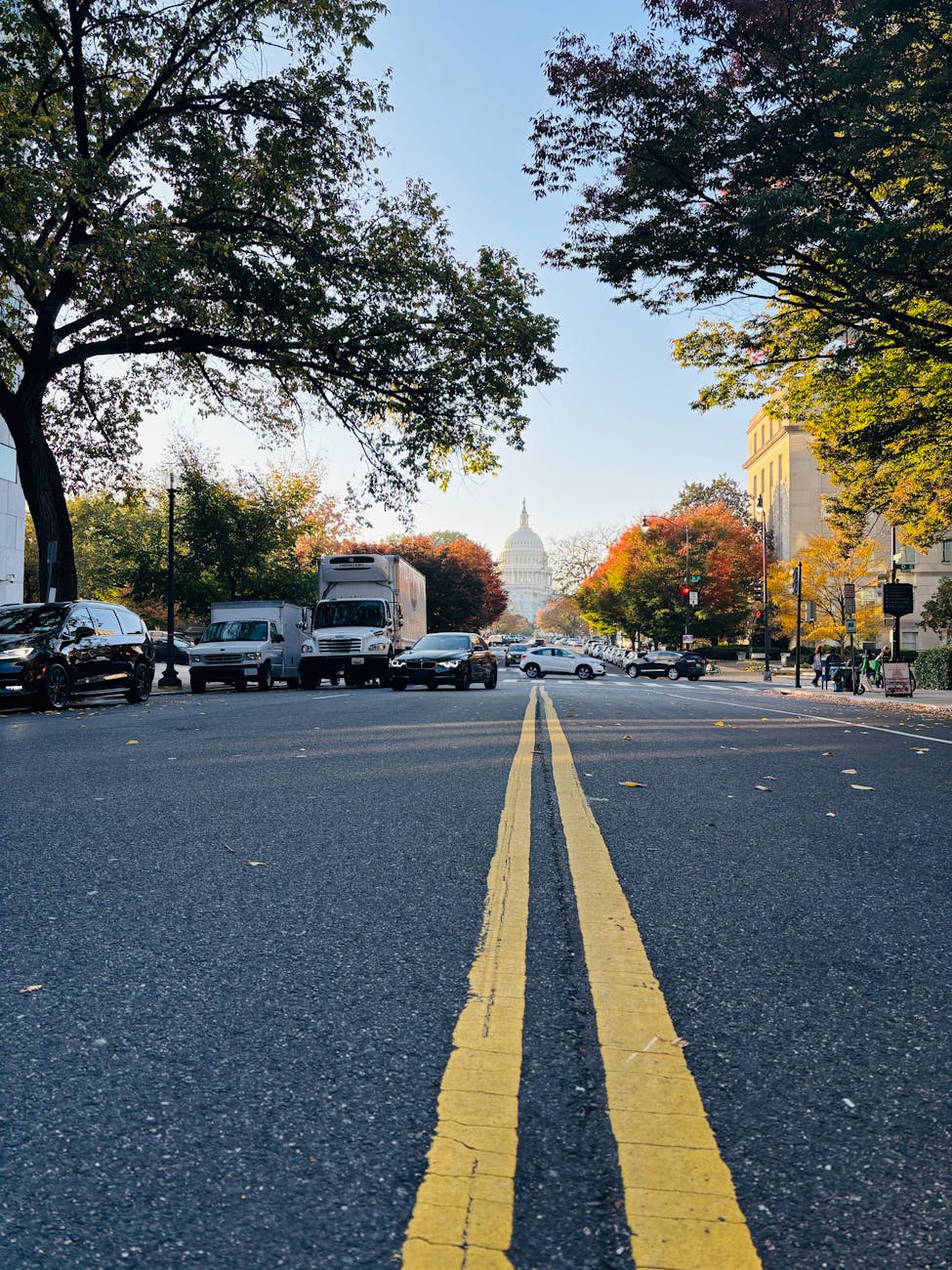
Photo by Moneer Ibrahim on Pexels.com

When President Donald Trump declared his third presidential candidacy in 2022, he saved his most colorful language for America’s urban areas, bemoaning “the blood-soaked streets of our once-great cities” and adding that “the cities are rotting, and they are indeed cesspools of blood.”

Later in his campaign, Trump called Milwaukee “horrible” and described Washington, D.C., as a “rat-infested, graffiti-infested shithole.” More recently he said, “These cities, it’s like living in hell.”

Other Republicans have seized on similar dystopian urban images. When Vice President JD Vance visited New York several years ago, he compared the city to a zombie apocalypse, posting: “I have heard it’s violent and disgusting there. But is it like Walking Dead Season 1 or Season 4?”

As Trump ramps up the military presence in Washington — and hints that he may move to take over other cities — his crackdown punctuates a frequent Republican message that American cities embody chaos, lawlessness and immorality, despite widespread recent drops in violent crime. With cities increasingly liberal and rural stretches ever more conservative, Republicans have a growing incentive to attack urban areas as the epitome of all that is wrong with America…

Trump’s rhetoric culminates a long history of American politicians casting cities as hotbeds of vice and social disorder, said Michael Kazin, a historian at Georgetown University and author of “The Populist Persuasion: An American History.” Left-wing populists have often been dismayed by the vast wealth inequality on display in cities, he said, while right-wing populists have recoiled from the elites, immigrants and minorities who live there.

This resonates with some Americans because there is a broader and longer history of criticizing cities in the United States. From the beginning, a number of Americans have idealized small town or rural living. The growth of major cities was accompanied by numerous concerns. When asked today, many Americans say they would prefer to live in small towns.

At the same time, it is hard to imagine the United States today without its big cities and the good things that came with them. A United States without New York, Los Angeles, and Chicago? Or San Francisco, New Orleans, and Cleveland?

Even if voting patterns by geography seem fairly set in American national elections, it would be interesting to hear more politicians articulate messages that cross these boundaries. Are people living in cities, suburbs, and rural more different than they are similar? Breaking through the existing patterns might just require addressing issues that Americans face or care about regardless of where they live.
Would Americans view cities differently if the current drop in violent crime continues?

Crime appears to be down in a number of American cities:

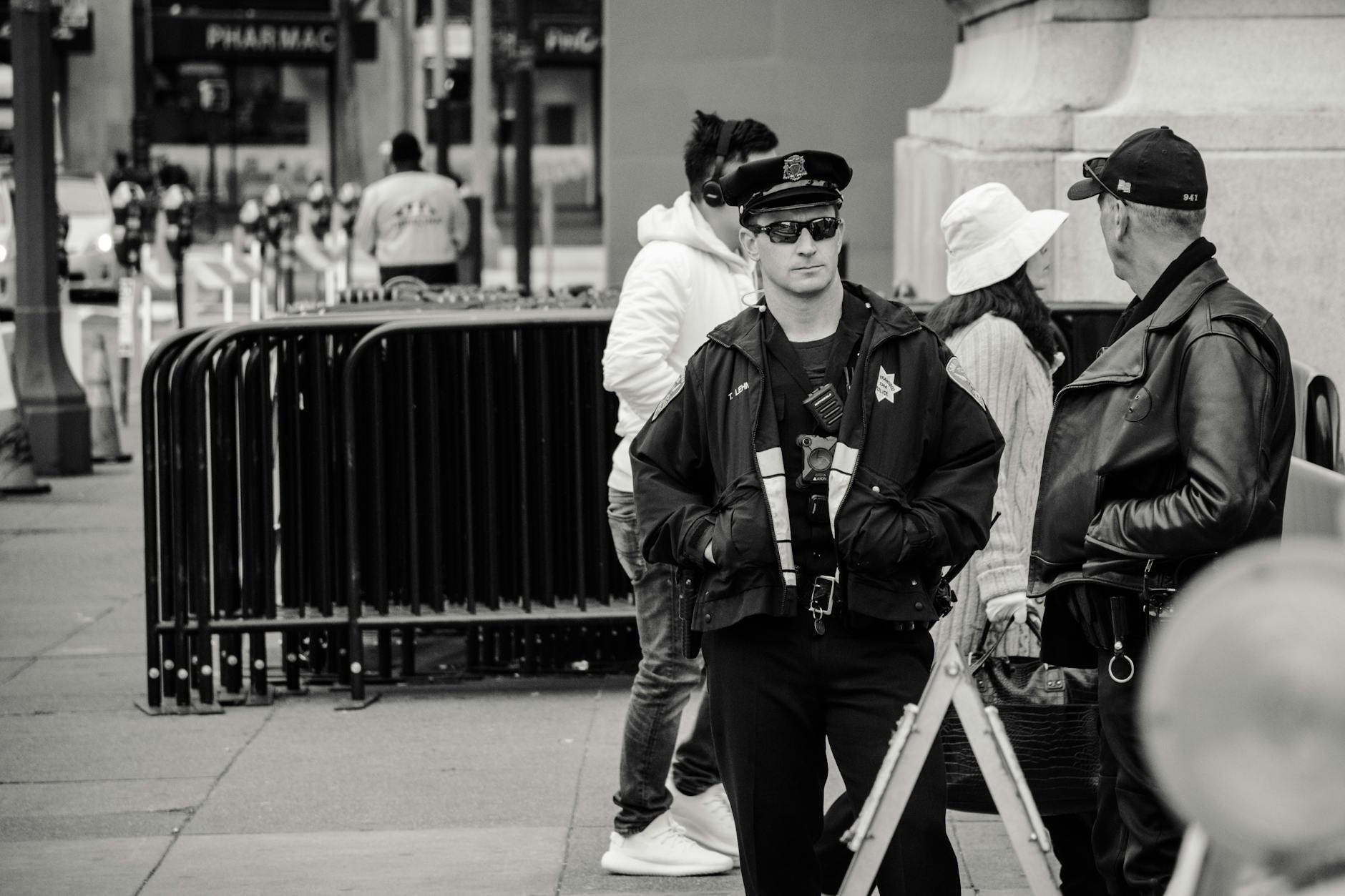
Photo by Brett Sayles on Pexels.com

Nineteen people were killed in Chicago last month, which is the fewest murders the Windy City has experienced during any April since 1962. In Baltimore, there were just five murders in April—the lowest number in any month since 1970. Three other major cities—Los Angeles, Philadelphia, and Detroit—recorded their fewest first-quarter homicides since the 1960s.

Criminologists tend to speak in caveats, with warning of reversion to the mean and admonitions to wait for better data, but even they must admit: These are some eye-catching numbers. “It’s really encouraging,” said John Roman, a crime researcher at the University of Chicago’s National Opinion Research Center. “It’s worth taking a moment and noting that we are approaching the numbers in most crime statistics we haven’t seen since the 1960s. In these cities, if you’re under 55, this is probably the safest moment you’ve ever lived in. That’s great, and it should be celebrated.”

The early 2025 crime decline builds off numbers from 2023 and 2024 and appears to include not just homicide but also robberies, rapes, burglaries, and auto theft. In many respects, we are returning to a pre-COVID world of public safety, with profound implications for residents of neighborhoods tormented by gun violence, the police who are supposed to solve the problem, and the politicians who love to campaign on the issue.

For decades, many Americans have associated big cities with crime. This can be in comparison to the settings in which they live – and a slight majority of the country is suburban – and can persist despite fluctuations in the actual crime rate.

But this is also connected to long-standing anti-urban sentiments. In a country that idealizes small-town life and where many love the suburbs, cities can look unappealing. Any reports on crime – whether crime is up or down – could feed into this broader narrative.

This goes beyond politicians trying to make political points by playing up particular issues cities face. How about the media and how it reports crime? How about the ways Americans perceive safety? How about police? And so on. There are facts about crime and perceptions about crime. For a long time, Americans have connected crime to cities. It might take a long downturn in crime for that connection to be broken.

Should all suburban teeangers want to experience the big city?

A Hollywood actor who grew up in Naperville argues suburban kids should want to explore the big city:

Right there on Wikipedia, Odenkirk said that he grew up “hating” Naperville because “it felt like a dead end, like Nowheresville. I couldn’t wait to move into a city and be around people who were doing exciting things.”

We contacted the co-star of the hit TV series “Breaking Bad” (he plays sleazy attorney Saul Goodman) and Alexander Payne’s critically acclaimed domestic drama “Nebraska,” opening Nov. 22, and asked for an explanation for this unabashed Naperville bashing.

“Well, you have to remember I was 16 years old when I was in Naperville,” said Odenkirk, 51. “I felt like I was offstage when I wanted to be onstage. I felt like I was watching from afar all the people who were movers and shakers, the people who were living exciting existences. That’s what I wanted to do.”…

“I didn’t want to be in the suburbs when I was 16 and 17 and 18,” Odenkirk continued. “I couldn’t wait to get out and go to Chicago or some other big city. New York intimidated me. Frankly, Chicago intimidated me, but I wanted to be there! Come on! Doesn’t every teenager feel that way?”…

“I would worry if my teenagers said they liked (the suburbs), that they didn’t want to experience the big city.”

One of the critiques of American suburbs involves their lack of opportunities for teenagers. This can take several forms. One issue is with urban design. In spaces designed around cars, if you can’t drive, you are in trouble. Similarly, if you live in isolated residential neighborhoods that are not close to important areas, like school or shops or parks or friends, teenagers can’t go very far. A second issue is with the suburban mindset that tends to focus attention on the local level. The complaint here is that teenagers aren’t exposed much to the wider world, to interactions with people much different from themselves.

Cities offer solutions to both issues: there is a variety of mass transit option in many big cities and walking or biking can actually get you to somewhere interesting. They also tend to contain more diverse populations and opportunities compared to suburbs. Yet, the perception is that cities are not as safe for children/teenagers and this might limit their ability to explore big cities.

All that said, compared to other suburbs, Naperville has the sort of factors that can help make suburbs more exciting for teenagers – a lively downtown with restaurants, stores, and the Riverwalk; good schools; plenty of recreational activities and learning opportunities (good libraries); a growing non-white population. So, if it doesn’t appeal to teenagers, what suburb does? (Note: Odenkirk was 16 in 1978 Naperville, a time when the community was growing but didn’t necessarily have all of the amenities it does today.)

Anti-urban hymn? “God, who stretched the spangled heavens”

Yesterday’s service featured #580 in the 1982 Episcopal hymnal, “God, who stretched the spangled heavens.” Beyond being a mid-20th century hymn (and they have some interesting quirks themselves), the second verse was very interesting:

Proudly rise our modern cities,
stately buildings, row on row;
yet their windows, blank, unfeeling,
stare on canyoned streets below,
where the lonely drift unnoticed
in the city’s ebb and flow,
lost to purpose and to meaning,
scarcely caring where they go.

It almost seems like this should be immediately followed by “Eleanor Rigby” by the Beatles: “All the lonely people, where do they all belong?”

This hymn tries to balance two images in this verse (and supported elsewhere in the song): on one hand, we have “stately buildings,” impressive demonstrations of modern capacities and on the other hand, these great cities are full of people “lost to purpose and to meaning.” On the whole, this is not a favorable view of city life, even if it is trying to be descriptive and demonstrate the issues modernists face. Are there any hymns that talk about vibrant urban neighborhoods?

I resolve to be on the watch for anti-urban messages in other hymns. I wonder if there is a large gap in hymn content in this area between more mainline denominations who retained a little more presence in the big cities during the post-World War II suburban boom and also tend to hold to political views that suggest engagement with the city while religious conservatives have more individualized songs and desire escape from the dirty, evil cities.