All the birds flying over suburban homes in the Chicago region

Suburban homes are all over the American landscape. Above and around them fly lots of birds, particularly at this time of year in certain parts of the country:

Photo by Fahad AlAni on Pexels.com

This week, millions of birds will fly through the night skies above the Chicago area as they travel from their winter homes down South to their summer breeding grounds in Canada and northern states like Wisconsin and Minnesota.

With spring migration in full swing, hundreds of species such as the Baltimore Oriole and Nashville Warbler are following Illinois’ rivers and Lake Michigan to find their way. Free of daytime temperatures, the birds are further aided by the stars, moon and stable night atmosphere…

Spring migration is long and it comes in waves, starting in late February and March with waterfowl and goose migration. Next, short-distance migrants like Robins and Red-wing Blackbirds make their way up…

To combat the threat, bird lovers and environmental organizations are promoting Audubon’s Lights Out program, which encourages home and building owners to turn off or dim their lights as much as possible during spring and fall migration seasons…

“You can bring birds to your own yard if you own property, or even if you don’t and you just have a balcony or something similar,” he said. “Planting native shrubs or perennials or trees if you’re able to is a huge, huge benefit to birds. They’ll seek out native species as they’re migrating because native species provide insects for them and they’re aligned to match when these native species are in their blooming period.”

I would guess many suburbanites appreciate birds in their yards. People like to feed birds. They enjoy hearing them early in the morning (or later in the day, depending on one’s sleep schedule). They like to watch them and see who is present.

How exactly the birds get there and the ways suburbanites can help birds get to where they want to go might be less known. In the paragraph above, it might be easy to see birds as an adornment to suburban life. Have a home and yard and the birds are icing on the cake. They come and they go.

But suburban yards sit in the middle of bigger ecosystems. Some birds do well in this setting and others do not. While a lot of attention is paid to tall glass buildings, houses and other assorted suburban development can mess with pathways bids have used for a long time.

Can birds and suburbanites coexist in the long run? Are American suburbanites more likely to believe that birds aren’t real? I wonder how many would be willing to do the two things suggested above – dim their lights and have native plants – to further the well-being of birds on the move.
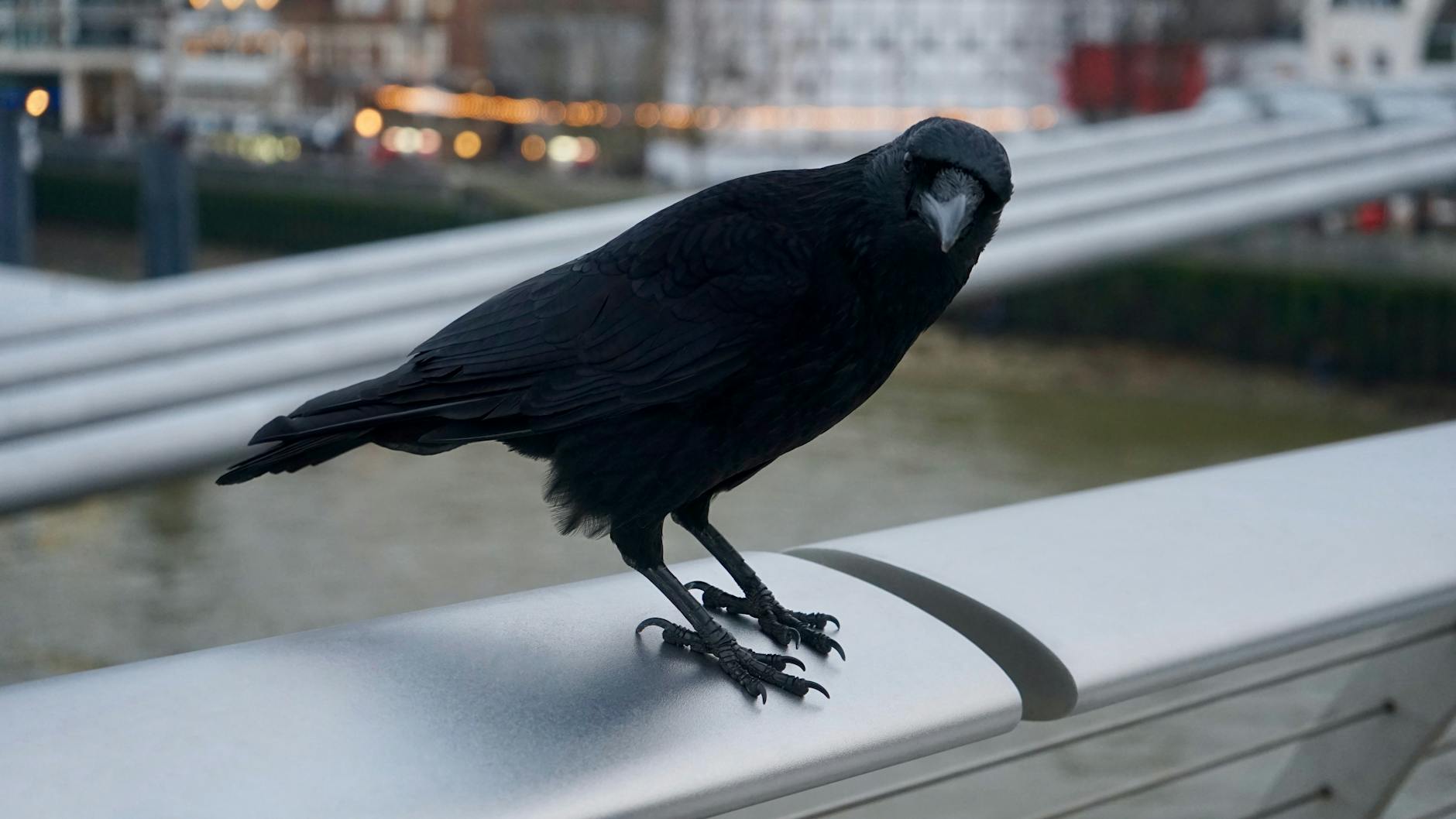
Crows take to American cities

The humble – mighty? – crow is congregating in some American cities:

Photo by Mike Bird on Pexels.com

Across North America, crow populations have been declining for decades. But crows appear to be flocking to cities more than ever before. Cities from Sunnyvale, California, to Danville, Illinois, to Poughkeepsie, New York, host thousands of crows each winter. Some popular urban roosts host more than 100,000 crows each night.

Crows are territorial during the spring and summer breeding season, but during the rest of the year, they sleep in large groups known as roosts. Sometimes a roost occupies a single tree; sometimes it’s spread over multiple perching sites—usually flat roofs or treetops—in a consistent area. Roosting has clear advantages for crows, especially during winter. “They’re better off being in a big group, where they get the benefit of all those eyes looking out for danger. It’s also warmer,” John Marzluff, the author of Gifts of the Crow, told me.

City roosts offer even more advantages. The very features of urban life that harm other species—fragmented landscapes, bright lights at night, and open stretches of grass in parks—benefit crows. Lights make it easier to spot predators, such as owls. Grass doesn’t offer much in the way of food or shelter for many animals, but crows will happily dig through it for beetle larvae and other snacks. Also, Marzluff told me, crows like that we humans often plant grass close to clusters of trees, where they can sleep or nest, and other food sources, such as our trash. Fragmented habitats, such as a group of trees in a park surrounded by asphalt, harm other species because they aren’t big enough to foster genetic diversity. But they are ideal for crows, who can fly between pockets of greenery and like to have a variety of options for their nesting areas and foraging sites.

Crows, in other words, move to urban areas for the same reason humans do: Cities offer just about everything they need within flapping distance. During the breeding season, Marzluff said, crows even decamp to the suburbs to raise their families, just like humans. And once even small roosts are established, many of them grow year after year, from perhaps a few hundred birds to a few hundred thousand. News spreads fast through the crow community, Marzluff said: Crows share information with one another and develop traditions and culture within populations, including roosting habits, though scientists still don’t know exactly how they do it.

These birds are real!

This reminds me of the book Subirdia which suggested some bird species can thrive with human development and others do not. Crows are likely not the only birds or animal species that finds cities to be a good habitat.

The article ends with suggestions from some that humans should embrace crows in cities. However, if the headline is prescient, would crows go the way of pigeons? Or might some another birds take over from the crows?

Peregrine falcons take over Chicago apartment balcony

See what happens when peregrine falcons take over an city apartment balcony:

It all started four years ago, when the birds began dropping by the building’s balconies early each spring. In April 2014, the couple got pretty cozy on Dacey Arashiba’s terrace. Arashiba, an I.T. consultant, was delighted, but his neighbors, put off by the birds’ loud noises and poop, complained. “My building manager told me the birds had to go. Maintenance staff shooed them off the balcony,” Arashiba says. “And that was it. For a while.”

But in June, the birds came back. A week later, the pair had laid three eggs in Arashiba’s flowerbox (“I am an occasional, lazy gardener and hadn’t replenished the dirt in a few years,” he admits.)

Now on the offensive, Arashiba called Mary Hennen, director of the Chicago Peregrine Program, who told him that falcons are federally protected under the Migratory Bird Treaty Act (and had previously been on the state and federal endangered species lists). It’s highly illegal to harass them (building management complied)…

Arashiba let Massey crash in his condo for a full month so the 23-year-old photographer could get close-up pictures of the birds as their chicks grew from tiny fluff balls to sleek (but spotted) youngsters. Massey’s assistant, Katie Stacey, was also there to help out with parts of the shoot, which required some precarious balancing of equipment to fully capture the birds’ vertigo-inducing existance.

There are some great pictures here. I wonder how many city apartment dwellers would have had a similar reaction to the Arashiba’s as their balcony became a lot more difficult to use. Would many have sided with the neighbors who complained? And if the birds had been chased away, could they have easily found a nesting site elsewhere in the city?

See an earlier post regarding a book about the birds of suburbia (“suburdia”).

“Suburdia”: a wide variety of wildlife in cities and suburbs

A professor of wildlife science finds a surprising amount of wildlife in urban areas:

John Marzluff, the scientist, is well known for his research on, among other topics, the intelligence of crows and ravens. In his new book, Welcome to Subirdia: Sharing Our Neighborhoods With Wrens, Robins, Woodpeckers, and Other Wildlife (Yale University Press), Marzluff examines the effects of urbanization on a variety of birds…In more than a decade of research in and around Seattle, where he is a professor of wildlife science at the University of Washington, Marzluff and a small army of graduate students discovered a consistent pattern: Bird diversity grew from the city center, peaked in the suburbs, and dropped again in the forested areas between Seattle and the Cascades.

“We had discovered subirdia,” Marzluff writes. “Now I was really perplexed.”…

For many birds, the suburbs, as Marzluff explains, afford a wide variety of habitats. The trees, flowers, shrubs, ponds, and bird feeders that dot our neighborhoods make them attractive to many species. Add the golf courses, office parks, and retention ponds that are hallmarks of many suburban landscapes, and subirdia becomes downright appealing.

The suburbs are often criticized for their environmental faults including sprawl that chews up land and destroys natural habitats. Yet, these findings offer some evidence that the suburbs may not be all bad. It also leads me to two other questions:

1. Does this apply beyond birds? It sounds like it took a lot of work to establish these findings for birds. Yet, I assume some of the ideas would work for other animals as well as some would adapt and thrive to the suburban setting and others would not.

2. Such findings shouldn’t be used as evidence that suburbia is a positive for the natural environment. But, we shouldn’t continue to think in terms of pristine nature versus dirty cities. All of the environments in the United States, whether rural or urban, have been heavily affected by human activity.