Suburban sounds near the start of fall

During the pandemic, some who were at home described the noises they heard from their residences that they may have missed in going to work regularly or being out more.

As summer winds down on the calendar and fall approaches, I noticed some different sounds in the suburbs. I described some of the suburban noises of summer back in 2018. Here are a few of the notable changes heading into a new season:
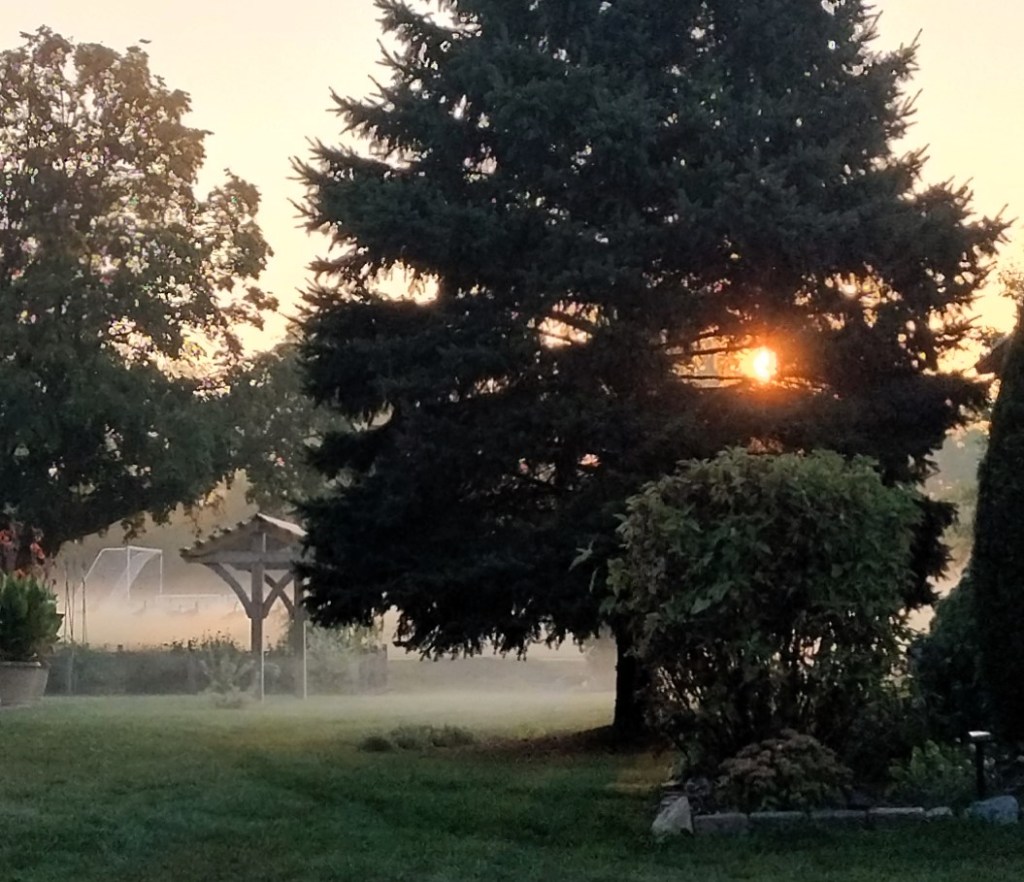
-Geese flying overhead regularly and standing around in fields and near water. The picture above includes geese honking and milling around in the early morning suburban mist on a soccer field set up for the fall season.

-Fewer lawnmowers at work and less yard work noise. It also has not rained much recently. The spring and summer hum of outdoor machines has lessened.

-The occasional sound of marching band practices and performances. We are more than a mile from a high school but we can hear the band at work (cannot hear cheering).

-No cicadas at this point of the year, particularly compared to earlier this summer in our area.

-Less noise from kids in the neighborhood during the day with school in session. Of course, people living near schools likely hear a lot more noise now during the middle of the day compared to the summer.

This is a particular suburban soundscape soon to change with leaves blowing around and crunching underfoot and later snow dampening outdoor noise.

Sprawl disturbs cicada cycles

Clearing land for suburban development disrupts cicada cycles:

“They have a tight connection with the tree,” says Dan Babbitt, the manager of the insect zoo at the Smithsonian’s National Museum of Natural History. Cicadas spend their underground years feeding off the roots of trees. Then when they’re ready to come up, they crawl back out along the tree trunk to the branches where they lay their eggs, all in the hopes that the next generation of cicadas will fall back into the soil, burrow down to the roots, and feed there for another 17 years.

This is why leafy residential neighborhoods often have some of the best cicada sightings (and sounds). It’s also why the absolute worst thing we could do to the creatures is clear-cut whole stretches of once-rural land for new development while they’re down there. Get rid of the trees, and you get rid of the cicadas. And re-planting those sad saplings common along many freshly paved roads in the exurbs won’t help…

“When they go out and build these things around Champaign-Urbana, they cut the trees down, they bring in the bulldozers, they pull up the top soil, and they stick the houses down,” Cooley says. “None of the cicadas in the ground there would have survived that. None of anything in the ground would have survived that.”

Some periodical cicadas do well in older, tree-lined suburbs, Cooley says, those places where houses were built slowly over time, “where they didn’t take the big trees.” Across history, it’s hard to tell if the shape and geography of broods has altered significantly around the footprint of expanding cities. Early records on when and where they appeared – and which broods were which – aren’t all that reliable. Some “straggler” cicadas also appear off the cycle of the rest of a brood, further confusing history’s witnesses.

Just another way that suburban development disrupts natural habitats. But, I’m still left with two pressing questions:

1. Would the average suburbanite see this as a problem? For those who live in the areas with more cicadas, are they viewed as a big nuisance even if they are only around every 17 years?

2. There is no indication in this article about how destructive this is. How bad is it if suburban development wipes out cicadas? What are the side effects? This is related to Question 1: perhaps suburbanites would be friendly toward cicadas if they knew they were making their lives and the habitat better.