Booming coyote population in the Chicago suburbs

Coyotes also want to live in the suburbs:
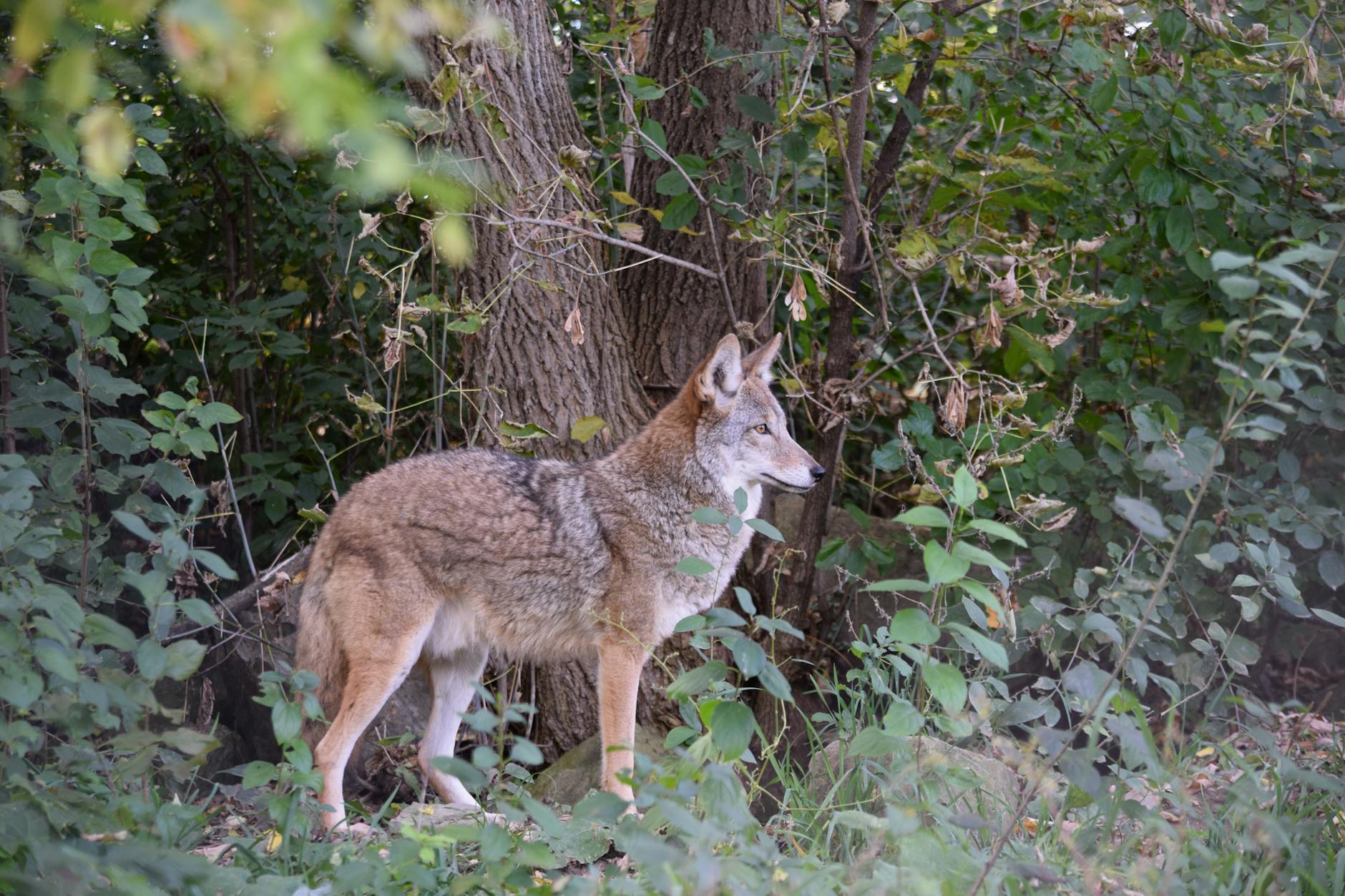
Photo by Michelle Chadwick on Pexels.com

The suburban coyote populations are growing rapidly which means there will likely be more interaction with people but both Erickson and Ramono say it’s not really the coyotes’ faults.

“We invited them when we built all these suburbs,” Erickson said. “We said, ‘Hey, there’s more food here. There’s more habitat here.’ We invited these animals in here.”

They say when we experience mild winters three to four years in a row, the population can increase 18 to 27 percent. The old and sick and late-littered animals survive, animals that would normally would die off.

In five years, the population could double.

They also say rural coyotes may only live two years because there are pressure on them. In suburban areas, we have coyotes live to 13-years-old because of the all of food and the lack of pressure.

I have seen coyotes running across busy four-lane suburban roads and through suburban backyards. I have heard them howl at night in an open field next to a neighborhood. I have read plenty of online claims regarding the threat of coyotes to local pets. Coyotes are now fixtures in suburban Chicagoland.

They are evidence that some species can thrive in suburbia. As noted above, suburban areas provide food and places to live while limiting pressure (competition for food? predators?). The typical suburbanite may not like their presence but coyotes are here to stay for now.

At what point would communities take action against coyotes? When I have read online claims of the threats to pets, I could imagine that an uptick in coyote/pet interactions could move people to act given the love Americans have for their pets. Or perhaps signs of coyotes taking out other wildlife that suburbanites like or are used to.

Biologist estimates 2,000 adult coyotes living in Chicago

A biologist says there are at least a few thousand coyotes living in Chicago:

Stanley Gehrt, a biologist from Ohio State University has been studying and tracking coyotes in Chicago for over 14 years and has estimated that there are roughly 2,000 adult coyotes living right here in the Windy City. If pups are included, this estimate could double to roughly 4,000 coyotes in Chicago. Gehrt has tracked over 800 coyotes in Chicago since 2000 using GPS collars and found that coyotes live everywhere in the city – including the densely populated downtown area. According to researchers, more coyotes are moving into dense urban areas because they’ve become adaptive over the years. They’re resourceful animals and can thrive in different types of climates.

If the numbers are growing, we expect more contact with humans. If I had to guess, city dwellers – just like suburbanites in recent years – will often be quite surprised by such encounters.

It’s too bad this short blurb doesn’t add any more information about the City of Chicago plans to respond to coyotes. Would politicians gain or lose points by limiting the population of coyotes or allowing them to grow? You don’t want to cross a lot of owners of small dogs…

The presence of coyotes in cities and suburbs

Residents of cities across the United States have reported seeing coyotes in recent years. This has been an issue around Wheaton, Illinois: earlier this year, I even had the opportunity to be about 100 feet behind a car that hit a coyote walking across a busy road.

Among other discussions, such as the exact background of coyotes, researchers suggest coyotes are long-term residents in urban areas:

Even in their new habitat of the great metropolises, with nary a sheep in sight, the coyote finds itself, at best, a nervously tolerated visitor. In recent years, urbanites have been simultaneously charmed and disturbed by coyotes strolling in Central Park, trotting into a Quiznos restaurant in downtown Chicago and taking a dash around a federal courthouse in Detroit. Such news is, more often than not, soon followed by the news that the coyote has been rounded up and removed. It doesn’t seem to matter that coyotes are relatively harmless, as researchers point out, as any person or pet is much more likely to be injured or even killed by a domestic dog.

Neither does it seem to matter that the removal of a single showy coyote is unlikely to leave a city clear of these animals, or even give any sense of just how many coyotes a given city harbors. Dr. Gehrt said that when he began his research he would have guessed there were some 50 to 100 coyotes in the Chicago metropolitan area. After a decade of radio tracking and genetic analyses, he knows better. Dr. Gehrt said he conservatively estimates the number of these rarely seen creatures at more than 2,000.

The coyote is out there, and it is here to stay.

I would have liked to have seen more discussion in this article about why coyotes have returned to urban areas in such large numbers.

Seeing a coyote is also a reminder than even our most urbanized areas, like Manhattan or built-up suburbs, are closer to nature than we often think.