“Map lines are inherently political”

Maps document human interpretations of physical and spatial features:
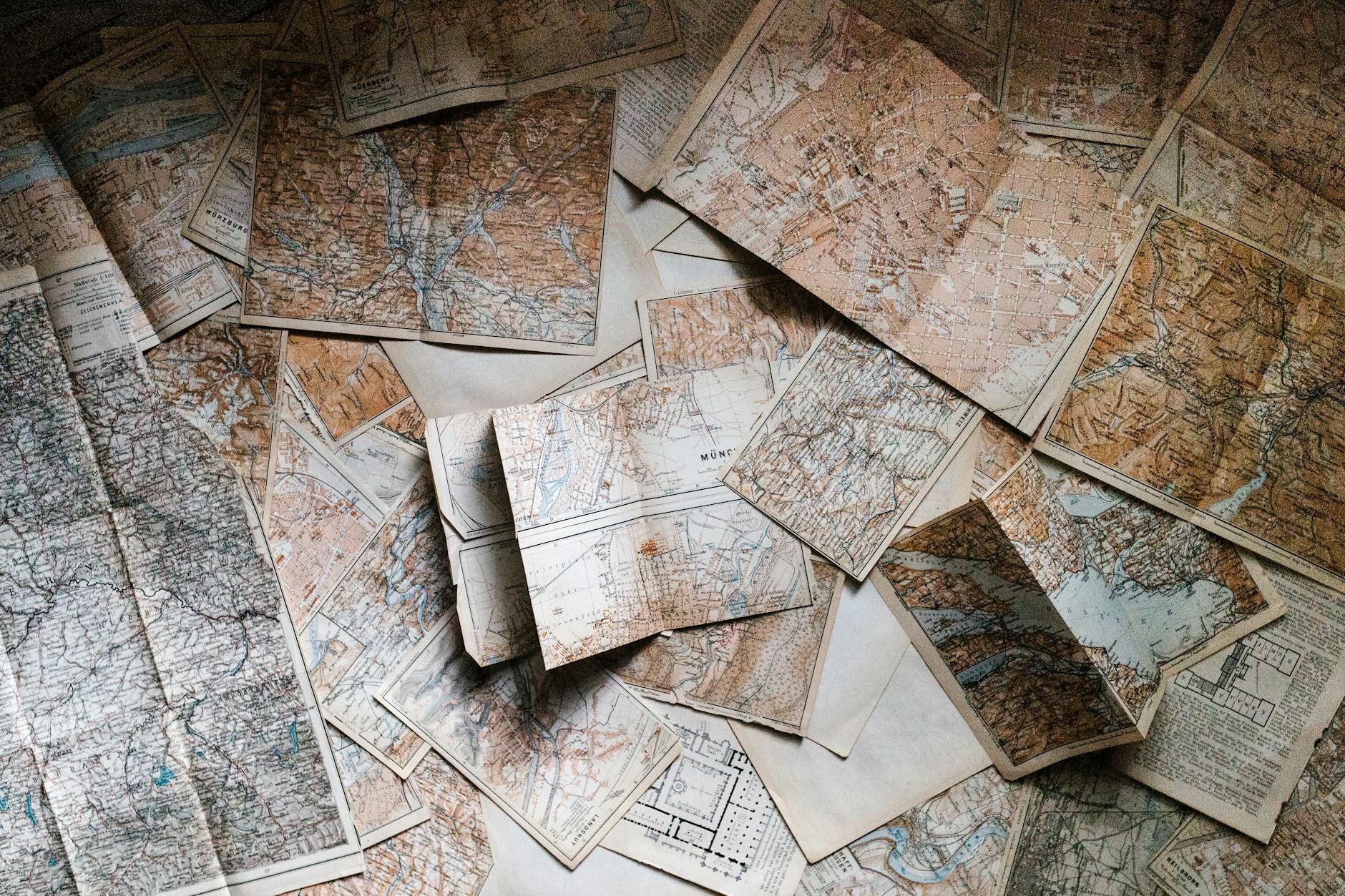
Photo by Andrew Neel on Pexels.com

Map lines are inherently political. After all, they’re representations of the places that are important to human beings — and those priorities can be delicate and contentious, even more so in a globalized world where multiple nations often share the same maps.

Numerous examples follow:

The water bordered by the Southern United States, Mexico and Cuba will be critical to shipping lanes and vacationers whether it’s called the Gulf of Mexico, as it has been for four centuries, or the Gulf of America, as President Donald Trump ordered this week. North America’s highest mountain peak will still loom above Alaska whether it’s called Denali, as ordered by former President Barack Obama in 2015, or changed back to Mt. McKinley as Trump also decreed…

The Persian Gulf has been widely known by that name since the 16th century, although usage of “Gulf” and “Arabian Gulf” is dominant in many countries in the Middle East. The government of Iran — formerly Persia — threatened to sue Google in 2012 over the company’s decision not to label the body of water at all on its maps. Many Arab countries don’t recognize Israel and instead call it Palestine. And in many official releases, Israel calls the occupied West Bank by its biblical name, “Judea and Samaria.”…

The Associated Press, which disseminates news around the world to multiple audiences, will refer to the Gulf of Mexico by its original name while acknowledging the name Gulf of America. AP will, however, use the name Mount McKinley instead of Denali; the area lies solely in the United States and as president, Trump has the authority to change federal geographical names within the country.

Humans make meaning of the world around them and maps capture some of that meaning. And because meaning is sometimes agreed upon and sometimes contested, maps reflect these realities.

What are innovative ways to include multiple names or meanings on a map? Or layer changes in a map over time? I have seen some interesting displays online that attempt to do this. How can maps be more dynamic and flexible?


The International Car Wash Association, the American Beefalo Association, and the purpose of business associations

I recently drove by the headquarters of the International Car Wash Association. I did not know this group existed and I wanted to learn more. According to their website, here is what this group does:

Photo by Pixabay on Pexels.com

International Carwash Association (ICA) is the nonprofit organization representing the car wash industry in the United States, and uniting it around the world. Its members own, operate or support nearly every car wash business in dozens of countries. ICA offers the world’s largest car wash events and exhibitions, the leading online manager training program (LEAD™), news and inspiration through CAR WASH Magazine™ and a variety of industry research products (Pulse™).

Why did this catch my eye? In graduate school, I made a very small contribution to a research project by sociologist Lyn Spillman that involved me going through a multi-volume set of American business associations and coding basic information from the entries. I read a lot of entries about organizations that I never knew existed. Only the name of one group stuck with me from that work: the American Beefalo Association. From their website, here is more information about beefalo and the group:

Beefalo was developed in the early 1970’s by a Californian producer who successfully interbreed American Bison with domesticated cattle. After nearly 150 years of selective breeding, the perfect balance was found in 3/8th’s Bison and 5/8th’s domestic cattle. This new cross had high fertility success and a superior balance of traits for modern-day uses and needs. With this cross, the hardiness of the bison was retained but was melded the easy temperament, superior carcass structure and meat quality of domesticated cattle. In 1975 the American Beefalo Association was formed as the breeds popularity sky-rocketed. By 1985, USDA meat testing had concluded substantial differences in Beefalo’s nutrition profile when compared with traditional beef warranting beefalo it’s own meat label and regulations. Today beefalo is experiencing a resurgence in the health food market as consumers are actively becoming more conscious about where their foods come from, invested in animal welfare and engaged in sustainability efforts.

Spillman went on to write a book – Solidarity in Strategy: Making Business Meaningful in American Trade Associations – explaining how these organizations bring meaning to business activity. Spillman writes, “Associations often dwell on shared identity, admire technical excellence, highlight contributions to the group, and express occupational camaraderie, with little attention to strategic economic purposes.” (13) In other words, the International Car Wash Association and the American Beefalo Association might be assumed to be about generating revenues but they may be more about bringing people across an industry together and creating solidarity.

Owning and selling over $1 billion in art

The art collection of Paul Allen will soon go to auction with the proceeds going to charities:

Photo by Sora Shimazaki on Pexels.com

In a statement, Christie’s said that the famed auction house will sell off more than 150 ‘masterpieces’ belonging to Allen’s foundation. The collection spans over 500 years of art history while the value of the works is more than $1 billion. The auction is titled: ‘Visionary: The Paul G. Allen Collection.’ The proceeds will be divided up among various charities.

Among the artists’ whose work is featured in Allen’s collection include Paul Cezanne, Jasper Johns, David Hockney, Edward Hopper, Pierre-Auguste Renoir, Georgia O’Keefe, Paul Gauguin, Roy Lichtenstein and Claude Monet. Following Allen’s death, it was revealed that he was the anonymous buyer of Monet’s haystacks painting titled Meule in 2016. The painting sold for $81.4 million.

Because I am teaching a class titled Culture, Media, and Society this semester, a sociology of culture course, this news caught my attention for several reasons:

  • The amount of wealth concentrated in a set of created objects is fascinating to consider. This is considered a good investment for those with the means:

In the aftermath of the Covid-19 pandemic, the art world continues to see major gains. According to a UBS study, the art market generated over $65 billion in 2021 alone. The US art market made up 43 percent of the value share. 

  • This is a reminder of the amount of wealth – and presumably networking – involved in the major art markets. People with fewer resources can see major works in museums or galleries but the owners of such works are in different social categories and circles.
  • Living with such work that is considered important and/or expensive must be interesting:

In 2015, he told Bloomberg: ‘To live with these pieces of art is truly amazing. I feel that you should share some of the works to give the public a chance to see them.’ Allen said in the same interview that his art collection was a ‘very, very good investment for me.’

  • How does someone become invested – economically, socially, personally – in art? According to Allen:

It was a visit to London’s Tate Gallery that exposed him to classical works by J.M.W Turner as well as the pop art of Roy Lichtenstein. That visit left Allen ‘profoundly moved.’ The bio continues by saying: ‘That experience ignited within him a passion for art — and for making art accessible to more people.’

As we consider culture as “processes of meaning-making” (definition from sociologist Lyn Spillman), there is a lot of meaning-making in Allen’s milieu, actions, and legacy.

Roughly 40% of St. Louis high-rises don’t have a 13th floor

Triskaidekaphobia is built into a number of St. Louis high-rises:

An informal survey by St. Louis Public Radio of 68 skyscrapers in the St. Louis area finds about 41 percent skip over 13 in counting their floors. Not surprisingly, most of them are hotels or residential properties where people pay to stay…

Oftentimes, architects have solved the problem by putting mechanical components for elevators, and heating and cooling systems on the floor, rather than offices or living spaces, she said…

By far the simplest solution is just renaming it the 14th floor, she said…

As irrational as it is to purposefully mislabel floor numbers, there may be some value in the superstition as well. According to Kathryn Kuhn, an associate professor of sociology at St. Louis University, commonly shared superstitions can lend to individuals a sense control and significance…

Ye explained that in Chinese, the characters for 4 and 14 share a similar pronunciation with the word for death or dying. Thus many high-rises in China leave out the 4th and 14th floors. In some regions, 13 is actually considered a lucky number, he said.

This is a fairly common architectural feature. It highlights the importance of meanings and values for humans, even as they push past natural limits of getting off the ground by building high into the sky. Buildings don’t just have meaning because they are there; they have meanings because humans give them meaning. And, of course, this can differ widely across societies and culture even if they have buildings that look and function similarly.

I’m not sure I like the idea that this is an issue of rational vs. irrational thinking. Such a dichotomy often depends on somebody getting to label one side rational or irrational. What is necessarily irrational about fears and emotions, things that all human beings have? I suppose it is irrational only if most fears can be argued away using scientific explanations.

Exploring the messages embedded in “The Battle Hymn of the Republic”

Political scientist Dominic Tierney explores the cultural and religious meanings and values behind the familiar American song “The Battle Hymn of the Republic.” Some of his thoughts on the song:

But most of all, the “Battle Hymn” is a warrior’s cry and a call to arms. Its vivid portrait of sacred violence captures how Americans fight wars, from the minié balls of the Civil War to the shock and awe of Iraq. Based on ideas from my new book, How We Fight: Crusades, Quagmires, and the American Way of War, we can see how the nation’s experience is intimately connected to this crusader’s cry…

The totemic poem has guided the United States through many military trials. The “Battle Hymn” epitomizes the strengths of this nation: its optimism, and its moral courage. It’s a song of agency, of action, a call to sacrifice together for the cause. The soldiers who march to the “Battle Hymn” have helped to liberate millions.

But there is a dark side to the “Battle Hymn” and the American way of war. The righteous zeal of America’s war effort can excuse almost any sins—like killing hundreds of thousands of enemy civilians. When Americans loose the fateful lightning, they have no moral guilt, for they are the tools of God.

This is a fascinating topic, particularly considering that the song came out of the Northern side of the Civil War but seems to have later been adopted by a majority of Americans. A song like this does reflect the American narrative, the story that we tell about ourselves over the years and also helps interpret our current situation.

And yet, I feel like I have rarely heard this song in recent years – the more common American hymn is “America, the Beautiful” which seems to adopt a very different tone, particularly in its first verse which opens with images of nature though its later verses pick up on some of the same themes. What explains a shift away from “The Battle Hymn,” if this has indeed happened? What happens or changes when “The Battle Hymn” is used in settings that have less to do with war – would other songs be preferred then or are there causes today that could or would utilize this song and its messages?