
Humans contribute to and benefit from being part of social networks. Social networks are made up of the relationships between people. These relationships can range from weak to strong, can be based on all kinds of social ties, and can connect large numbers of people (think playing “six degrees of Kevin Bacon”).
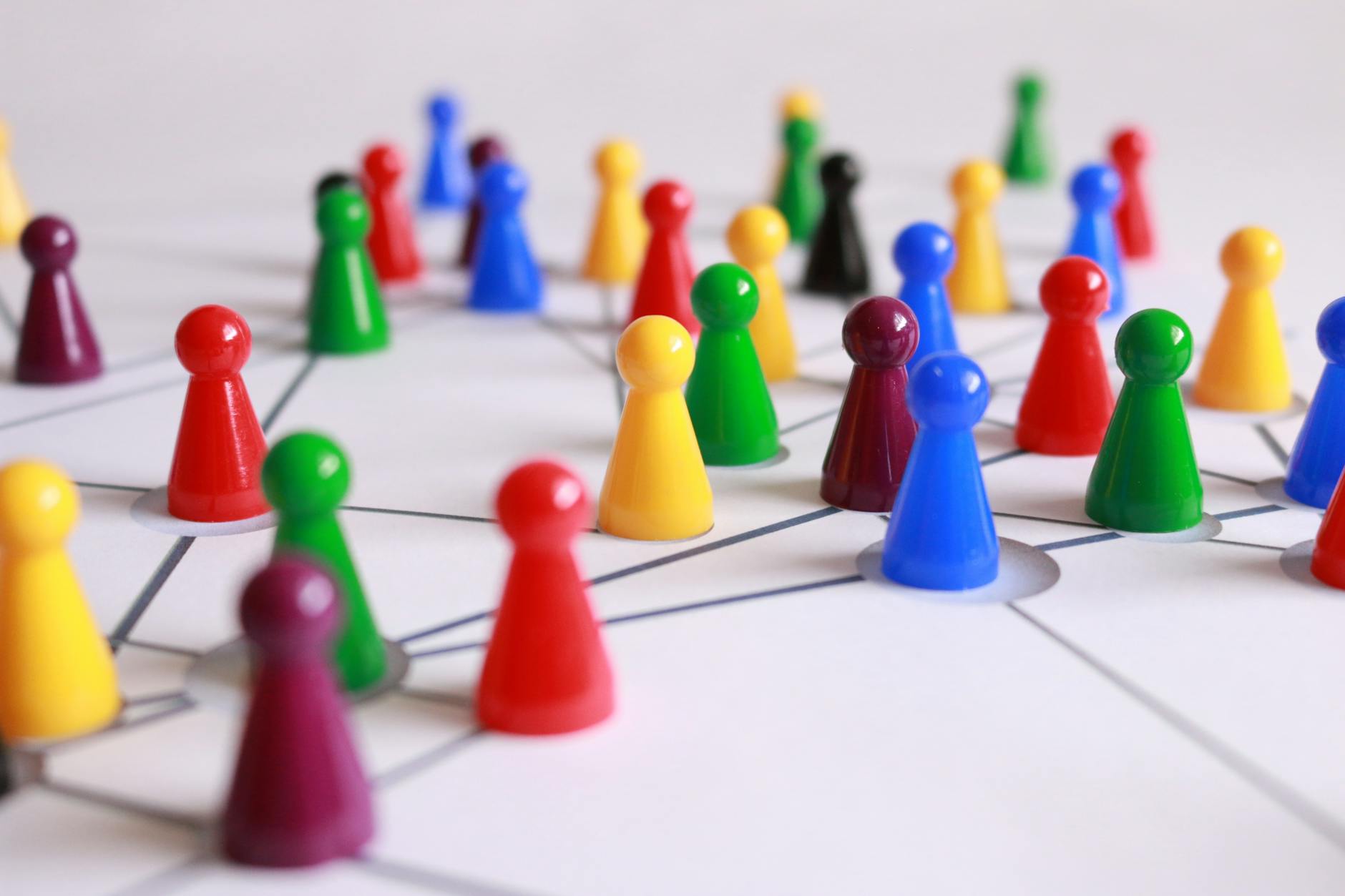
The 2009 book Connected by James Christakis and Nicholas Fowler details features of social networks. They pass information. They connect people. They can heal themselves.
And they are superorganisms, enabling humans to do things in networks that individuals alone cannot. Yes, social networks can lead to negative outcomes such as passing diseases along. This is how epidemics happen. But networks give people access to information, to relationships, to resources. In one famous study, the friends of friends – “weak ties” – provide more access to jobs. A community can do things through its social networks that an individual or a small group would not be able to.
Take any group of which you are a participant. The social network approach examines not the group or institution as an actor but the sets of relationships between people. In a family, there are different kinds of ties and different kinds of resources passed through the network. A network diagram of a workplace would look different, dependent on the size of the network, the density of the relationships, and the shape of those connections. A national society might be much too big to map out but the ways that people are connected can be surprisingly small if we consider nodes and bridging ties.
People and actors can have both bonding and bridging ties. Bonding ties are ones that tend to be close relationships that bring individuals together. Imagine close friends. All enduring groups need some level of this. Think of a religious congregations. There are often close connections at the center of this group that help anchor the organization. Religious congregations also have the capacity to create bridging ties. They can reach out in their communities, working neighbors or other congregations or other organizations. These ties can link together groups that might not otherwise interact. Some congregations might be really good at one of these two kinds of relationships: forming tight bonds that endure or linking together parts of society that can benefit from collaboration. Social networks overall give humans opportunities to thrive. It is in the building and maintaining of relationships that individuals can access what they need and larger groups can operate. To be human is to be part of networks that can empower people.
 Legally Sociable