“So goes Amazon/social media discourse/better schools/job growth/affordable housing, so goes the United States”

In 1953, the CEO of General Motors was in a congressional nomination hearing as he had been appointed by President Eisenhower to be Secretary of Defense. Did he see think that holding the government job would be a conflict of interest given his large holdings of GM stock?
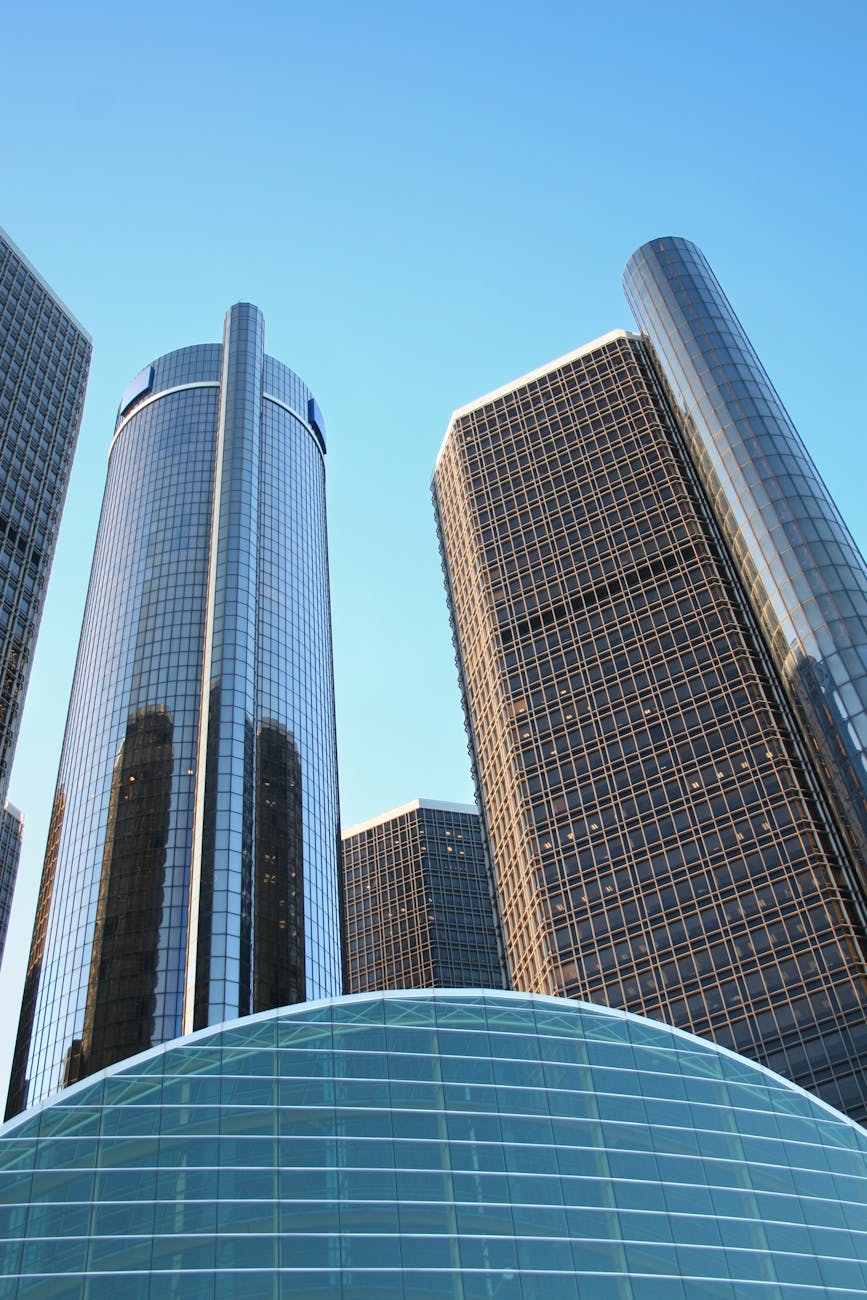
Photo by 500photos.com on Pexels.com

I cannot conceive of one because for years I thought what was good for our country was good for General Motors, and vice versa. The difference did not exist. Our company is too big. It goes with the welfare of the country. Our contribution to the Nation is quite considerable.

This quote ties the fate of one company to the fate of the country. Since 1953, this might fit numerous large corporations that employed many people and generated large revenues. Today, this might be Amazon or Walmart or Nvidia or other influential corporations.

At the same time, people in the United States focus on particular social issues that they think require attention. Address conversation and participation on social media and life would get better. Improve schools and education and future generations have a brighter future. Add more jobs in exciting industries and people will be excited. Provide decent or good housing at affordable prices and this can lead to other opportunities. The issue of the moment might have been different years ago and it could change in the future but there are always conversations about what should be done.

Both sets of statements are reductionistic. No single company determines the fate of the United States. One social issue could affect many yet other issues might have a broader reach or have larger effects.

Companies and social problems do evolve and change over time. A number of the companies that led the way in the United States decades ago are no more. Certain social issues vexed the country years ago but may have receded from view today or the effects were ameliorated.

In other words, the conversations of today may not be the most helpful if they limit focus to just one company or social problem and even broader conversations will change in the future. This does not mean that the conversations of now are not valuable; rather, we should seek to have a broad field of vision and a sense of the current scene even as we discuss specific firms and social concerns.

General Motor’s “Parade of Progress” bus tour

General Motors has had difficulty in recent years but at one point, GM was important and big enough to cast a vision for America’s future. In addition to the “Futurama” exhibit which featured an impressive highway system, GM also had a bus tour that gave Americans a glimpse of the future:

General Motors’ research Vice President Charles Kettering (Boss Ket) decided to take GM’s show on the road. Between 1936 and 1956, the company’s “Parade of Progress” toured the U.S., Canada, Mexico and Cuba, visiting hundreds of towns and showing millions how working examples of modern technology would transform their everyday lives.

Eight 30-foot, streamlined buses led the parade, six with walk-through exhibits, one with a stage and one carrying equipment, while nine tractor-trailers carried the remaining gear, and new models of GM cars followed. The red-and-white buses would pull into a small town, circle the wagons at the football field, and the buses would open like clams while electric floodlights rose on poles. A crew accompanied the parade and erected a tent that could accommodate up to 1,500 people for a free technology show.

The show was such a success that GM built 12 Futurliner buses in 1940, after the New York World’s Fair. The parade continued to tour until Pearl Harbor, after which it was disbanded and the buses stored in Ohio. They wouldn’t see the light of day for 12 years, until the “Parade of Progress” was revived in 1953, with 12 buses. But the world had changed. TV had stolen the parade’s thunder, and even though the show included new exhibits — Highways of Tomorrow, How a Jet Engine Works, Wonders of Stereo, Kitchen of Tomorrow and What is the Atom? — it was over by 1956.

It really does seem like a bygone era: a bus tour of America that would pull into a community and residents would come out to see the technology of the future. It is interesting that the article notes that the television was part of the demise of these bus tours. With the information the television provided plus the information available to anyone today through the Internet, who needs to check out a bus tour? At the same time, these experiences are quite different in that they are solitary and more passive. Additionally, I imagine there could be quite a crowd or energy that would build at these exhibitions. This would be a Durkheimian “collective effervescence” experience. What would be the equivalent today: people showing up at the Apple store to see the latest technological wizardry? But this sort of experience would be about a single or just a few digital devices and less about an exciting vision of the future. Is there any place these days that offers a comprehensive and positive view of the future?

I also wonder how much these GM exhibits helped push the narrative of scientific and technological progress that seemed to develop in the post-World War II United States.