Changes in gym spaces by gender and age

If gyms are places that can be segmented by gender and age, some of the older patterns may be changing:

Photo by Victor Freitas on Pexels.com

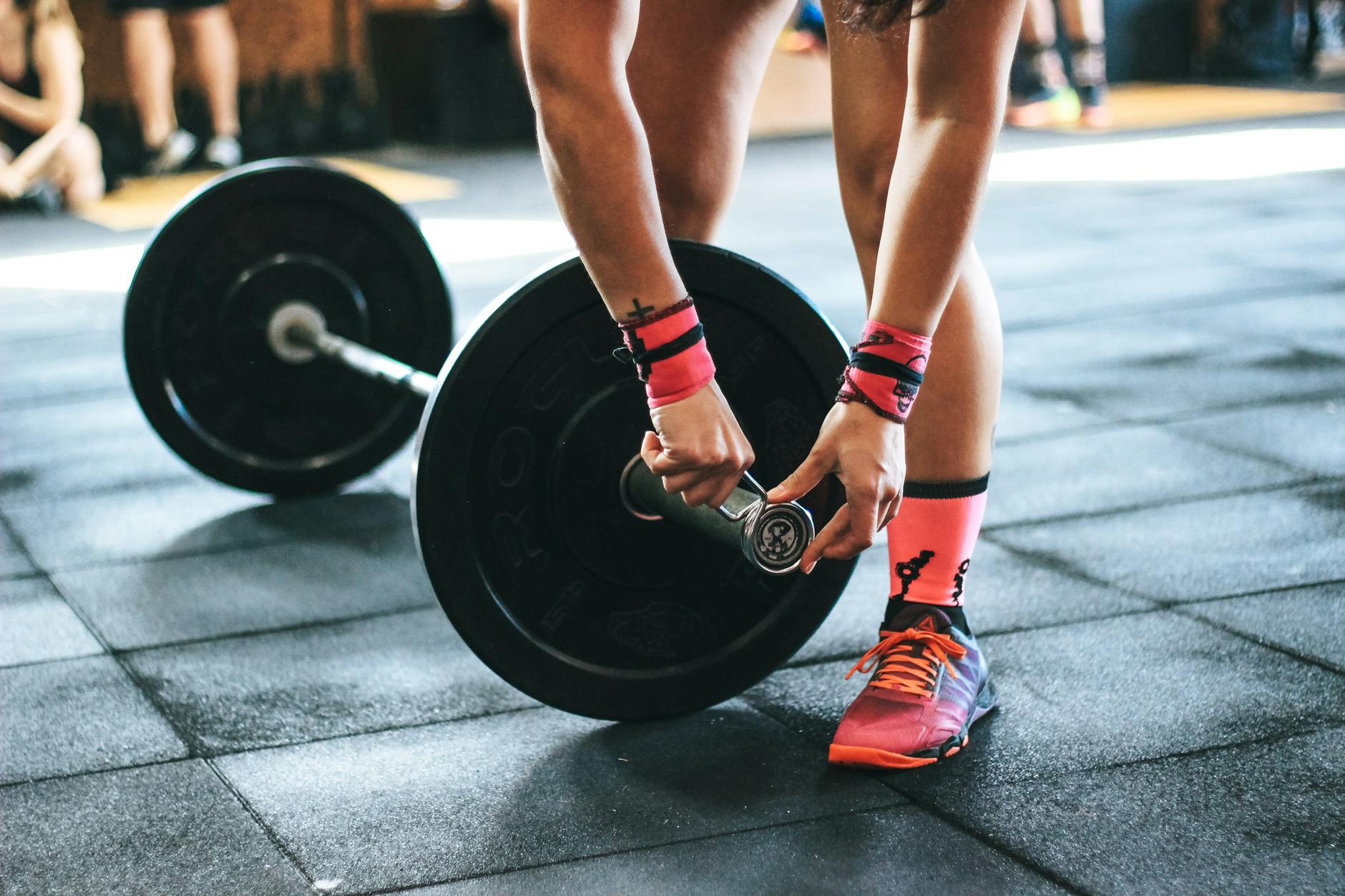
The message from Americans is simple: Jogging on a treadmill or sweating over a stationary bike in a room full of strangers is out; moving heavy objects is in. But, in a twist, it’s not muscle-bound men who are changing America’s workouts. It’s women and older Americans who’ve made gyms prioritize strength training. “More older people, more women, more young people, even, are lifting weights than ever before,” says fitness author and influencer Casey Johnston. “When I started lifting, there was still a lot of apprehension around it in terms of ‘it’s really macho, it’s too intense for most people.’”…

The current fixation is being triggered largely by social media. If the treadmill is dying, internet influencers are the killers. Open most apps, and the message is clear. For men, bulging biceps and broad shoulders. For women, toned arms and sculpted glutes. “Swole” is the marker of peak physical health…

The increasing number of women and older people getting into weightlifting has been a striking cultural change. Wiedenbach, the New York gym owner, recalls that gyms were more gender-segregated in the early 2000s. “Back then it was very much split: There were treadmills—those were for girls—and there were weights, and those were for guys. And never the two groups would meet,” he says. In those days women made up just 10% of his clientele; now it’s closer to 40%.

Older Americans are hitting the weight room more often too. “Everybody talks about longevity now, and having strength and having muscle mass is a key indicator in longevity,” says Noam Tamir, founder and CEO of TS Fitness, which offers small workout classes in Manhattan.

This highlights broad shifts across a lot of locations. What does this mean for:

  1. The day to day experience of gym-goers. How much has this changed users’ sense of their workouts? Their interactions? Their willingness to stick with that gym or change facilities?
  2. How spaces within the gym are constructed. It is one thing to swap out one set of equipment for another; how else (if at all) have the spaces changed?
  3. Have broader conceptions of gyms and who goes there changed? It might now be a different experience (see #1) but it could take a while for the general public to catch up with this. Where might people learn about gyms?
  4. Do these changes mean more people will exercise? Are gyms now regarded as more inclusive or welcoming or are there barriers to learning about using weights?

The morality of going to the gym

The adult life is often made of up little tasks that must be done to live: go to work, prepare and eat meals, do laundry, and various other activities. Perhaps there is another activity that must be added to this list: getting exercise and/or going to the gym.

“There seems to be a whole substitute morality, where your obligation is to go to the gym and not ask why,” says Mark Greif, a founding editor of the literary journal n+1 and the author of a widely discussed 2004 essay, “Against Exercise.” “If you don’t, you become a sort of villain of the culture.”

The message that perspiration is a gateway to, and reflection of, higher virtues is captured in health club slogans like ones used by the Equinox chain over recent years: “Results aren’t always measured in pounds and inches.” “My body. My biography.” “It’s not fitness. It’s life.” The same idea is encoded in the language of personal improvement. A “new you” usually means a trimmer, tauter version, not someone who has learned to speak Mandarin or picked up woodworking skills.

And the pectoral is political. The current president and his predecessor have made ostentatious points of their commitments to fitness routines. Whatever the differences in their ideologies, intellects and work habits, George W. Bush and Barack Obama both let voters know that they carve out time almost daily for cardio or weights or both. And while that devotion could be seen as evidence of distraction (Bush) or vanity (Bush and Obama), each politician safely counted on a sunnier takeaway. In this country, at this time, steadiness of exercise signals sturdiness of temperament, and physical leanness connotes mental toughness…

To be unfit is to be unfit: a villain of the culture, indeed.

An interesting commentary. More broadly, these ideas seemed tied to American ideals of youth and health. We like politicians and athletes and movie stars who are physical specimens. We argue that disciplining the body is indicative of discipline in other areas of life. Being healthy is not just being an appropriate weight or eating right or limiting stress: it should include muscles and toning.

Some questions follow:

1. Do other cultures have similar ideas or are we unusual in this regard?

2. When or where did the emphasis on muscles, beyond just “being fit,” arise?

3. For the average American, how much of this judgment regarding exercise and going to the gym comes from people around them versus comparing themselves to media produced images?

4. How much have professional sports contributed to this? If you look at athletes in the 1950s and 1960s, they did not train as much. Today, being an athlete is a full-time, full-year job in order to stay in shape.