Flipping mobile homes for profit

Fixing up mobile homes offers an opportunity for some to make money:
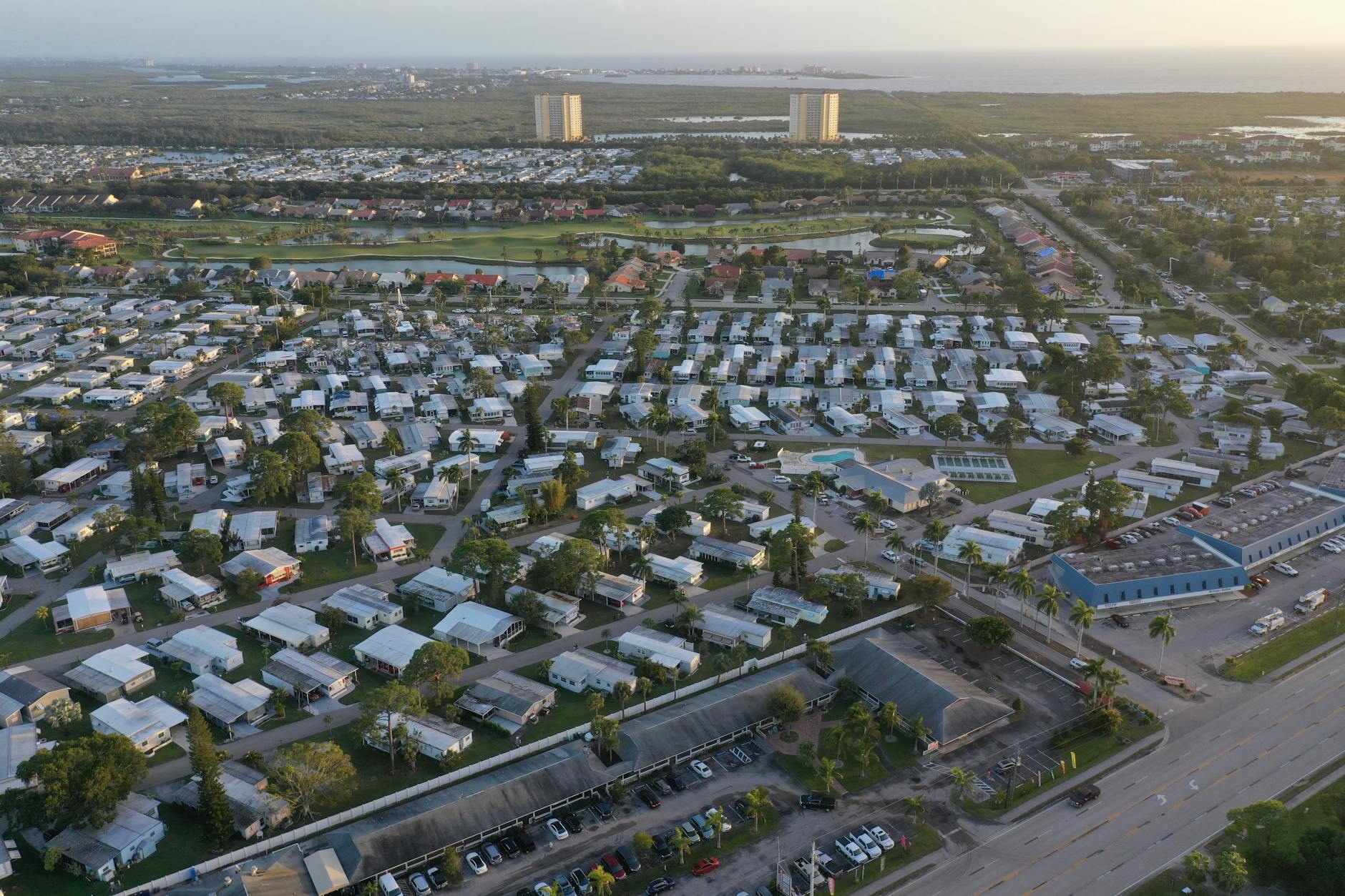
Photo by Nick Adams on Pexels.com

This is mobile home investing, an unsexy, little-known sector that happens to be recession-proof, meeting a nearly bottomless demand, and earning some of the best returns in the housing industry. Its low price of entry is allowing an entirely new crop of entrepreneur — many of them Black, as the Sellerses are, or coming from very modest backgrounds. (A 2021 survey by the National Association of Real Estate Investment Managers found that 73 percent of industry workers are white males.) With housing costs rising across America, many mobile home flippers are finding the opportunities so plentiful that they’re now training other wannabe real estate moguls in the practice, earning a significant chunk of their income from mentorships and tutorials that help more people like them enter the field.

While they don’t get a lot of attention, mobile homes — “manufactured housing” per marketing and policy wonks, or “trailers” in other circles — are the country’s biggest source of unsubsidized low-income housing, providing shelter to 21 million Americans. As the nation’s housing crisis grows, they’re becoming increasingly attractive to people who can’t afford a traditional site-built home. Between 2014 and 2024, the number of new manufactured homes shipped across the country increased by over 60%, according to census data…

The work does require a lot of elbow grease. Some units just need a good cleaning and a fresh coat of paint; others have rotted subflooring, old insulation, and broken windows that all need replacing. After that, the investor will have to market and sell them on Facebook Marketplace or Craigslist, either outright to a buyer or wholesaler, or through seller financing. Investors say the downsides of the mobile homes business aren’t much different from those of other real estate fields: homes that turn out to be in worse condition than the buyers had thought, difficult tenants, unscrupulous contractors.

The sector’s high returns are often characterized by desperation. Facing a lost spouse or job or some other hardship, sellers are often willing to dispose of a home cheaply because they need the quick cash. Buyers are hungry for something, anything, they can afford. They aren’t looking to build equity; they’re seeking shelter, at a time when both conventional homeownership and rentals have soared out of reach for many. Mobile homes exist in an alternate reality, one where a home purchase can be completed in a day without the help of attorneys or appraisers, where the cost of a used unit floats depending on its actual value to the buyer and seller.

An interesting look at the intersection of flipping culture – who doesn’t want to make money on housing? – plus a big need for affordable or cheaper housing across the United States.

Several questions come to mind:

  1. At what point do the returns on flipping mobile homes limit investor interest?
  2. How many people might be priced out of mobile homes because of flipping?
  3. Does any of this help raise the status of mobile homes which tend to have a stigma in many places?
  4. Would we ever see an HGTV show on flipping mobile homes? (Maybe not given their audience.)

Investors buying about 20% of homes in the United States

A story about rising home prices in small town America highlights the role of investors buying property:

Photo by Lukas on Pexels.com

Local buyers bid against one another as well as against investors who now comprise about a fifth of annual home sales nationally. Online platforms such as BiggerPockets and Fundrise make it easier for out-of-town investors to buy real estate in smaller cities across the U.S., said John Burns of California-based John Burns Real Estate Consulting.

Often, Mr. Burns said, “the cash flows are better in the Tulsas and Allentowns of the world” for those seeking to rent out properties. In the fourth quarter of 2020, nearly a fifth of homes sold in the Allentown area were bought by investors, according to Mr. Burns’s data.

While much attention is directed to hot real estate markets in major metro areas – with a lot of attention for the most expensive like Manhattan, San Francisco, Los Angeles, and others – this hints at a different dynamic. In smaller town, there is not a big supply of new housing. Thus, investors can purchase homes and turn them into rental properties. Without large influxes of new residences, these rental units can bring in good money as buyers look to move up within an unchanging local supply.

If there is such demand and limited supplies of new homes in places like Bethlehem, Pennsylvania, the focus of this article, one possible future is a business opportunity for local or national builders who could come in and provide new apartments or single-family homes. While the community may not be growing much in terms of population, housing stocks do need replenishing and what people desire over time changes. Could building in Bethlehem generate the kinds of profits builders are looking or are more of them chasing even better profit opportunities in hotter markets with faster-growing populations?

If investors are making a significant number of these purchases, could communities respond in ways that help retain opportunities for local residents as opposed to far-off companies? Could they form local investment funds or cooperatives that then only sell or rent the homes at reasonable rates to local residents? This could be an affordable housing issue in many communities and even if local actors generated little profit in the transactions, they could help insure a supply of human capital.

Foreign investment in Chicago real estate reaches record high

Chicago was an appealing city for international real estate investors in 2015:

Chicago’s continuing rise to prominence on the world stage was further boosted by the latest figures indicating that 2015 will not only be a banner year for new construction and hotel occupancy, but a record-breaking period for foreign real estate investment as well. 2015 saw $3.27 billion of new overseas capital flow into the Windy City, according to recently published report by Crain’s Chicago Business, a figure that shatters the previous record of $2.18 billion set in 2013. Citing data from New York-based Real Capital Analytics, Crain’s reports that foreign buyers accounted for roughly 16 percent of Chicago’s total $20.2 billion of real estate sales this year. Chicago now ranks as the fourth largest market in the nation for foreign investment — up from last year’s eighth place — and trails behind only New York, Los Angeles, and Washington D.C.

These positive figures are attributed to several factors. Oversaturation of traditionally stronger coastal markets has driven up prices to the point where commercial investors are often finding more lucrative opportunities in Chicago. Chicago is seen as a somewhat riskier choice for firms taking on commercial properties due to the relative ease at which new buildings can be added and tenants relocated — similar to CNA’s announcement earlier this week — but foreign buyers willing to take on this risk have enjoyed greater returns. In 2015, investment in Chicago saw first-year rates of return (“capitalization rates” for you finance-minded folks) averaging 5.1 percent, outperforming the 4.1 and 4.7 percent yearly yields of Manhattan and San Francisco, respectively.

While this sounds like good news (more capital flowing into the city and the potential for these investments to lead to other deals), I could imagine two downsides:

  1. This recently happened in Chicago, but it wasn’t the first city of choice for international investors. It is suggested here that investors are now turning to Chicago because the more desirable markets – NYC, LA – are oversaturated. So, this may confirm that Chicago is still the third city – or maybe even the fourth city if you include Washington, D.C. This may just feed the anxiety some in Chicago have of their place on the world stage.
  2. Even as investment from outsiders is viewed as good, would investment from foreigners be viewed as positive by all in Chicago? Americans occasionally have periods of fear that people from other countries are taking over and Chicago is a more parochial/less cosmopolitan market than some on the coasts. Foreign investment may be good but do Chicagoans like the idea that others are benefiting greatly off the Midwest?

How Wal-Mart plans to regain its edge

Here is an interesting summary of Wal-Mart’s corporate plans for the near future. The headline of the article says it all: “Wal-Mart, humbled king of retail, plots comeback.”

Three years ago, Wal-Mart ruled for convenience, selection and price. But today it is losing customers and revenue, and smarting from decisions that backfired.

Wal-Mart is not in danger of ceding its place atop the retail world. But competitors have begun to chip away at its dominance.

Over the last year, revenue at Wal-Mart stores open at least a year has fallen by an average 0.75 percent each quarter, according to the International Council of Shopping Centers. Revenue rose by an average of nearly 1.7 percent at Target, 8 percent at Costco and 5.9 percent at Family Dollar.

To fight back, Wal-Mart is again emphasizing low prices and adding back thousands of products it had culled in an overzealous bid to clean up stores. It’s also plotting an expansion into cities, even neighborhoods where others dare not go.

Even as the article talks about stagnant or slightly declining sales at existing stores plus some questionable decisions (like reducing the number of products on the shelves), the main issue seems to be perceptions. On the business side, Wal-Mart has been challenged, particularly on the lower end by dollar stores. But business has not tanked and Wal-Mart still thinks it has new markets to tap in the United States, particularly in urban areas. What do investors and shareholders think – is it just about stronger growth right now? On the public image side, stores like Target have offered an enticing alternative. And yet Wal-Mart has changed the layout and design of its stores to look more like Target and this seems to have helped. Ultimately, the article says Target’s revenues are still one-sixth of that of Wal-Mart.

It sounds like Wal-Mart thinks they need to make some changes. There is no guarantee that any business, even a behemoth like Wal-Mart, will continue to expand or even be profitable. And just by virtue of its size, Wal-Mart’s actions will continue to be scrutinized.