Jonathan Franzen on “the smell of infrastructure”

In his second novel, Strong Motion, Jonathan Franzen describes “the smell of infrastructure.” Here is the description:

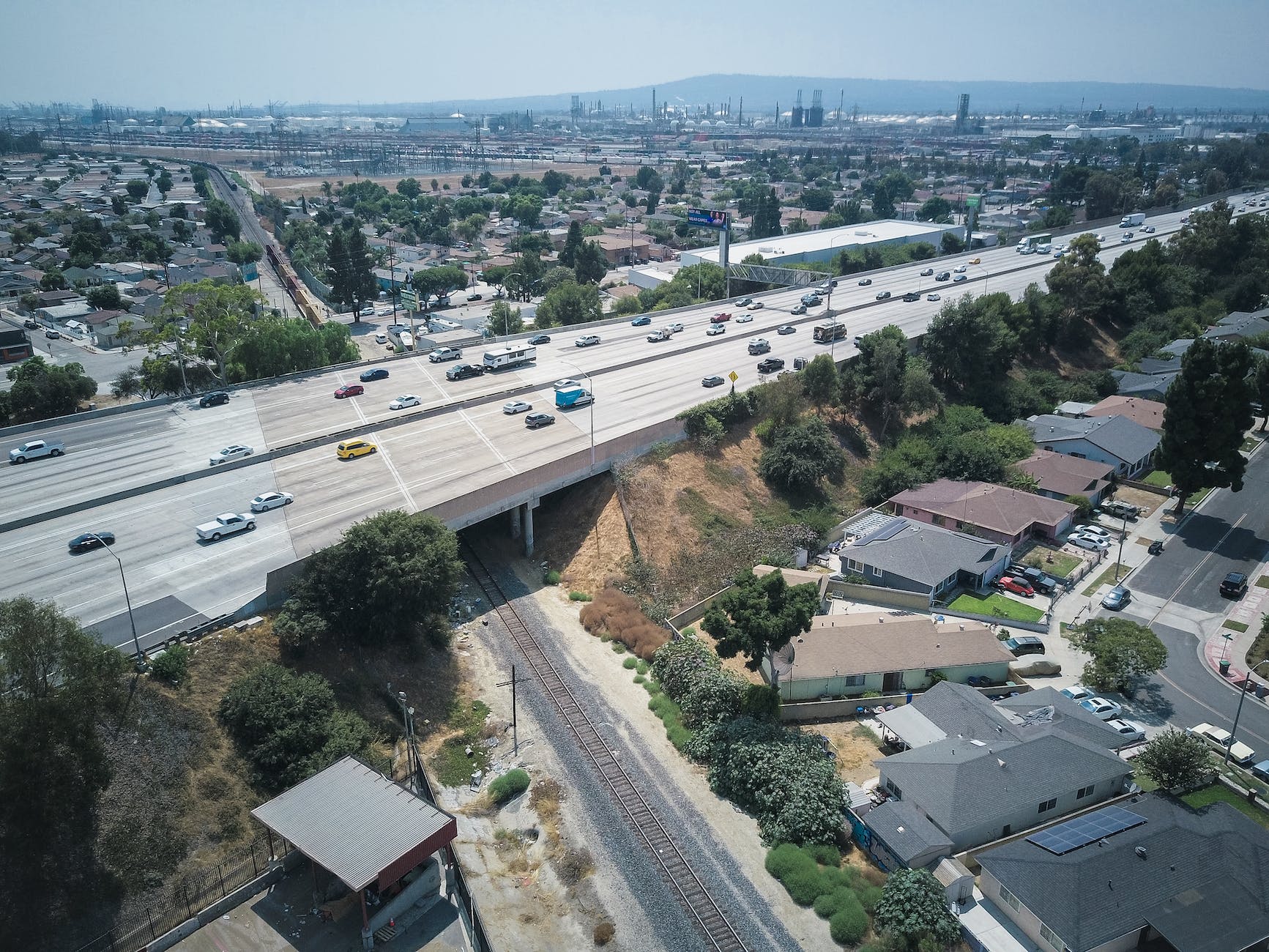
Photo by Brandon Benedict on Pexels.com

There’s a specific damp and melancholy ancient smell that comes out in Boston after sunset, when the weather is cool and windless. Convection skims it off the ecologically disrupted water of the Mystic and the Charles and the lakes. The shuttered mills and mothballed plants in Waltham leak it. It’s the breath from the mouths of old tunnels, the spirit rising from piles of soot-dulled glass and the ballast of old railbeds, from all the silent places where cast iron has been rusting, concrete turning friable and rotten like inorganic Roquefort, petroleum distillates seeping back into the earth. In a city where there is no land that has not been changed, this is the smell that has come to be primordial, the smell of the nature that has taken nature’s place. Flowers still bloom, mown grass and falling leaves and fresh snow still alter the air periodically. But their smells are superimposed; sentimental; younger than those patiently outlasting emanations from the undersides of bridges and the rubble of a thousand embankments, the creosoted piers in oil-slocked waterways, the sheets of Globe and Herald wrapped around furry rocks in drainage creeks, and the inside of every blackened metal box still extant on deserted right-of-way, purpose and tokens of ownership effaced by weather, keyhole plugged by corrosion: the smell of infrastructure.

It was out in force when Louis and Renée came up Dartmouth Street from the Green Line stop at Copley Square.

I feel I may have experienced a similar smell before in the city in similar conditions: in the big city in the evening with a bit of dampness. The smell from the roads, buildings, mass transit, and built environment is a particular one. Would I chalk it up to infrastructure? Does this require relatively few people around so that the smell of infrastructure is accentuated?

But, this might not be the exact smell of Boston. All cities have some unique features and histories that contribute to a specific milieu, including the smell. Trying to describe that in words is a difficult task and not one that I would want to take on.

One approach to the broken dreams of the American suburbs: realistic expectations

After reading Jonathan Franzen’s latest novel Crossroads, I have a not-original answer to the problem of the brokenness lurking behind the promise of the American Dream in the American suburbs: realistic expectations about what life in the suburbs is like.

Photo by Lara Jameson on Pexels.com

Much is expected of the American suburbs and Americans love them for multiple reasons. They are the land of opportunity. Home to the middle-class and the hard-working. A symbol of success. A setting meant to guarantee success to future generations. The land of private single-family homes where owners can control their own destiny.

What if the suburbs could never deliver on all of these promises? What if it was only available to some? What if the humans who tried to pursue these goals still faced difficulties and heartbreak? What if the suburbs covered up a whole host of issues in American society?

Numerous novels, films, songs, and creative works have addressed these questions over the last century. They have clearly showed the cracks in the suburban facade, the tragedies masked by the suburban sprawl.

But, these works often struggle to propose a solution. Get rid of the suburbs? Do not move to them in the first place? Stop promoting them?

If anything, these works serve as a cautionary tale: the suburbs may not be as impressive as they are made out to be. They are home to the problems all humans face as well as have their own particular issues due to their histories and current realities.

At the same time, through policy and ideology, millions of Americans have moved to the suburbs. Balancing the dire stories told of life falling apart in the suburbs alongside the narratives of success and comfort in the suburbs, is there a more realistic narrative available about what suburban life is?

Suburban fiction and the unhappy white suburban families of Jonathan Franzen

There exists a common fictional narrative involving the American suburbs: the white nuclear family that looks successful from the outside – home, children who achieve, high-status communities, good jobs, well-educated, etc. – is internally falling apart. The suburban veneer is thin; when it is scratched away or falls off, the white suburban family is hurting. Such a story has been told in various forms for decades.

Photo by Kindel Media on Pexels.com

I have recently read several of the big novels of Jonathan Franzen. In both The Corrections and Freedom, the various members of white suburban families are not doing well and neither is the family as a whole. He switches perspectives from different family members (and some connected characters) who are experiencing both their own personal struggles and ones connected to their upbringing and those ongoing ties. The suburban homes are not happy ones; they are settings for unresolved conflicts, anger, and a sense that life should have turned out better.

Is this the same kind of suburban fiction that has been tread many times before? The settings have changed a bit – the suburbs of the 2000s are not exactly the same as the new mass produced suburbs of the 1950s, there is new technology available, etc. – and Franzen has a particular style. However, the stories felt similar to others in key ways.

(Disclaimer: I have not read all of Franzen’s work or his most recent novel set in the Chicago suburbs.)