The suburban contexts of James Dobson and Focus on the Family

In reading multiple obituaries upon the passing of Dr. James Dobson, I was interested to read about where he lived and where his ministry operated. In my book Sanctifying Suburbia, I examine how evangelicals embraced the suburbs, and I discussed in Chapter 6 two of the evangelical centers where Dobson spent much of his adult life: the suburbs east of Los Angeles and Colorado Springs, Colorado. But his suburban experiences also predated the professional career for which he became know. Here is what the New York Times reported:
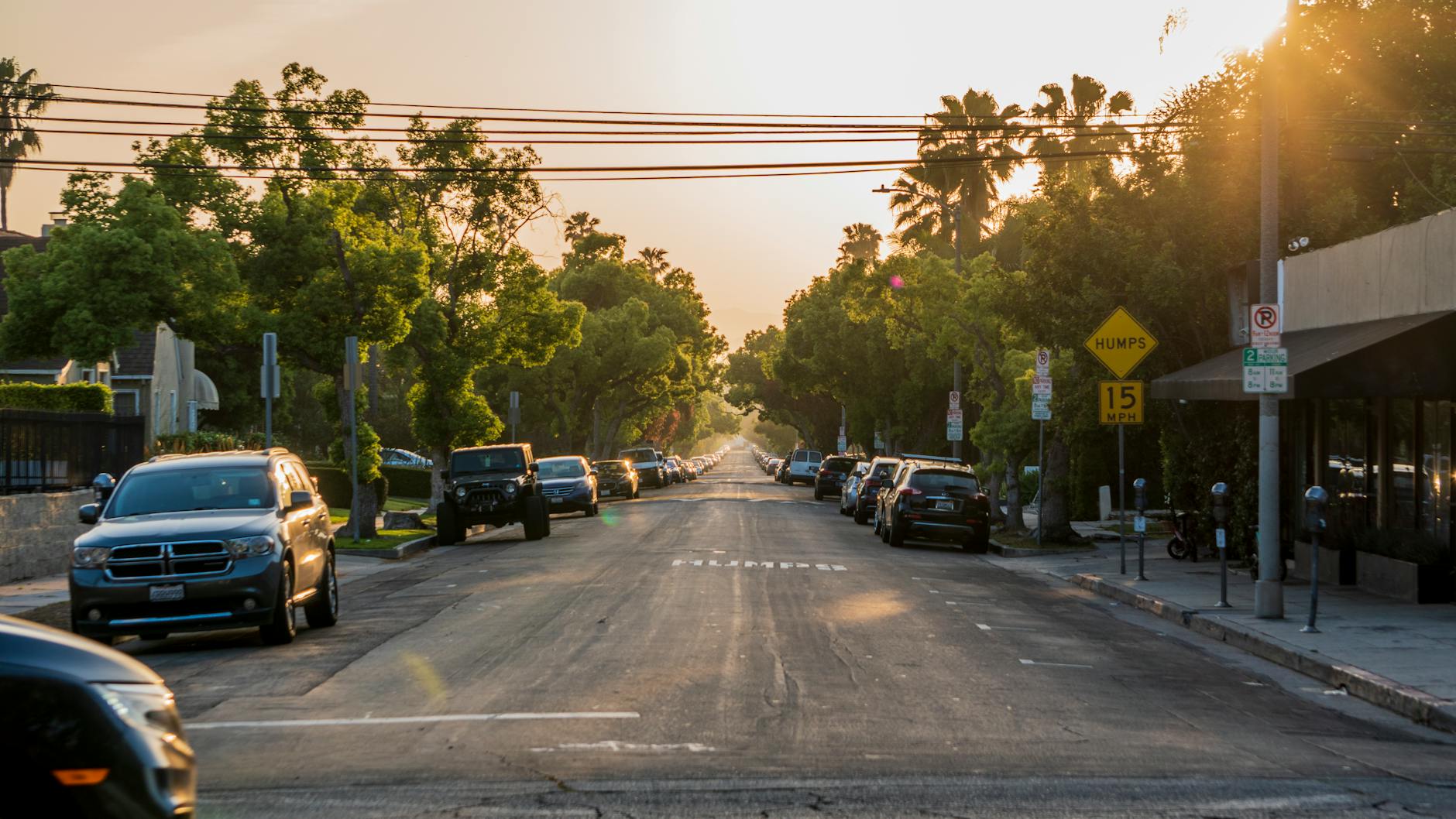
Photo by Jake Heinemann on Pexels.com

James Clayton Dobson Jr. was born in Shreveport, La., on April 21, 1936, the only child of James and Myrtle (Dillingham) Dobson.

He was the son, grandson and great-grandson of Church of the Nazarene ministers. The family avoided dancing and movies. His father, who never attended college, was a traveling evangelist, primarily in the Southwest, and young James lived mostly with his mother in Bethany, Okla., and graduated from San Benito High School, in San Benito, Texas, in 1954.

He received a bachelor’s degree in psychology in 1958 from Pasadena College (now Point Loma Nazarene University) and a master’s degree in 1962 from the University of Southern California.

In 1960, he married his college sweetheart, Shirley Deere. She survives him, as do his son; a daughter, Danae Dobson; and two grandchildren.

After four years as a teacher and counselor at high schools in Hacienda Heights and Covina, Calif., he earned a doctorate in child development in 1967 from U.S.C. He was then on the faculty of the Keck School of Medicine for 14 years and simultaneously on the staff of Children’s Hospital.

Looking more closely at these early locations shows some connections to suburbs. Shreveport is a small big city with over 76,000 residents in 1930. Bethany is a suburb west of Oklahoma City created by Nazarene founders that grew from 485 residents in 1920 to 22,694 residents in 1970. San Benito is a small community within the Browsnville-Harlingen-Raymondville combined statistical area today that is not far from the Mexico border. It had between roughly between 13,000 and 16,000 residents in the 1950s while Brownsville at that point had between 35,000 and 48,000 residents.

Dobson went to college at Pasadena College. This college started as Pacific Bible College in Los Angeles. In 1909 it moved to purchased land in Pasadena, a suburb east of Los Angeles. When Dobson was in college, the suburb was finishing a growth spurt: it had grown from 9,117 residents in 1900 to 116,407 residents in 1960. In the early 1980s, a proposed move of Pasadena College to Santa Ana, another suburb southeast of Los Angeles in Orange County, failed and the college occupied a former college campus in San Diego (and became known as Point Loma).

His first jobs involved teaching in two suburbs east of Los Angeles. Hacienda Heights is an unincorporated community that had 35,969 residents in 1970. Covina is also in the San Gabriel Valley and its population exploded in the postwar era, expanding from 3,956 residents in 1950 to 30,395 in 1970.

Without closer study, it is hard to know exactly how these suburban experiences shaped Dobson’s views and work. But going to school and starting work in a hotbed of growing evangelicalism in the post war era – suburban Los Angeles – plus his own experiences in small communities outside bigger cities echo broader evangelical patterns. Emphasizing nuclear family life and conservative political values also aligns with reasons evangelicals could embrace suburban life.
Brian Wilson and suburban music

The recently deceased Brian Wilson was from the suburbs of Los Angeles and wrote music about suburban lifestyles:

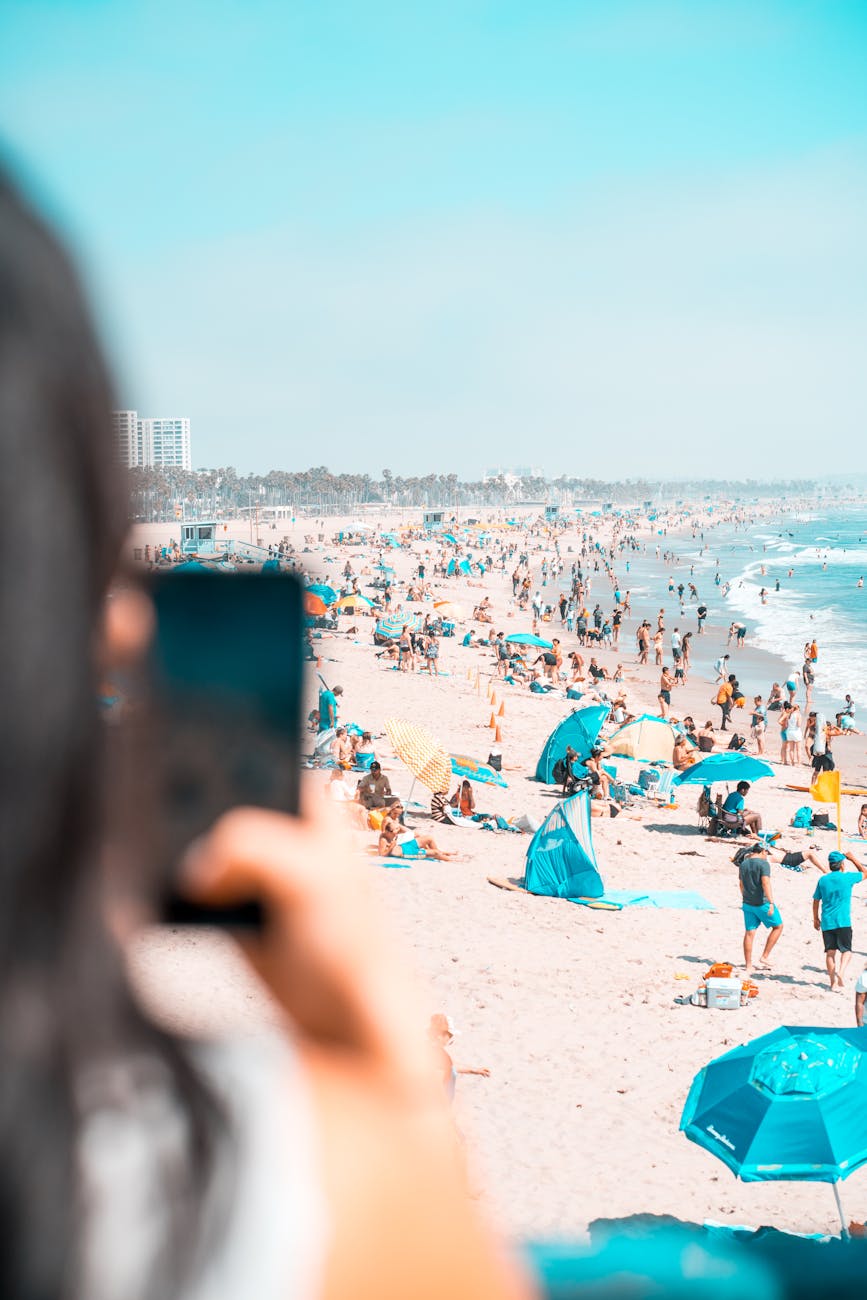
Photo by Alex Hussein on Pexels.com

Wilson’s legacy includes dozens of hit singles with the Beach Boys, including three Number One singles (“I Get Around,” “Help Me, Rhonda,” and “Good Vibrations”). In the 1960s, the Beach Boys were not only the most successful American band, but they also jockeyed for global preeminence with the Beatles. And on albums such as Pet Sounds, Wilson’s lavish, orchestral production techniques dramatically expanded the sonic palette of rock & roll and showed how the recording studio could be an instrument by itself.

Born June 20, 1942, Brian Wilson grew up in Hawthorne, California, a modest town next to the Los Angeles Airport. Brian was the eldest of three brothers; his younger brothers were Dennis and Carl. Their father, Murry, was an aspiring songwriter and a tyrant. “Although he saw himself as a loving father who guided his brood with a firm hand, he abused us psychologically and physically, creating wounds that never healed,” Wilson wrote in his 1991 autobiography, Wouldn’t It Be Nice: My Own Story.

Wilson grew up playing sports and obsessing over music, teaching his brothers to harmonize with him. Music was his sustenance and his solace, he said: “Early on, I learned that when I tuned the world out, I was able to tune in a mysterious, God-given music. It was my gift, and it allowed me to interpret and understand emotions I couldn’t articulate.”

In 1961, Brian, Dennis, and Carl formed a band with their cousin Mike Love and their friend Al Jardine, managed by Murry Wilson; Brian played bass, took many of the lead vocals, and wrote the songs. Signed to Capitol Records and named the Beach Boys, they started to roll out hits like convertible Thunderbirds coming off an assembly line: “Surfin’ U.S.A.” (with music borrowed from Chuck Berry’s “Sweet Little Sixteen”), “Surfer Girl,” “Be True to Your School,” “Fun, Fun, Fun.” Those Brian Wilson compositions all sounded like insanely catchy jingles for the California teenage lifestyle — surfboards, hamburger stands, pep rallies — but on the flip side of the good times was a real sense of melancholy. Sometimes that was apparent in the lyrics — the lonesome “In My Room,” for example — and sometimes it was expressed nonverbally, with the Beach Boys’ heartbreaking multipart harmonies.

Two connections to the suburbs to note:

  1. Hawthorne, California was a small community in the early 1940s – over 8,000 residents – southwest of downtown Los Angeles and a few miles from the beach. Today, the community houses nearly 90,000 people. The suburb was home to a number of aerospace companies over the years and Mattel was started there in 1945. It grew as the sprawling Los Angeles area grew in the postwar era.
  2. Many of the songs of the The Beach Boys reflect features of suburban life, particularly for teenagers. Numerous early songs discuss driving. Los Angeles became a driving capital in the postwar era and Hawthorne is bordered by multiple interstates. A teenager driving in the early 1960s could easily access the beach, fast roads, fast food, shopping malls, and new subdivisions and communities. Do this all in the sunshine and you might be regularly going in “American Dream mode.” There is also the theme of family. The group includes Wilson’s two brothers and his cousin. Wilson writes and sings about relationships. In the suburbia of the 1950s and 1960s, nuclear families were emphasized. The Brady Bunch, set not that far from Hawthorne, purported to show wholesome family life. That the group and songs involved family life, even amid clear themes of teenager individualism, is not surprising given the suburban context.

Bonus note about the Chicago area: Wilson lived in suburban St. Charles for a few years and recorded an album in his home basement:

Thomas and Wilson met four years ago in Nashville when the producer was recording Stars and Stripes, a country tribute to the Beach Boys. They are an unlikely pair — Wilson the fragile artist and Thomas the beefy Midwesterner who wears cowboy boots and a mullet haircut. But in 1996, their wives bought sprawling homes next to each other in the rolling countryside of St. Charles, Illinois, and a studio was installed in Wilson’s basement to record Imagination.

The Wilsons chose St. Charles almost by chance. “Joe and Brian were in the studio in Chicago one day, so Chris [Thomas’ wife] and I went shopping, because they were looking for a house,” explains Melinda, 51, sitting with Brian in a small, comfortable room off the studio in St. Charles. “We saw this place with a basement that was unfinished, and we thought, ‘Why not?’

“It’s good to get out somewhere, away from everything, where you can work,” she says. “It doesn’t matter about the weather, doesn’t matter about traffic. If Brian doesn’t want to work, he just goes upstairs, and when he feels like it, he comes down. Most artists are not people who can do a nine-to-five trip.”…

Later, over dinner, Wilson feels differently, and he admits that he misses L.A.: “It’s home, where I’ve always recorded, and there’s just something about the vibe there. I like the L.A. vibe.”

After living in St. Charles, Wilson moved back to Los Angeles.