
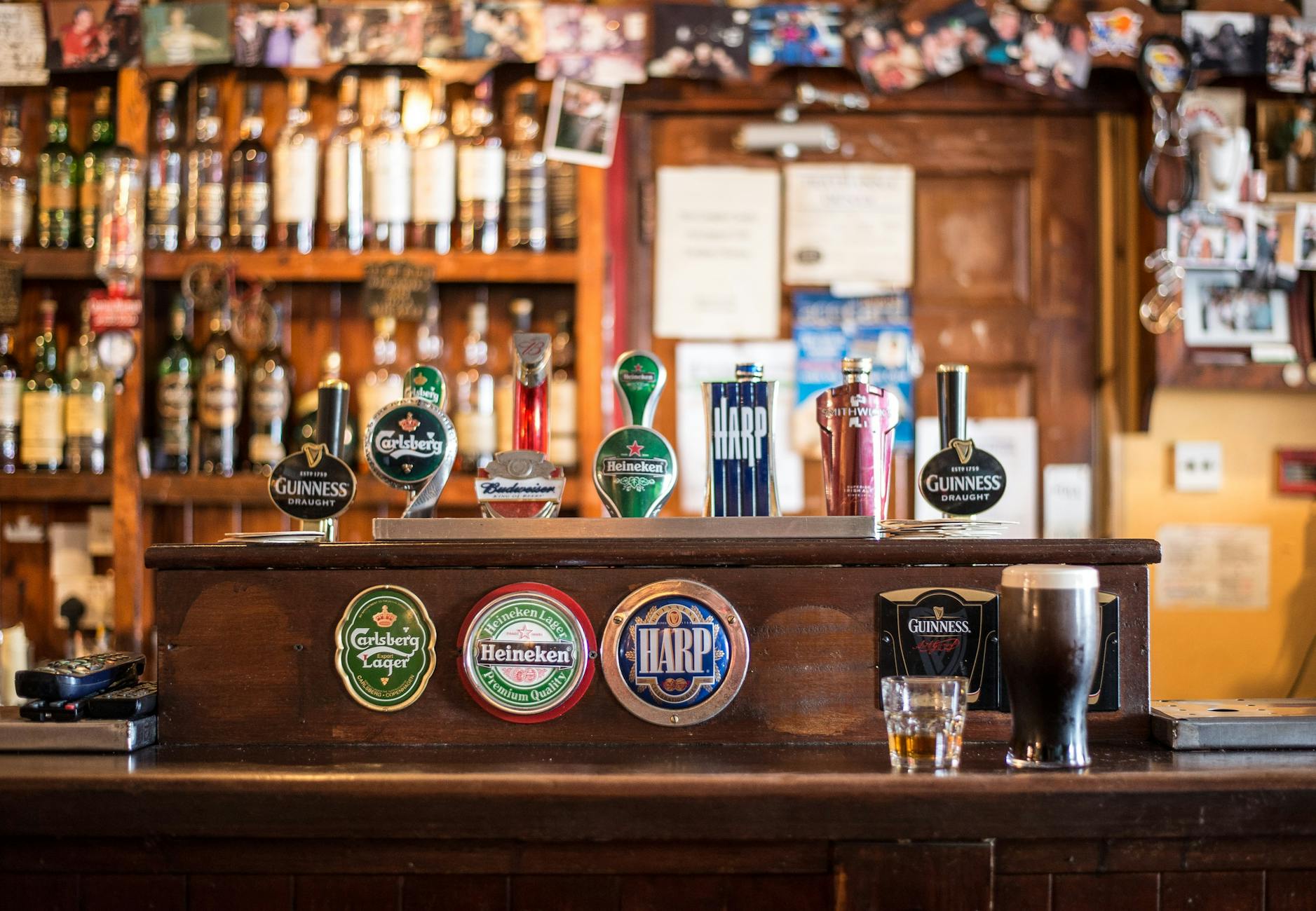
In 1986, Kitty O’Shea’s opened on the ground level of the Chicago Hilton with the mission of creating an “authentic Irish pub experience” in downtown Chicago. Its owners paid careful attention to detail, traveling to Dublin to research the look and feel of some of its treasured pubs. They flew in Irish bartenders with authentic brogues and offered nightly Irish entertainment. It quickly became the most successful Hilton hotel restaurant in the world, according to news reports…
Chief among them is the Irish Pub Concept, creators of the Fadó franchise. They offer consulting and resources for prospective pub owners, with several templates to choose from (including Celtic, English and country-style bars). The company says it helped launch upwards of 6,500 Irish pubs across the world. They provide everything — down to the brick-a-brack and employee training manuals.
These mass-produced Irish pubs have been criticized for offering a caricaturized, Disneyfied version of Irish culture — an Irish “pub in a box,” if you will. But they are also hugely popular.
Chicago still has its share of Irish pubs that grew organically and are owned and operated by Irish emigrants and their descendants. They include Shinnick’s Pub, which has been in Bridgeport for 80 years; Chief O’Neill’s, named in honor of an Irish-born Chicago police chief and opened by Irish emigrants in the ’90s; and the Fifth Province in the Irish-American Heritage Center. These places didn’t need to consult anyone on authenticity. And they continue to draw Irish emigrants, locals and people like me — the descendants of those early arrivals.
Presumably, some of these locations serve as “third places,” settings where people can go between work and home to socialize, eat, and talk. Sociologists and others have noted that Americans have relatively few places like this and this limits social interaction and civic engagement.
But other locations may serve more like consumer spaces where people visit, enjoy, and leave having had a good time. There are plenty of these in American communities where people seek out a particular experience they like with less concern for community-building and longer-term relationships.
Could online or virtual spaces ever replicate these settings? I am skeptical. Could online or virtual spaces drive people back to pubs and other gathering spots to converse and interact in person with other humans? Maybe.
 Legally Sociable