
As more Americans eschew religion, they can search for meaning and community elsewhere. This includes exercising and moving with others:
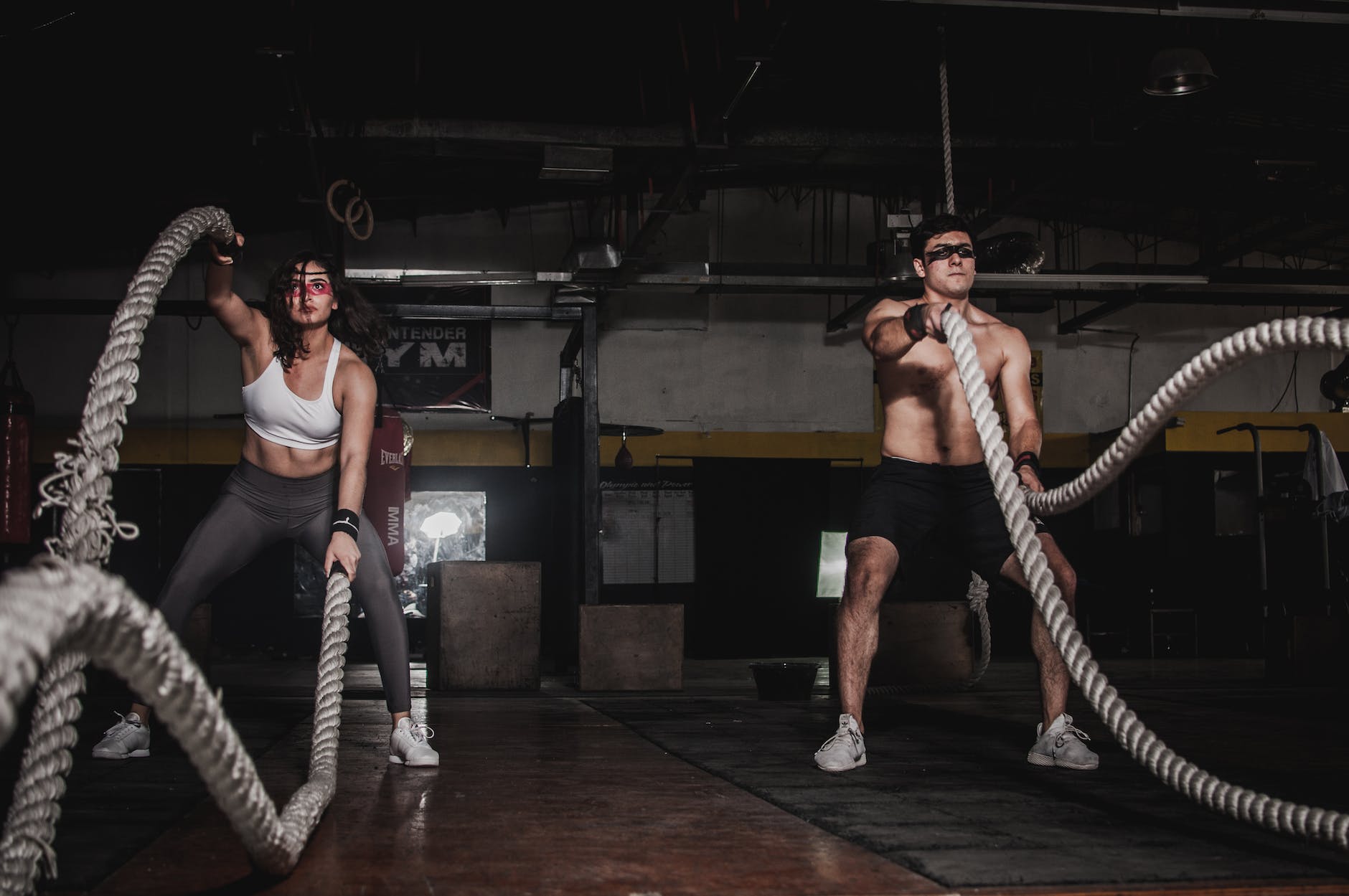
Some readers mentioned fandom as a bonding mechanism — World Cup enthusiasts and participants in fantasy football leagues, for instance, are creating ongoing relationships. But mostly I heard from people who bonded through athletic activities. Some talked about clubs that formed organically in their neighborhoods or towns, like that Colorado hiking group. But many who answered the questionnaire I launched in April about moving away from organized religion talked about replacing their weekend worship with SoulCycle, CrossFit or Orangetheory, and finding friends and even some spiritual solace in those activities. (In case you’re wondering, I’m an Orangetheorist and a SoulCycle dropout, though I can’t say I’ve ever felt a metaphysical connection to either one.)…
Casper ter Kuile, the author of “The Power of Ritual: Turning Everyday Activities Into Soulful Practices,” studied CrossFit and SoulCycle when he was a student at Harvard Divinity School, and told me that he observed some of the “mutuality” that Johnson experienced when he talked to CrossFit devotees. CrossFitters write down their fitness goals on a whiteboard and, whether a goal is comparatively big or small, “goals are honored with the same amount of dignity and celebration.” There’s a feeling that you have the agency to meet your goals and that the community is also involved in your success. There’s also a lot of evangelizing for CrossFit that can parallel the outreach or recruitment aspect of religious worship…
SoulCycle even mimics some of the emotional beats and physical qualities of a church service. Ter Kuile and Thurston have described the “soul sanctuary,” where classes are held, and the way “Every SoulCycle ‘journey’ has a similar arc, which peaks during a hill ballad when riders turn up the resistance dial on their stationary bike and climb uphill in the dark.” The reader Susana Odriozola, 40, who lives in California and was raised Catholic, though she no longer goes to church, said that parts of the SoulCycle experience reminded her of going to Mass: They throw water out to you and you turn to your neighbors and greet them…
One part of churchgoing that’s tougher to satisfy with group fitness is the multigenerational inclusiveness of those spaces. You’re not going to bring a little kid to a CrossFit box. And though Schnurr told me that people bring their families hiking, her own experience is that some of her grandkids love it, but others, not so much. I’ve tried to drag my kids along on various hikes and climbs and, similarly, it’s not always a hit. Like me, Odriozola said she’s still trying to figure out how to give her children “spiritual strength without religion,” and that is an ongoing journey. And there are fitness spaces that are difficult to access or inaccessible for those who have mobility and health challenges.
Functional religion is an interesting topic. I have blogged about work replacing religion, politics looking like religion, and sports fandom mimicking religion.
Not mentioned here is the involvement of bodies in these activities. As sociologist Randall Collins suggests in Interaction Ritual Chains, the movement of bodies together and the emotional energy that develops is important. These physical activities help by asking people to move their bodies in sync. Religious activities do this as well; people do not gather and worship as a bunch of brains but they involve their bodies and emotions. Additionally, none of the stories in the piece above mention transcendence or interacting with forces/being beyond the people in the room.
How many of these groups/activities explicitly advertise these particular benefits? They cannot guarantee certain communal experiences but they could point to the potential for it to develop.
 Legally Sociable