
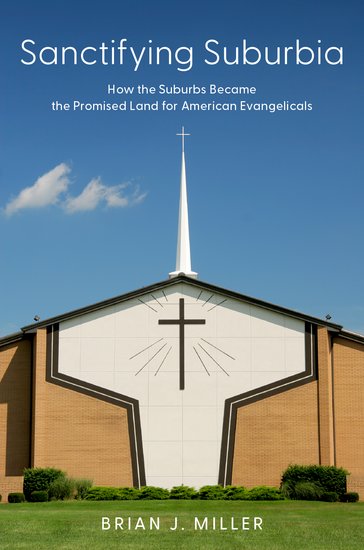
I have been studying and writing about religion in the American suburbs for about ten years now. After recently publishing a book on evangelicals embracing suburbia – Sanctifying Suburbia – and more recently also looking at a variety of religious traditions over time in the Chicago suburbs, I had this thought:
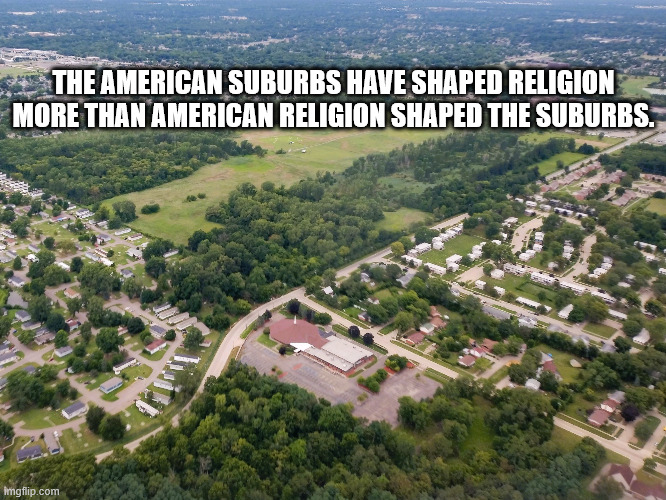
This is a broad statement. But if I were to put the two social forces side by side – suburbanization in the United States and religion (and all that entails) in the United States – I would come down on suburbs affecting religion more than the opposite. Here is a couple of ways to think about:
- As religious groups have moved to the suburbs, whether Catholic, Protestant, Muslim, Jewish, or others, they often have to adapt to suburban settings.
- How much do religious congregations, organizations, and adherents in suburbia shape community life or social life at the structural level (beyond individuals, small groups, some social networks, more micro level)? Another way to put it: if these religious groups were not present, how different would suburban life be?
- The reasons Americans love suburbs and the way of life involved therein can override religious values and concerns such as loving their neighbor, serving the good of the whole community, and pursuing religious and spiritual goals.
I am going to keep thinking about this claim and may write more about it. Even as religion has served to provide meaning and structure for many humans and societies across time and space, suburbia is a powerful place and ideology.
 Legally Sociable