Two communities and two different approaches in advertising to baseball viewers

What is the most effective way for a community to reach viewers of a baseball game? Here are two contrasting approaches on last night’s White Sox broadcast:
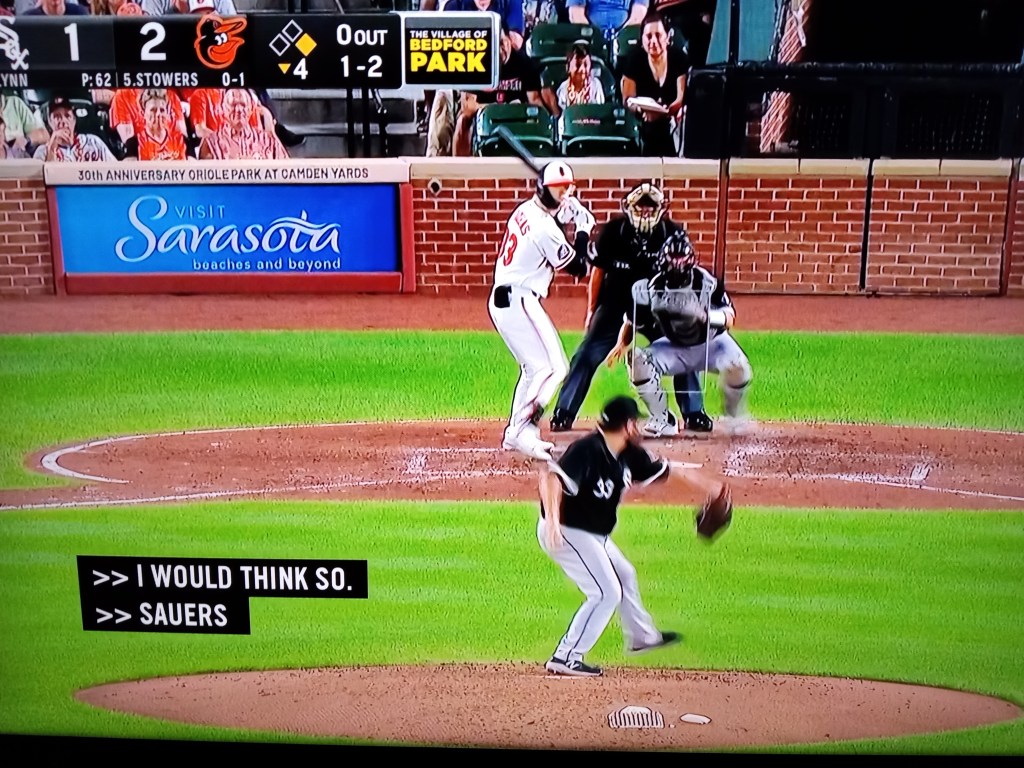
The Village of Bedford Park is not unknown to media consumers in the Chicago region; they advertise the advantages they provide for businesses, including plenty of water. The suburb has less than 1,000 residents but wants your business.

In this ad, there is little communicated about the Village outside of its name. Name recognition has some value; the Chicago area has hundreds of suburbs and knowing this small suburb could be consequential.

Contrast this approach with that of Sarasota. A bigger community of over 50,000 residents, the suburb emphasizes “beaches and beyond.” This could be aimed at tourists, visitors who bring in money to hotels, property owners, restaurants, stores, and more, or people who might want to relocate to a land of beaches.

This approach is more common when communities advertise. Including the name, a tagline or motto, and some sort of image – here Sarasota in a particular script and with a flowing tee – aims for name recognition and some knowledge about the community.

Are either of these approaches effective for baseball fans watching the game? Do they decide to take their business to Bedford Park or visit Sarasota? Many communities now advertise and engage in branding in similar ways but it would still be interesting to hear officials in both of these communities discuss the merits and return on investment of these marketing approaches.

Frank Underwood gets in on the critique of McMansions

The second episode of Season One of House of Cards includes this commentary regarding McMansions:

Frank Underwood: Such a waste of talent. He chose money over power – in this town, a mistake nearly everyone makes. Money is the McMansion in Sarasota that starts falling apart after 10 years. Power is the old stone building that stands for centuries. I cannot respect someone who does not see the difference.

Watch the YouTube clip here.

Underwood’s statement hints at three facets of the criticisms of McMansions:

1. Sarasota represents the booming Sunbelt flooded with new money and new developments. McMansions are often associated with the sprawling suburbs of recent decades that quickly gobbled up land.

2. He suggests McMansions are about money (represented by a lobbyist here) and not about longer-term influence (power in this case). Critics suggest people buy McMansions – which often stretch them beyond their financial means or at least lead to a big mortgage – in order to impress people.

3. Critics argue McMansions are not of the same kind of quality construction as other houses or structures. With builders/developers interested in quick profits and providing as much space for as little money as possible, McMansions won’t stand the test of time. Of course, even stone buildings require some work but people expect them to last longer than suburban tract homes.

Frank Underwood might claim he is everything McMansions are not: he is not worried about first impressions but rather plays the long game of influence and power, he has attended schools like The Sentinel (modeled after The Citadel, a name suggesting stone and permanence) and Harvard Law, and he is from the old traditions of South Carolina (one of the original colonies, not an upstart booming suburb).