Inviting skaters in to revive a moribund urban plaza

Skaters have revived a plaza in downtown San Francisco:
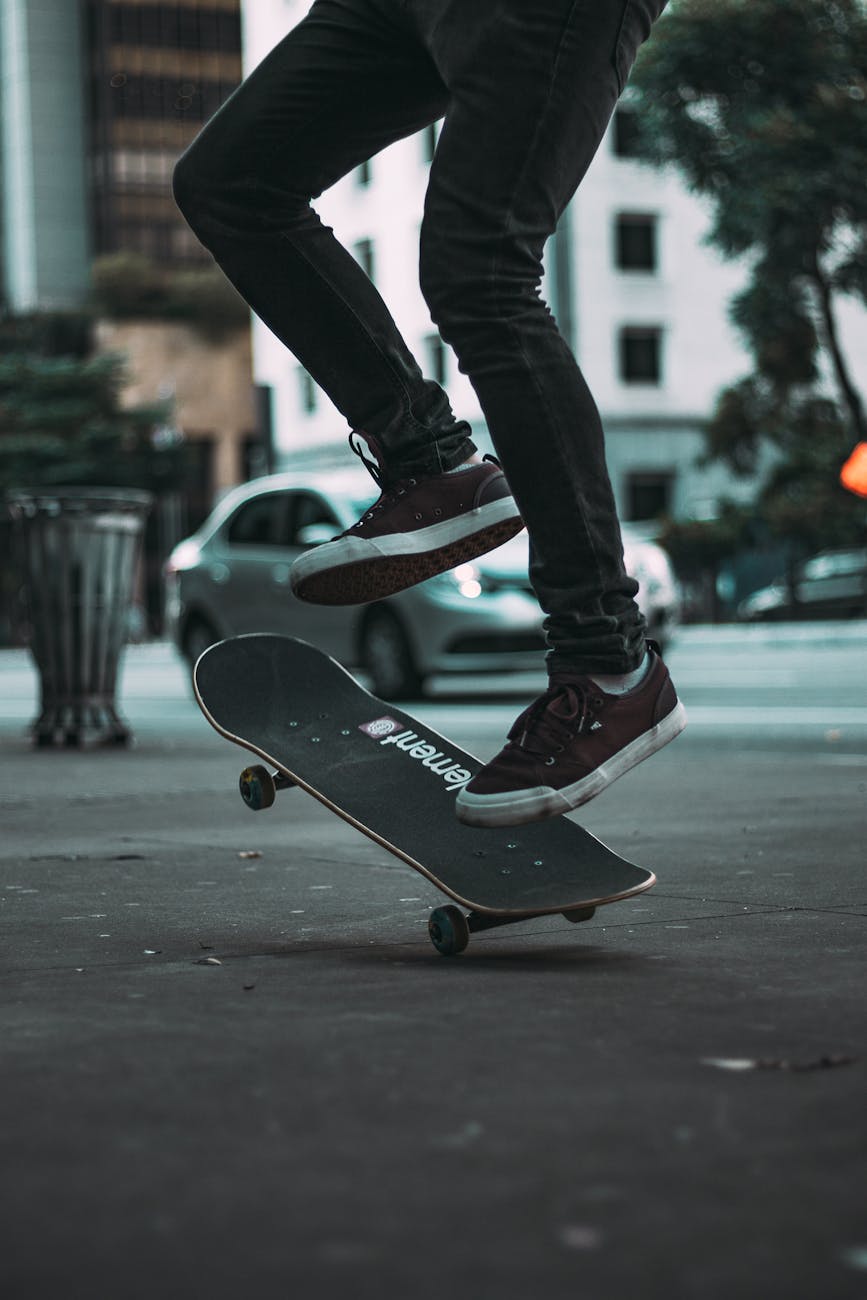
Photo by Bran Sodre on Pexels.com

For a city struggling to recover after the Covid-19 pandemic, the images of suffering and bedlam could not have been more inconveniently placed: U.N. Plaza, a block from City Hall, has a busy rail station and is bordered by Market Street, a major thoroughfare that double-decker tour buses cruise daily. In 2023, after a big, international conference announced that it was coming to the hobbled city, the parks department scrambled to find a new life for the site.

That turned out to be a skateboard park. On a recent sunny morning, kids in baggy pants slid the railings around a flagpole and cruised over a volcano-shaped embankment. The old granite ledges that used to be illegal to skate on were now open to grind and slide.

Inviting a bunch of skaters to rip around, scuffing ledges, is not the use San Francisco had in mind in 1975 when the plaza was dedicated to commemorate the founding of the United Nations in the city. U.N. Plaza was part of a larger redevelopment meant to attract affluent shoppers to San Francisco from the suburbs. Instead, for the next four decades, the city produced regular reports of failure that highlighted assaults and drug use on the plaza, and high vacancies in the buildings surrounding it. For all the thought that went into the open design and gushing fountain, it was never clear what people were supposed to do there…

What the transformation of U.N. Plaza does show, however, is that attempts at urban revival can go a long way for relatively little money when they attract a natural constituency of users. Obvious as that may sound, it’s the opposite of how planners in San Francisco and elsewhere have historically operated. The notion that a great public space is defined by architecture first, people second, was so ingrained in the city’s thinking that it took the squalor brought on by the pandemic to reverse it…

Another thing that Mr. Ginsburg said he had learned from working with skateboarders was that they operated as the informal “watchful eyes” that the urbanist Jane Jacobs had described as a crucial element of safe streets. They cover a lot of space, they watch out for one another, and unlike a concert or special event, skaters require no special programming from the city. They just show up in short bursts throughout the day, helping to maintain activity outside working hours.

As noted later in the article, skaters are not necessarily the ones American cities tend to call on to bring social life to spaces. But, if the alternative uses are worse, they might call on skaters.

And even though Jacobs is invoked above, her analysis would likely go further than just finding a set of people who want to be in the park: why not design a neighborhood where the uses around the park or plaza support an endless flow of people and activity around and in the park? Then you do not need people who need to just “go to the park” but rather all types who are going in and out of the park.

Would this relationship between the city and skaters continue with the city (1) setting up more spaces for skaters and (2) limiting anti-skating devices and policies in other locations?

Could you design a skatepark that the neighbors don’t mind?

Designing outdoor spaces for teenagers – such as basketball courts – is difficult as many residents don’t like the activity. One Finnish landscape architect thinks there is a way to cut down on complaints:

Though they’re a teen-friendly third space, many skateparks receive noise complaints, and as a result, may be  deemed too much of a nuisance to maintain. Some parks are removed after only a few years of use at the request of nearby residents, possibly resulting in thousands of dollars in city funds squandered. However, Saario doesn’t think this is inevitable. The parks that go astray, he believes, are a result of poor community planning, awareness, and design—and sometimes independent business contractors who don’t have the skaters’ or the community’s best interests at heart.

“If a landscape architect is designing a space like this, they need to take the time and map land that’s accessible, but far enough away from residential areas so as to not disturb local neighborhoods,” Saario says. Cities often have multiple locations where new recreational spaces can be installed, and some idea of the ground conditions they’re building on top of, but Saario says landscape architects are needed so that officials can understand what design options are available within each site, and whether multiple types of users are permissible.

Saario’s final requirement for designing a park is that it’s built around a unique element that encourages conversation between groups and imaginative ideas. “I grew up skating inside an asphalt pool named The Footprint of the Giant,” he says. “When I met other skaters in the city, they knew where we were from—we had an identity. Skateparks need to have a strong concept that creates a sense of place.”

For an example of integrating a local landmark within a new park, Saario points to Fiskars, a village about 100 kilometers from Helsinki. Fiskars city officials recognized the need for a recreational space for kids and teens, but weren’t sure where to place it so as to avoid any disturbances. The officials asked Saario to analyze a number of possible locations for the park and suggest the best placement. Saario’s solution was to tear down a concrete manure silo near an abandoned barn at the edge of the city. In its place, a number of concrete bumps, curbs, and ledges (pictured above) were added to create the park’s surface. The final design used the brick walls from the original silo structure to support the newly poured concrete. “We were able to cut down on the park’s expenses this way,” he says. “And architecturally, there was a nice contrast of new against old.”

The ideas seem sound: reuse old spaces and materials, create unique skateparks that give users a sense of place, listen to the input of the teenagers/users, and don’t locate right near residences. Yet, finding the “perfect site” is likely to be difficult in many communities.

These issues are not new. I recall Herbert Gans noting in The Levittowners that the new mass suburbs offered few opportunities for teenagers away from their homes. On one hand, American teenagers are encouraged to assert their independence but on the other hand, few suburbs like the idea of large groups of teenagers hanging around. Does this help explain the rise of organized and structured activities – the fear of parents and communities that just hanging around will lead to trouble? Additionally, the teenagers themselves often have little voice in the political process as they cannot yet vote and may not like the idea of working with the system.