McMansions so close you can hear your neighbors flush their toilet

McMansions are big homes that are also sometimes built close to their lot lines. So much so that one Florida resident suggests you might know what your neighbor is up to:
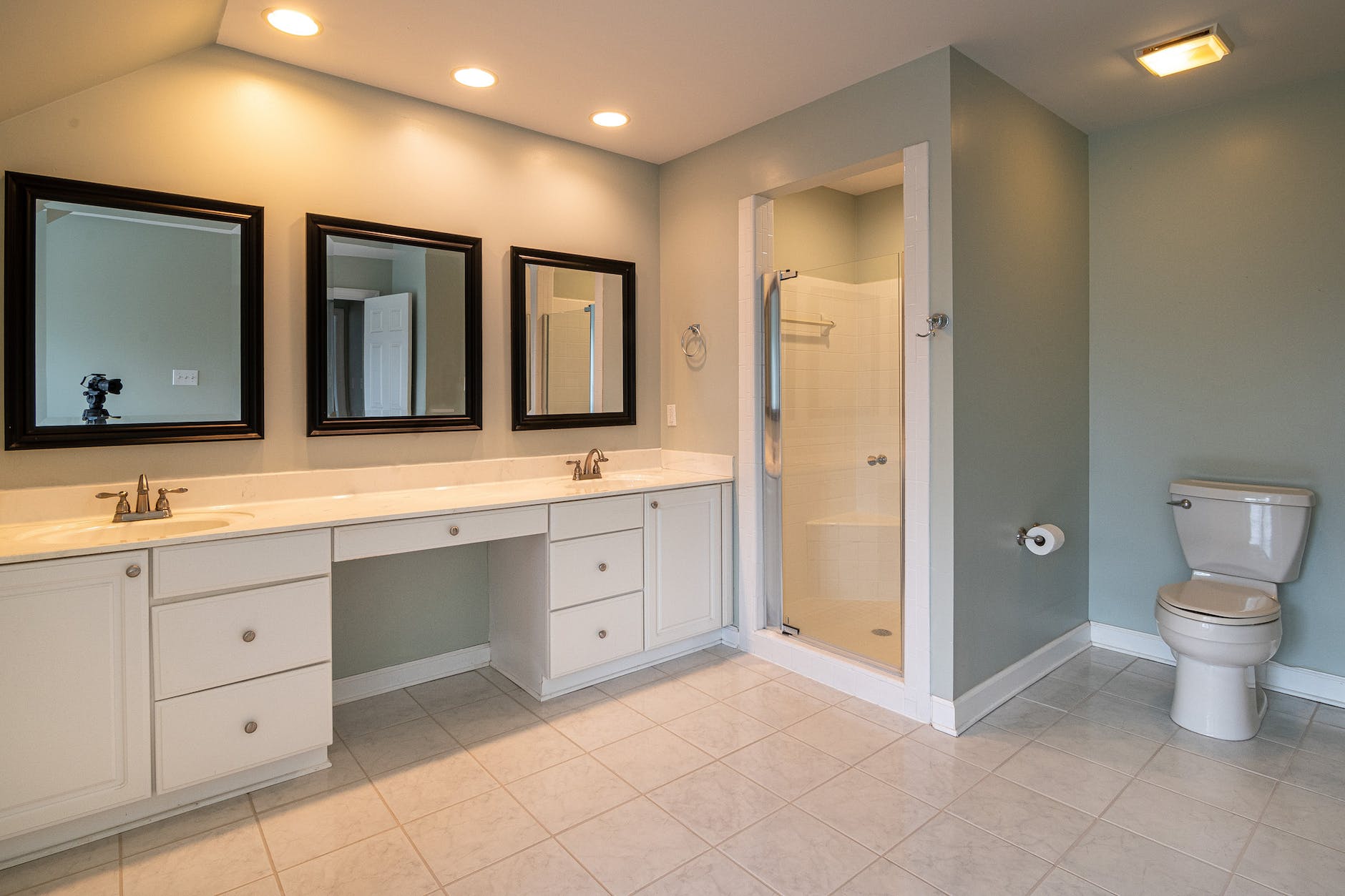
Photo by Curtis Adams on Pexels.com

I’m referring to the handful of gargantuan McMansions cropping up now, and, insult to injury, all seem to hug their property line so closely as to case a gray shadow on their neighbor and to heighten the anticipation of hearing the next time your neighbor flushes his toilet. Do these owners have 35 grandchildren to bed over the winter? Or are we seeing the beginnings of a contest to see who can build the biggest and gaudiest house on the island? Nantucket, here we come!

The idea that you can hear the flushing of a toilet from next door might be a bit of an exaggeration. Put this next to the 35 grandchildren and some creative license might be at work.

But, let’s say there might be some truth to this. Are we talking about McMansions within five to ten feet of each other? There may be some windows or doors facing the neighboring home. If it is a quiet neighborhood, house noise might travel. Residents of single-family homes tend not to like noise from nearby (examples here and here).

If it is a sizable home, could a neighbor identify which bathroom is the source of the noise? A home of over 3,000 square feet could have numerous restrooms. Perhaps some are located closer to exterior walls. Perhaps some have louder commodes than others. Perhaps some bathrooms are used more regularly.

The point still holds: some of the concern about McMansions is not just their size but rather how much of their lot they take up. A large home that covers a higher percentage of its lot and/or is very close to a neighbor will appear even larger.

Addressing the lack of big city toilets with an $8 a day NYC toilet membership

It is not easy to find a decent restroom in many big American cities and a new company in New York City wants to fill this hole in the market:

A New York company has started marketing what amounts to an upscale pay toilet service. Posh Stow and Go will offer visitors to the Big Apple “clean, safe and soundproof” bathrooms worthy of “the greatest city in the world,” in addition to such other amenities as “luxury showers” and private storage rooms.

Prices for the Midtown facility, which is set to open around June, start at $24 for a three-day pass (or $8 a day), plus a mandatory $15 annual membership fee. The company envisions opening other locations throughout the city—lower Manhattan is next on the list—but warns that “only a limited number of memberships will be sold so as to provide the best possible experience.”…

Parks may have a point: The lack of clean and comfortable public restrooms in major American metropolitan areas—especially New York—is an issue that’s been raised for years. The aptly named Phlush , a public restroom advocacy group based in Portland, Oregon, goes so far as to argue that “toilet availability is a human right” and “well-designed sanitation systems restore health to our cities.”

But the issue for cities remains twofold: Public restrooms are expensive to build and maintain and they are seen as a potential magnet for vagrants. For the latter reason alone, the city of Pensacola, Fla., recently approved an ordinance making it illegal for homeless individuals to wash or shave in public restrooms. (The ordinance was part of a larger push to address problems involving the homeless, though city leaders are now considering reversing the policies.).

I had never heard of Phlush but they make some good points: it is hard to be in a city if bathrooms are not available for all. Additionally, a city planning expert is cited later in the article suggesting that pay toilets go against the “democratic urban ideal.” This seems like one of the basic requirements of having a truly public space. Think of a space like Times Square that is consistently full of people: if most bathrooms are privatized, what is everyone supposed to do?

It would be really interesting to see the business plan of Posh Stow and Go. Just how many memberships can they sell before they reach a tipping point and the restrooms are not as luxurious and exclusive? Just how much money do they think is in private bathrooms? How much does it cost to retrofit existing retail space to fit this new use?