
Will it be even easier to justify driving in the future if it done so on roadways that emphasize sustainability and community life?
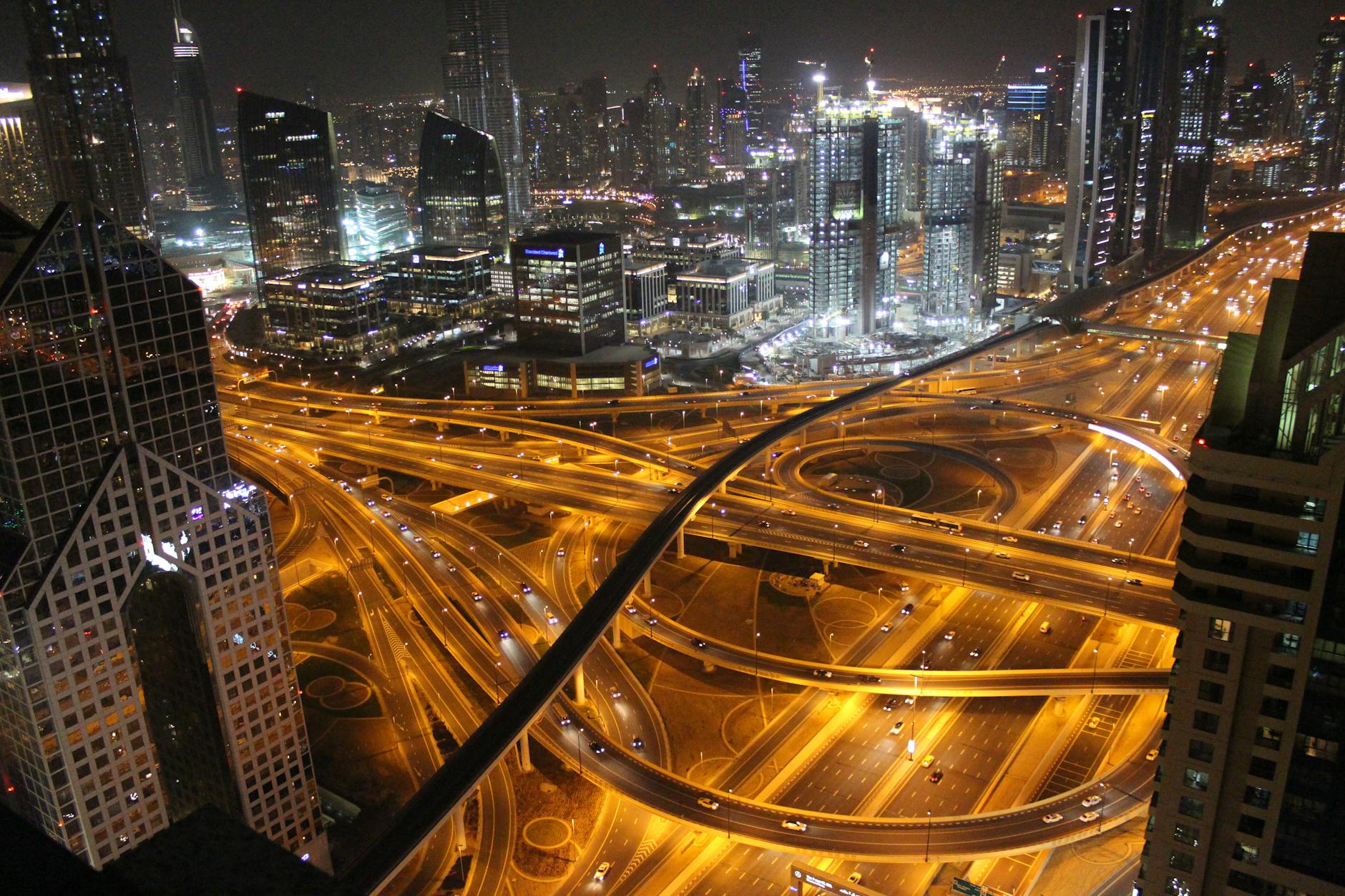
URB has released conceptual designs for a 64-kilometer-long highway that would see Sheikh Mohammed Bin Zayed Road, one of the city’s main traffic belts, transformed into a “Green Spine,” complete with autonomous, solar-powered trams and smart traffic management…
The autonomous solar-powered tram is just one aspect of the proposed highway’s transport system: above the tram line, a network of green areas, parks and overpasses would increase connectivity and walkability of the city, which is currently tough to navigate on foot.
The highway would also integrate smart technology, such as “internet of things” (IoT) sensors, to manage traffic and optimize energy use.
Bagherian’s designs allow for 300-megawatt solar panels and a storage system to be embedded in the tracks, that would power the tram line, as well as generate clean energy for an estimated 130,000 homes.
And the green spaces — including parks and community gardens — would provide space for one million trees, which would also help cool the city and improve air quality.
Does making driving greener and roads less invasive in communities make driving more palatable to critics? A number of critics want to reduce driving all together for a variety of reasons including reliance on fossil fuels and changing the scale of communities from human oriented to moving heavy boxes quickly and efficiently.
Perhaps this sort of approach is pragmatic. It might be very difficult to get rid of cars and vehicles. Transitioning to alternative fuels will take time. Cars have some advantages compared to other transportation options. Reducing the impact of vehicles could be the way to go: the vehicles keep moving but they are less visible and less disruptive.
I would not be surprised if driving continues at similar volumes in the future and roadways are transformed in ways that mean they do not just serve the vehicles traveling on them.
 Legally Sociable