
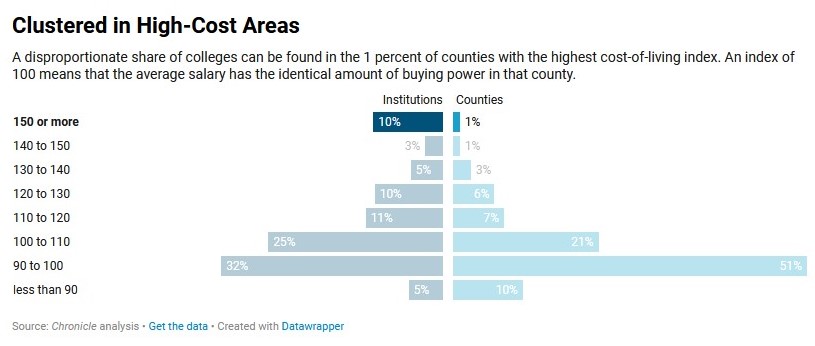
Where do colleges tend to be located? This graph in The Chronicle of Higher Education uses one metric:
Two quick thoughts in response:
- Does the presence of these colleges over time help contribute to a higher cost of living? I am reminded of Richard Florida’s argument about the creative class. If I remember the analysis correctly, places with colleges tend to have higher percentages of creative class residents. And he suggests colleges and universities can help attract people and development.
- When Ben Norquist and I looked at the locations of smaller Christian colleges, we found they tended not to be in the biggest cities (which account for some of these higher cost of living places). In contrast, research schools are often in big cities according to the article: “Almost a third, or 32.2 percent, of colleges in The Chronicle’s analysis were in counties where cost of living was at least 15 percent higher than the national average. The types of institutions found in these expensive regions tended to vary. About 10 percent of doctoral-granting universities and 23 percent of four-year special-focus institutions (like those specializing in health professions or religious training, for example) are in the priciest 1 percent of the nation’s counties, where the cost of living is more than one-and-a-half times the national average. In contrast, nearly half of associate- and bachelor’s-granting institutions were in counties with below-average costs of living.”
- The other category with a larger percentage discrepancy is among the percentage of institutions in counties at 90 to 100 in cost of living.
 Legally Sociable