
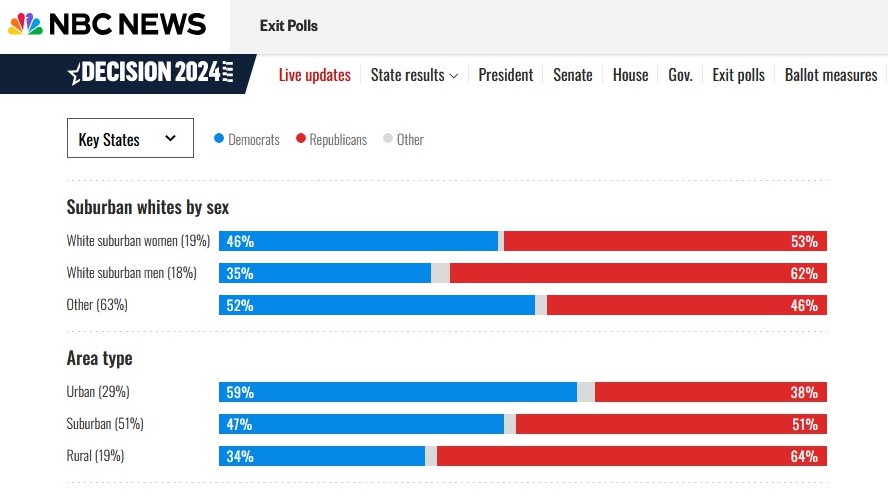
Based on these results, it looks like the Democratic candidate won large percentages in urban areas, the Republican candidate won a majority in rural areas, and suburban voters went slightly for the winning candidate.
If this pattern roughly held across the United States, it would be similar to patterns from previous presidential election cycles. If a candidate wants to win, they need to appeal to enough suburban voters.
What appealed to suburbanites specifically in 2024? If economic conditions was a top concern of voters, is this what drove suburban voters? The top table above suggests white suburbanites in these 10 states voted for the winning candidate. Were they driven by economic concerns or other issues?
And as attention turns to the next election cycle, how will parties and candidates seek to appeal to suburbanites? In addition to those thinking of presidential office, how will House districts involving suburbs speak to suburban residents?
 Legally Sociable
Pingback: City voters changed more for Trump in 2024 compared to support in suburbs and elsewhere | Legally Sociable