
If observers in the United States in the late nineteenth century had to predict the geography of American evangelicals in the year 2000, what would they have said? Would they have foreseen an evangelical presence in the biggest cities? Important evangelical congregations, organizations, and institutions resided in New York City, Philadelphia, and Chicago. From these population centers (and ones that emerged in the twentieth century like Los Angeles or Dallas), evangelicals could reach the masses. Or would they have selected small towns and more rural areas? Perhaps they would have thought of evangelicals living in particular regions, in the kinds of places that would be called “the heartland” or “flyover country” or “the Bible Belt.” These places with a slower pace of life and traditional values may have aligned with everyday evangelical life.
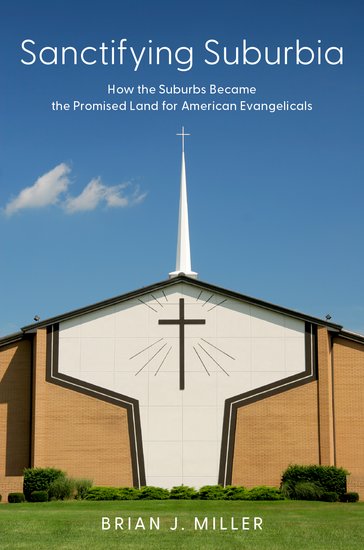
I argue in Sanctifying Suburbia (out in paperback today!) that by the turn of the twenty-first century American evangelicals were firmly suburban. Evangelicals did not simply follow many other Americans to the suburbs (the country was majority suburban in the 2000 Census); evangelicals actively chose to locate in the suburbs.
Why? Multiple factors led to this and different chapters in the book discuss the components that contributed to the evangelical embrace of the growing American suburbs. The story includes:
- Racial and ethnic change in cities and evangelicals moving to whiter suburbs.
- The National Association of Evangelicals operating from suburban settings for much of its existence after its founding in the 1940s
- Locating in some evangelical clusters – like Wheaton and Carol Stream, Illinois and Colorado Springs, Colorado – that offered particular amenities and synergy between evangelical congregations and organizations.
- Seeing cities as incompatible with evangelical lifestyles and goals.
- An individualized view of engaging with places and society while also holding up heaven as the ultimate city/place.
And this is not just a story of the twentieth century; some of the seeds were sown prior to mass suburbanization and developed over decades.
Where does this leave American evangelicals in the third decade of the twenty-first century? As a whole, they may feel most comfortable in suburban settings where day-to-day life focuses on families in single-family homes, middle-class and populist activities and values rule the day, and attracting attendees and gathering resources from growing suburban populations occupies their organizational efforts.
 Legally Sociable
Congratulations!
LikeLike