
A new study suggests Americans are interacting less with others on city streets:
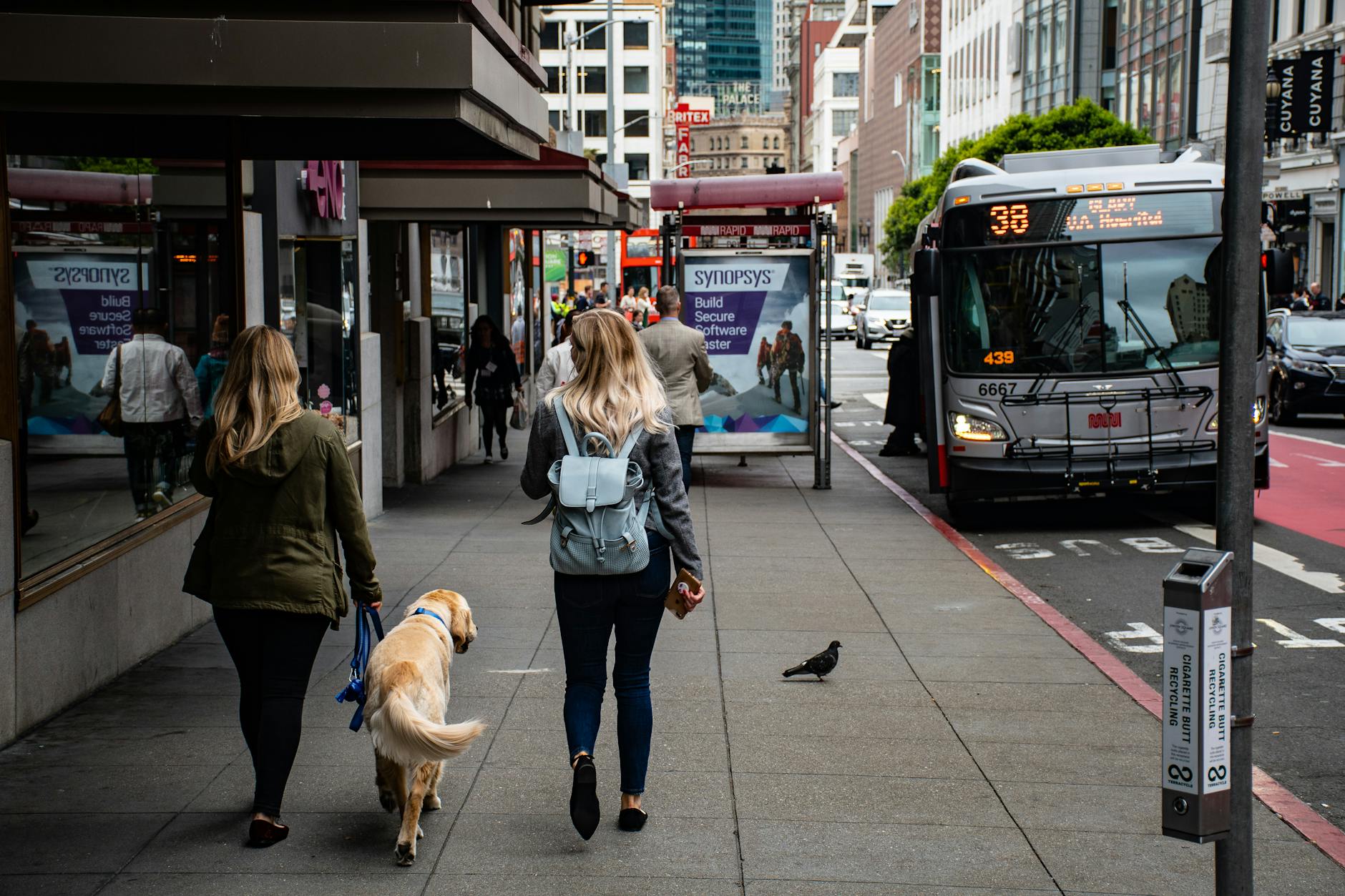
Are city streets places for pedestrians to hang out, or are they routes to be traversed as quickly as possible?
Americans are increasingly treating them as the latter rather than the former.
That is the striking implication of a recent interdisciplinary study published by the National Bureau of Economic Research. Applying modern artificial intelligence techniques to old video footage, the researchers compared pedestrian activity in 1980 and 2010 across prominent locations in Boston, New York City and Philadelphia. Their unsettling conclusion: American ambulators walked faster and schmoozed less than they used to. They seemed to be having fewer of the informal encounters that undergird civil society and strengthen urban economies…
Salazar-Miranda said that video analysis alone cannot explain why pedestrian behavior changed, but she sees several possible factors. Since average incomes rose among those who lived and worked near all four locations, individuals’ higher value of time could deter them from engaging in leisure activities like casual conversation or strolls that now carry a higher opportunity cost. City dwellers might be having fewer social interactions of all kinds, a phenomenon that has been linked to rising rates of loneliness. And some of the pedestrians observed in 2010 could have been socializing remotely: By then, 80% of US adults had cellphones. Mobile devices may be inducing people to hang out online instead of in person. Salazar-Miranda suggested those who do get together might opt for climate-controlled, pay-to-enter “third spaces” like coffeeshops that she said have become more widely available.
I have heard some similar research presented before and I like the methods of comparing videos of city streets decades ago to observations today. Changes over time are important to consider as cities and societies change.
At the same time, I wonder about how to think about fewer interactions on city sidewalks to societal changes overall. If broad arguments in Bowling Alone and similar work are correct that Americans are engaging civically less over time, would we expect to see fewer interactions on city sidewalks and in suburban parks and rural communities? If phones are everywhere, are they affecting people in different places in different ways? Showing that city sidewalks were once one thing and are now something else is important but what if social interaction between strangers or in public has dried up in all places? Is this evidence similar or different to conversations about kids of the 1970s playing outside all the time and big changes since then?
 Legally Sociable