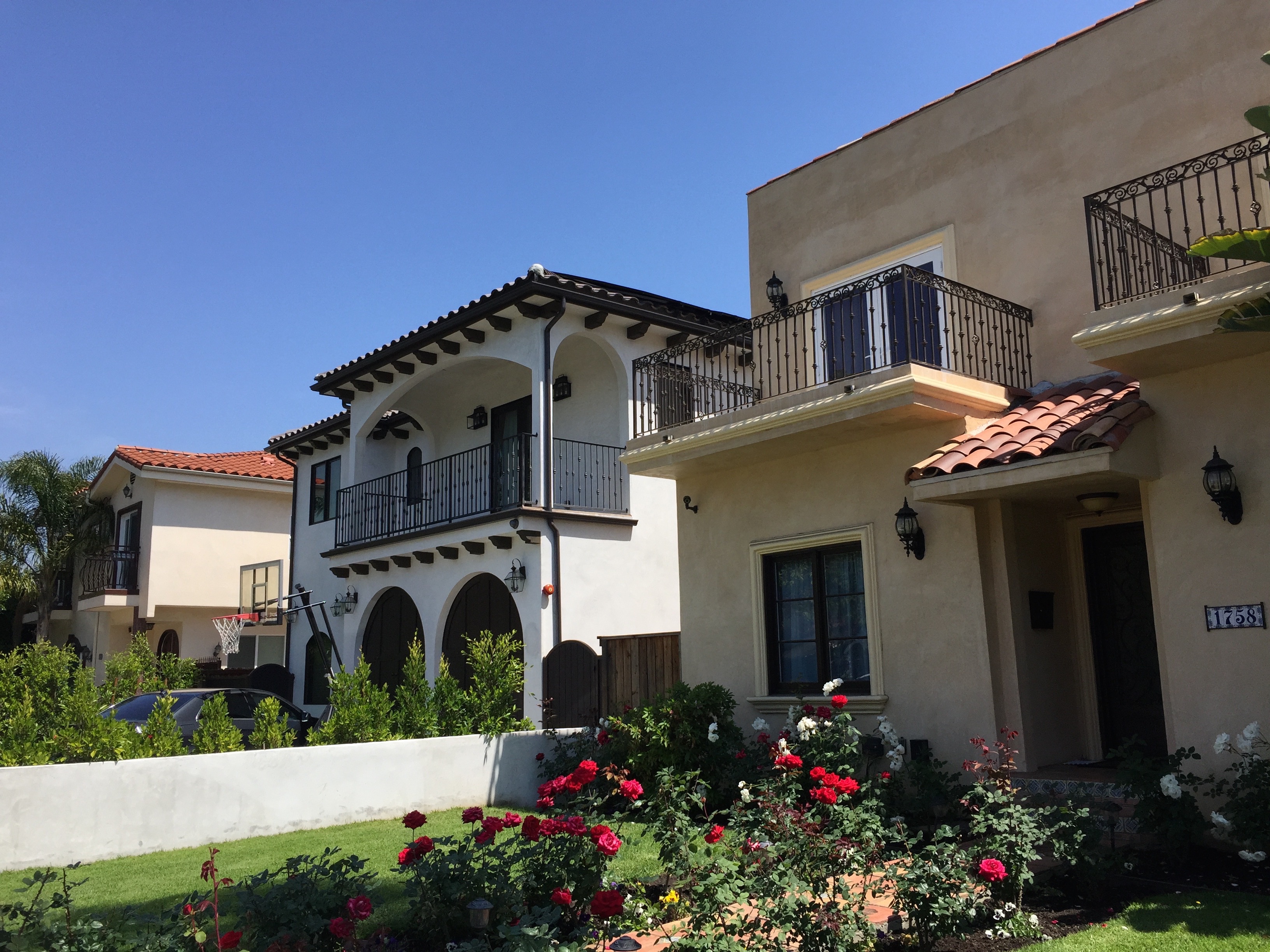
McMansions redeemed by multigenerational households?

At the end of an article on the rise of McMansion sized new homes, here is a suggestion that who purchases such homes might be changing:

The culture of the McMansion itself could be changing, too. As minorities and multigenerational households drive growth in the cities and suburbs where construction is most abundant, buyers may want larger homes not so much out of a lust for space but to have enough room for their families.

”We’re going to have much more diverse buyers coming into the market,” Hepp says. “Developers are adjusting to [multigenerational housing]. In some cultures it’s quite normal to have different generations living under the same roof.”

If this comes to pass, would it change the negative reputation McMansions have? Is it more acceptable to have large households in such homes compared to having “a lust for space”? The houses would still be the same: large, architecturally odd, part of suburban sprawl, perhaps much larger than other nearby properties. Yet, having more residents would cut down on their inefficiency and they might be more cost efficient.

Another complication is the mixing of race, ethnicity, and class in this possible trend. Would neighbors have more to object to if they dislike the McMansion as well as the new groups of people moving into the community?

My quick prediction: this trend wouldn’t redeem the McMansion for many of its critics but they do provide an interesting option for larger households.

“The Architecture of American Houses” in one poster

A new poster covers over 400 years of residential architecture in the United States:

https://i0.wp.com/mentalfloss.com/sites/default/files/p-americanhouses_fpo1.png

In all, the new poster features 121 hand-drawn American homes divided up into seven primary categories—Colonial, Folk/Vernacular, Romantic, Victorian, Eclectic, Modern, Neo-Eclectic—and 40 subdivisions, such as Italian Renaissance Revival, Ranch, and the dreaded McMansion.

Just mail me a copy and I will put it on the wall in my office. Three quick thoughts on the styles depicted:

1. I don’t see the split-level. Of course, it could be built in a variety of these styles but it is a unique arrangement that is common in many suburban areas.

2. The McMansion is at the bottom left as a separate category and it looks appropriately large, out of proportion, and multi-gabled. Yet, how different is it from the other “new traditional designs” on the rest of the bottom row? The “new traditionals” depicted here are more architecturally pure but they are similarly large. How much architectural mismash qualifies a house to be a McMansion? And can’t a architecturally accurate yet overly large, particularly if a teardown, still be considered a McMansion?

3. The subdivision grouping idea is an interesting one as it implies certain kinds of homes are found together. This probably is often the case as subdivisions typically have a limited number of designs and are built within a several year stretch. Yet, some places may not match this due to longer development spans (imagine a place with larger lots initially that are later broken up and built on) or denser urban areas where there is more construction and housing turnover.

Australian architects to demolish McMansions, reuse materials for multiple homes

Three Australian architects have plans to create multiple, more sustainable homes out of McMansions:

The project aims to demolish existing McMansions which have seen better days and reuse as much of the materials as possible – up to 80 per cent – to build between two and four new homes on the site using minimal new materials and sustainable practices.

Mr Gallois said the project aimed to show how housing could be more affordable and could also deliver zero emissions green homes…

“In the face of Sydney’s housing affordability crisis, the Reincarnated McMansion Project provides a real solution to the financial challenges of owning a home in Sydney in 2015,’’ he said…

Australia has some of the biggest homes in the world and the largest CO2 footprint per capita in the world so the aim was to work on both of these issues.

While many don’t like McMansions, few have developed plans of what to do with the many that have already exist. This sounds interesting: find ways to reuse the materials (cuts down on a lot of waste) and split the property into multiple single-family homes (denser housing but still lets people own single-family homes). I’m not sure there are many redevelopment projects that use a lot of the demolished materials – perhaps it requires detailed planning or builders and architects want to start with a blank slate rather than be constrained by older materials.

I wonder how neighbors would view these projects. In a neighborhood full of McMansions, would a group of smaller homes be met with approval? Teardown McMansions in particular prompt criticism because they interrupt the existing aesthetic of a neighborhood. Plus, homeowners want houses nearby to match their housing value, not units that provide less space and drive down prices. Would would the prices be for these new homes and what kind of architecture would they feature?

McMansion as a term went from “funny criticism” to “spiteful slur”

A Denver resident suggests the term McMansion has become too broad to be useful:

Regarding McMansions, this term originally meant very large tract houses that pretend to be grander than their vapid finishes should allow. They are mass-produced like hamburgers with no understanding of taste or style. Now McMansion has morphed into any big house no matter its utility or architectural worth. A funny criticism has turned into a spiteful slur.

An interesting observation. The term arose in the 1990s and its “Mc” prefix suggested a mass produced item. This was not necessarily a new critique of housing; the postwar housing boom also gave birth to large developers – like Levitt and Sons – and tract homes became a major part of suburban critiques (see the song “Little Boxes“). And the McDonaldization of the world was in full swing across a range of industries.

Yet, today calling a home a McMansion is definitely not positive and tends to lead to animosity among neighbors (a recent example here). Big houses invite though own criticisms – waste of resources, unnecessary space, larger than nearby homes – though what exactly qualifies is unclear. You can’t find too many defenders of McMansions.

Does this suggest the term has outlived its usefulness?

Why can’t suburbanites see the destruction and ugliness of sprawl?

Benjamin Ross, transit and environmental activist, makes his position on the suburbs clear in the Introduction to his 2014 book Dead End: Suburban Sprawl and the Rebirth of American Urbanism.

Yet lively, stable, and economically diverse neighborhoods remain hard to find. Decay and gentrification keep nibbling away at what escaped the wrecking balls fo the mid-twentieth century. Builders hasten to transform old factory districts into city neighborhoods. But with their wide streets, condos, and chain stores, the new urban quarters still seem less appealing than places built a century and more ago.

Meanwhile, ugly suburbs still spread outward, consuming rural land and carrying the failings of their predecessors to new extremes. Cheap townhouses, tony high-rise apartments, and pretentious McMansions scatter across the landscape, entangled in an ever-expanding web of highways and parking lots…

I puzzled over questions with import far beyond my own suburbs. Why is our nation still addicted to sprawl, so long after experts raised the alert? What is the compulsion that keeps us building what so many revile? Why are urban streets, so much in demand, so rarely supplied? Why do attempts at cure so often worsen the disease? How can we break free of our addiction, and create the cities we desire? (p. 3-5)

A clear position and I suspect a perspective that Joel Kotkin would dislike. Even with the truth that is present in Ross’ opening statements – Americans have politically and socially supported using more land, building bigger houses, privileging the car over other forms of transportation – this does seem to carry a familiar refrain from suburban critics: why can’t the suburbanites just see all those ugliness and destruction? Why don’t the experts carry more weight? That story is a complicated one and presenting someone with the facts of suburbia likely isn’t enough to change their mind. That single-family home with a lawn and the dream of a better life is hard for many Americans to imagine elsewhere.

I’ll post about a few more interesting points from Dead End in the next week or so.

“Jennifer Aniston leads fight against giga-mansions” in Beverly Hills

Even the wealthy don’t want “giga-mansions” in their neighborhood:

Her own $21 million (£13 million) Bel Air mansion covers a rather more modest 8500 square feet.

But it has been rapidly overtaken by a new trend for the giga-mansions. The ultra-wealthy are buying and bulldozing some of the area’s biggest villas, to build even bigger homes, filled with fountains, swimming pools and space for entertaining.

Opponents say they bring months of construction noise, threaten existing homes by destabilising the ground and that their huge size represents an invasion of privacy as they tower over neighbours.

Prince Abdul Aziz, a Saudi Arabian prince and deputy foreign minister of his country, is among the buyers to have angered neighbours. He bought a Spanish colonial residence from Jon Peters, the film producer behind Superman Returns and Man of steel, before promptly tearing it down and lodging plans for an 85,000-square-foot estate.

But the real fury is reserved for the 30,000-square-foot creation of Mohamed Hadid, a real estate developer and father of Gigi Hadid, the model.

Two quick thoughts:

1. These really are some large homes. They might work on larger pieces of property but not so well when neighbors are relatively close by. A 103 foot tall home is more like a 10 story skyscraper in a small size city than a welcomed member of a residential neighborhood.

2. This does invite questions about how large of a home is too large. A $21 million 8,500 square foot home in Beverly Hills is expensive and large by all measures. Presumably, the Los Angeles regulations allow for this size. But, how exactly does a municipality decide on the cut-off? The way around this in many communities that address teardowns is to insist on certain guidelines and styles that effectively limit the square footage.

Photo essay demonstrating LA’s mansionization

Here is a photo essay that shows the incongruity of a number of teardown McMansions in Los Angeles:

A developer wants to make as much money as he can as quickly as he can, where the only people whose feelings or quality of life he cares about are himself and whoever buys his newly-built mansion. A normal, thinking, feeling person could find many reasons why she would not want to rob her neighbor of privacy or sunlight by building a looming addition onto her house, with perhaps the most powerful reason being that her neighbors would hate her for it. A developer who will never live in a house he has built doesn’t have any relationships with neighbors to preserve. He actually stands to benefit from being indifferent/contemptuous to neighbors’ concerns, especially if it means he is able to build a bigger, more expensive, more obtrusive structure without the impediment of a guilty conscience. And don’t forget the long, noisy, messy, utterly unpleasant experience of living near a house under construction…

And that’s perhaps the biggest danger of mansionization. Regardless of what you think about mansionization and how it should or shouldn’t be regulated, there’s something about it that I’ve found to be consistently true.

When the first mansion goes up on a block of more modestly-sized homes, it sticks out like a garish eyesore. But if a second mansion is built on the same block, that first mansion suddenly doesn’t look nearly as big and out of place as it did before…

2015-07-01-1435742962-2381680-3inaRowGOOD.jpg
Three of a kindAnd at that point, the entire block might as well be mansionized — and chances are it will be. Having one mansion next to you is bad enough, but if the house on the other side of you gets mansionized, blocking sun and privacy from two sides, who would want to stay? Better to take what you can get and sell, leaving the house to a developer or new buyer who would inevitably go big — and another reminder of the now “old” neighborhood will be gone.

The critique of these new homes focuses on three areas:

1. It is often developers, and not neighbors, who go forward with the oversized homes. Neighbors might be more sensitive to the needs of others but developers are simply trying to maximize the property for profit. This may be true though there are plenty of cases where people buy properties with smaller homes and then make the decision to build a huge home. Developers aren’t the only ones to blame here.

2. The architecture and design of these new large homes are lacking. The homes are unnecessarily large and depart from traditional Southern California styles (stucco, clay tile roofs, etc.). These new homes clash with the older, smaller homes.

3. McMansions spread like a contagion: once a neighborhood or block has one, newer ones are soon to follow. The hint is that the teardowns need to be stopped at the start. A number of LA neighborhoods have been pushing for housing restrictions. But, it may be that one of these homes has to be built before neighbors really rally around the cause.

Seeing American home trends from the 1900s to the 2020s

This scrolling exhibit highlights some of the changes to American homes in the last 110 years. Here is what it predicts for homes in 2020:

Houses are nearly three times the size of homes from 1900.

Two master bedrooms (one upstairs, one downstairs) is a growing trend.

Water and energy conservation systems are becoming mainstream.

Extra bedrooms are being replaced by specialized storage (i.e. bigger pantries and closets).

Home automation tech (remotely controlling locks, lights, HVAC, and appliances) is booming.

There are some major changes over time this period including increasing size (with decreasing household sizes), more of an emphasis on cars, and changes in interior design and layout that take advantage of new technology and different social arrangements but are also subject to aesthetic whims (floating staircases in the 1970s, floral wallpaper in the 1980s, etc.).

Also noted: the 2000s are said to be the decade where “McMansionism continues.”

Avoiding McMansion sized furniture

With new American homes increasing in size over time, it may be hard to find smaller new furniture:

I need help finding a sofa/sleeper that is not “McMansion sized”…

Have added a TV room on my house & would like to put a sofa/sleeper there so it can be used as overflow guest bedroom space. The stores all seem to sell HUGE sofas. Where do I find a (hopefully full size) sofa/sleeper that will not become “The Elephant In The Room”?

In addition to the larger new homes in the United States, might the larger furniture also be due to the growing size of Americans and the increase in obesity rates?

There must be some room in the market for smaller furniture, particularly if tiny houses or micro apartments are gaining in popularity. I know Macy’s has a small furniture line because we purchased a  bed in this line a few years ago – though the furniture isn’t really small but rather simply isn’t oversized. Here is how Macy’s describes this line:

If you’re desperate for more room around your bed, check out small spaces furniture for bedrooms. The Tahoe set has a headboard that’s full of storage space, or opt for a Hawthorne bed with matching leather storage at the foot of the bed. There’s every style from luxury leather to contemporary wooden and padded beds, ready to be dressed up with a striking duvet set.

Transform your space with a great selection of small spaces furniture at Macy’s.

If Americans must fill their larger spaces, they can go with larger furniture or more furniture. Either could fulfill the consumerist ethos…

Opponent of teardown McMansions switches sides

One owner of an older suburban home says she can see the benefits of a teardown McMansion:

I would have taken Huetinck’s explanation personally several months ago, when I used to sigh as I walked by these construction sites that were seemingly engulfing us. But now that our kids are getting older and our space feels tighter, I can see the benefits of these “shiny and new” homes.

Although my husband and I like taking our two toddlers on walks to the farmers market at Bethesda Elementary School on the weekends and for strolls to the playground around the corner, I’ve found myself growing increasingly frustrated trying to navigate our living room without stepping on a toy, cramming clothes into closets that seem to grow smaller by the day, and making do with no garage. As much as I hate to say it, I’m starting to lose my allegiance to these older homes.

That’s not because I want to see our neighborhood turn into a cookie-cutter development, but it’s because I see the ease that something as simple as a mudroom can provide, especially with kids and a dog…

But the allure of a mammoth open kitchen, a two-car garage and a walk-in closet in the master bedroom is hard to ignore.

These sterile, user-friendly McMansions are looking better to me every day. Unlike our friend and neighbor Marjorie, I think we could come up with a price.

I would be interested to hear about what kind of interactions this writer/resident has with her neighbors after writing this piece in the Washington Post. It sounds like the neighbors have taken sides, pitting those who have lived a long time in the neighborhood and what to see it preserved or stay the same versus those who either want or need to sell and like the higher prices they can now get or those who can see the usefulness of a newer home.

Could a teardown McMansion may more defensible if the owner has a larger family? Although more American households than ever are single members, families with children might want more space to spread out. Yet, I imagine at least a few of those opposed to McMansions might also be opposed to overpopulation…

Finally, are there any teardown owners who stay in the same neighborhood? Or, is the act of buying a teardown so disruptive that one can’t remain a neighbor in good standing if they are the one bringing the disruption?