The YWCA Metropolitan Chicago was the lead contractor for the pilot program, according to the report. In total, there were more than 700 in-person events while the application window was open. About 176,000 people applied for 5,000 slots. Participants were chosen through a lottery system, according to the report.
How many might apply for a second program?
A second city pilot, rebranded as the Chicago Empowerment Fund, is expected to launch sometime in 2025, according to the city’s proposed budget. The program will again serve 5,000 “low-income families and returning Chicago residents,” and provide $500 for 12 months, but more details about the qualifications weren’t available.
I would guess more people will apply than the 176,000 who applied the first time. I am basing this on the presence of the first program and the economic uncertainty many people feel.
If the number applying is indeed higher, the odds of any individual getting into the program decreases. The situation reminds me of the documentary Waiting for Supermanwhich effectively uses video of a lottery for a school – some students benefit, many do not – as a sign that the education system is not working as it should. At what point does Chicago or other organizations go for a larger and longer-lasting guaranteed income program?
At Thanksgiving each year come the stories about how many millions of Americans are going to travel for the holiday. But is this partly because there are more people in the country? From the story first:
Just as sure as the turkey will taste dry, airports and highways are expected to be jam-packed during Thanksgiving week, a holiday period likely to end in another record day for air travel in the United States…
Auto club and insurance company AAA predicts that nearly 80 million Americans will venture at least 50 miles from home between Tuesday and next Monday. Most of them will travel by car…
The Transportation Security Administration expects to screen 18.3 million people at U.S. airports during the same seven-day stretch. That would be 6% more than during the corresponding days last year but fit a pattern set throughout 2024.
The TSA predicts that 3 million people will pass through airport security checkpoints on Sunday; more than that could break the record of 3.01 million set on the Sunday after the July Fourth holiday. Tuesday and Wednesday are expected to be the next-busiest air travel days of Thanksgiving week.
What could be other possible reasons for increased travel? Some options:
Cheaper prices to travel and/or more money travelers are putting toward it. Are flights cheaper this year than in the past?
The timing of Thanksgiving. The article hints that it might be different this year because Thanksgiving is so late. Does this happen every time Thanksgiving is later?
An increased emphasis on or interest in visiting family.
If the media is going to report that more people are traveling, how do we know it is not just because there are more people? The US Census Bureau population clock says there are more than 337 million people in the United States now and there were more than 331 million in 2020.
But the line dividing good and evil cuts through the heart of every human being.
This line gets at the nature of human beings and the fate of every individual. But as I read the sentences around this quote, I picked some sociological leanings. Here is more of the passage:
So let the reader who expects this book to be a political expose slam its covers shut right now.
If only it were all so simple! If only there were evil people somewhere insidiously committing evil deeds, and it were necessary only to separate them from the rest of us and destroy them. But the line dividing good an evil cuts through the heart of every human being. And who is willing to destroy a piece of his own heart?
During the life of any heart this line keeps changing place; sometimes it shifts to allow enough space for good to flourish. One and the same human being is, at various ages, under various circumstances, a totally different human being. At times he is close to being a devil, at times to sainthood. But his name doesn’t change, and to that name we ascribe the whole lot, good and evil.
An individualistic reading may not be the only one. Solzhenitsyn argues this issue faces every person. Individuals did make choices for evil and good but a these do not take place in a vacuum. At the same time, we can be swayed toward evil. He mentions “various circumstances.” Those might be our reactions to situations but it could also be about the people and norms around us. How much harder is to choose good when the people and institutions around us are pushing a different direction? The archipelago described in the book is not solely the result of one person; it was a system developed over time that involved millions. By the time Solzhenitsyn encountered the gulag, it had been operating for decades and would continue to do so.
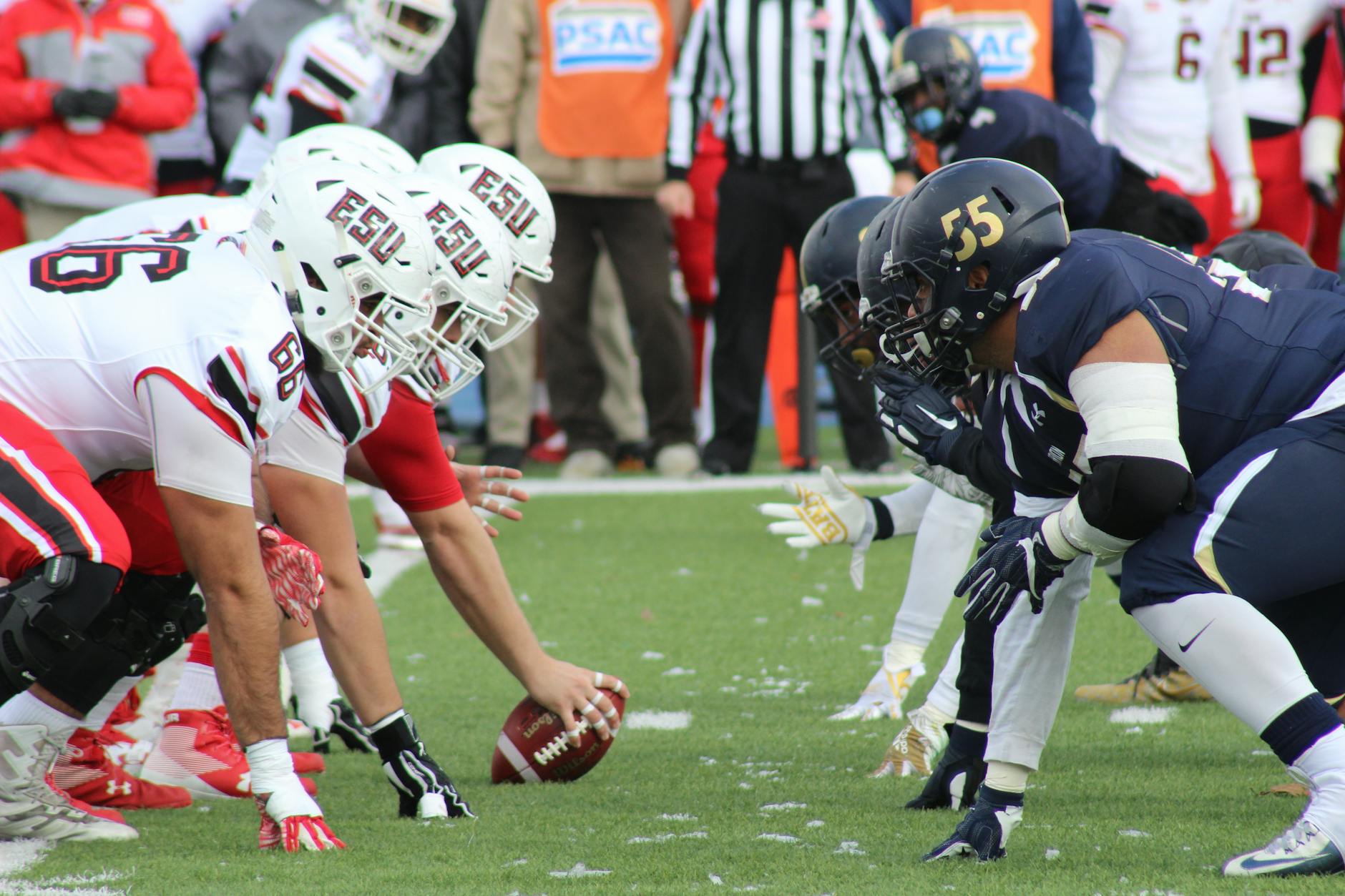
Watching several big college football games yesterday, I tried to focus on the number of transfers playing for Power 5 teams. Sometimes these transfers come from other big programs but they also now come from small schools were players have proven themselves. And then when they do well, they get the call-up to the 10-20 teams that might challenge for a national championship. And then they might get the call-up to the NFL.
To some degree, this has always been true in college football. But with the ease of transfers and NIL money, it seems like a new era is underway. The player who might never get recruited at a top team at the end of high school could be a hot commodity after several successful in the lower minor leagues. This might be especially true of quarterbacks; instead of going through years of developing someone, big programs can pluck a veteran transfer who can step right in.
How much more like the minor leagues can college football get? Will this help prompt separating the football from the education side? The number of transfers from smaller programs to bigger ones might play a role.
A crop of new restaurants and a Dave & Buster’s have been added to the mix. A grocery store is slated to open next year. In the clearest sign of the mall’s resurgence, a developer has kicked off the first phase of a luxury apartment project called “Yorktown Reserve.”
The old Carson’s department store will be dismantled to pave the way for public green space between the mall and the apartments. Inward-facing mall spaces will be turned outward. Facing the park will be a new, two-story entrance directly into the center of the mall.
What does “Reserve” refer to? The first thought that came to mind: wine. Quoting a possible definition of reserve in the Merriam-Webster Dictionary:
9: a wine made from select grapes, bottled on the maker’s premises, and aged differently from the maker’s other wines of the same vintage
Upon further thought, this does not strike me as the meaning. Apartments tasting like a fine wine? How about a different definition of reserve:
1: something reserved or set aside for a particular purpose, use, or reason: such as…
b: a tract (as of public land) set apart : reservation
A reserve as in a set apart piece of land? This seems more like the meaning with the apartments next to a new “public green space” and the mall.
Once the apartments are constructed, I would be interested to hear residents and neighbors reflect on this name. Does it feel like a reserve? Does the name imply a certain price point and residential experience?
That all adds up to more than $264 billion spent on groceries at Walmart US locations in 2023, up from $247 billion and $219 billion in the preceding two years.
Not only are top-line sales growing, their percentage of total division revenues is ticking up from about 55% three years ago to roughly 60% last year. And these numbers don’t even include Walmart-owned Sam’s Club.
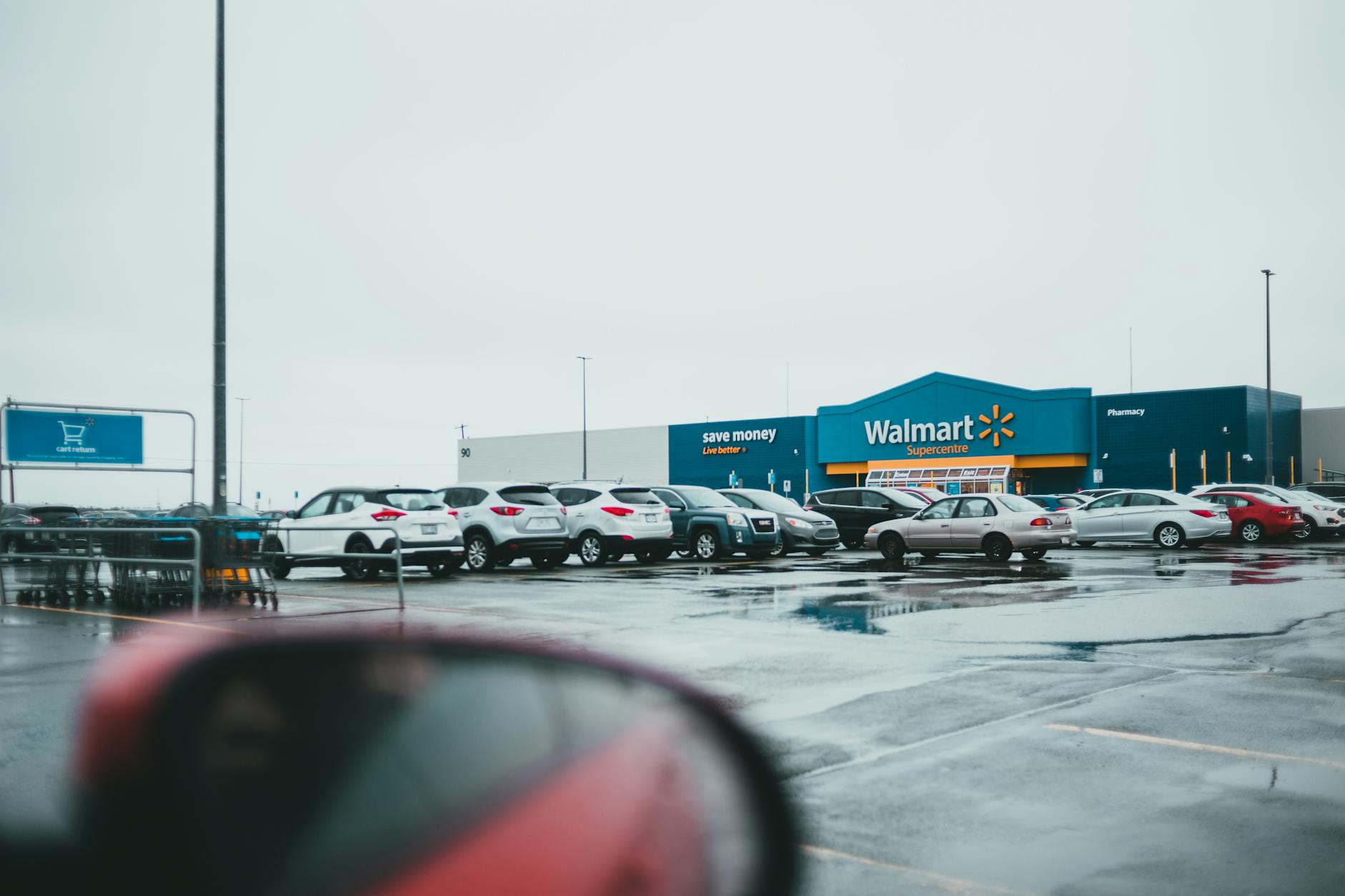
I remember the first Walmart that opened near us in the Chicago suburbs when I was a kid. It was not a Supercenter and it was not as big as today’s stores. There were some food items there but no fresh groceries. You could buy all sorts of stuff there, from CDs to clothes to auto care items. Buying groceries often required a trip to the major grocery chains in the Chicago area, Jewel and Dominick’s at the time.
The Walmart today is a different experience. One side of the store is devoted to groceries. There are many options available for all sorts of food items. A buyer could go just for groceries and make a choice about whether to add other items to their carts from the other parts of the store.
From these experiences and their revenue streams, it sounds like Walmart is a grocery store first. It is not a conventional grocery store but as the comparative numbers indicate, its grocery sales dwarf other competitors. For younger generations of Americans, they may see Walmart as the prototypical place to get groceries as opposed to supermarkets or neighborhood grocery stores.
The priest who permitted Sabrina Carpenter to film her music video for “Feather” has been stripped of his duties.
On Monday, Nov. 18, Monsignor Jamie Gigantiello was relieved of his role after church officials determined that an investigation revealed other evidence of mismanagement, per the Associated Press.…
Last November, just days after Carpenter, 25, released the visual for “Feather,” Gigantiello was disciplined and stripped of his administrative duties because of the video, per The New York Times.
The Diocese of Brooklyn shared a statement with the Catholic News Agency stating that Bishop Robert Brennan was “appalled at what was filmed at Annunciation of the Blessed Virgin Mary Church in Brooklyn.”
According to the outlet, the Diocese claimed that the Blessed Virgin Mary Church did not follow policy when it came to approving what gets filmed on Church property, and it was Gigantiello who gave Carpenter’s team permission to film the video.
As a researcher who has written about church buildings, I wondered how many churches or congregations would allow a music artist to film within their building. Would it matter what kind of music the video involved? Or if the artist had a personal connection with the faith tradition or the particular building? I would guess many religious congregations would hesitate before approving the filming of a music video in their space.
Religious buildings often work to separate profane – everyday – activities from sacred – transcendent – activities. How this is done can vary across religious traditions and spaces. If a congregation is renting space in a high school for services or is meeting in what used to be an Army barracks, how do they do this (see Chapter 6 in Building Faith for these examples and several others)? Or some religious traditions might mark religious spaces by distinct architecture and design while others argue they can do this in a multifunction space that can be a sanctuary at one moment, a gym the next, and a wedding reception space after that.
If this church had turned down the music video filming, where might they have gone next? Another religious building or a sound stage?
A 2021 Northwest Municipal Conference survey of its members identified 14 suburbs permitting group homes for particular populations, largely those with disabilities.
However, the conversion of homes into assisted living centers for seniors is becoming increasingly prevalent. Schaumburg has seen two proposals in the past year alone. There are also online seminars offered to entrepreneurs looking to flip homes and turn them into assisted living centers, aimed at the nation’s aging population.
Regulations vary in towns that allow such conversions. Some require approval from a village board or city council, while other towns don’t require such approval because these uses are already allowed in its residential code. But all enforce rules against external changes to the houses that would identify them as group homes…
“You’ll be driving down a neighborhood and never know we’re there apart from a van picking people up or dropping them off,” said Little City Foundation CEO Rich Bobby…
While the intention of the homes is to blend in, a degree of engagement with neighbors is sought in advance to paint an accurate picture of those who are going to live there.
A common suburban story regarding proposed changes to houses might go like this: neighbors get wind of a possible change in a subdivision or residential area. They express concerns about such changes altering the character of the community. Perhaps there might be increased traffic, noise, and lights? They share that they moved into this location because it was a quiet, residential space. Changes to that format threaten their day-to-day experiences and their property values.
But what if the changes to that house or residence were minimal in nature? Or, as the regulations above suggest, the exterior of the home does not look any different and there is not a noticeable change in day-to-day life around the home? Would this allay all the concerns?
From this article, it sounds like concerns have been at a minimum thus far. The number of conversions is small. Perhaps there is a tipping point where multiple proposals in the same neighborhood or on the same straight might draw more attention. But if neighbors do not see significant changes on the outside, they might not have many issues.
Given the needs of the suburban population, I suspect more suburbs will face this particular issue in the coming years. Building large facilities can be difficult and costly. If converting homes to group homes can help serve residents and neighbors are okay with it, perhaps this will happen in a lot of places.
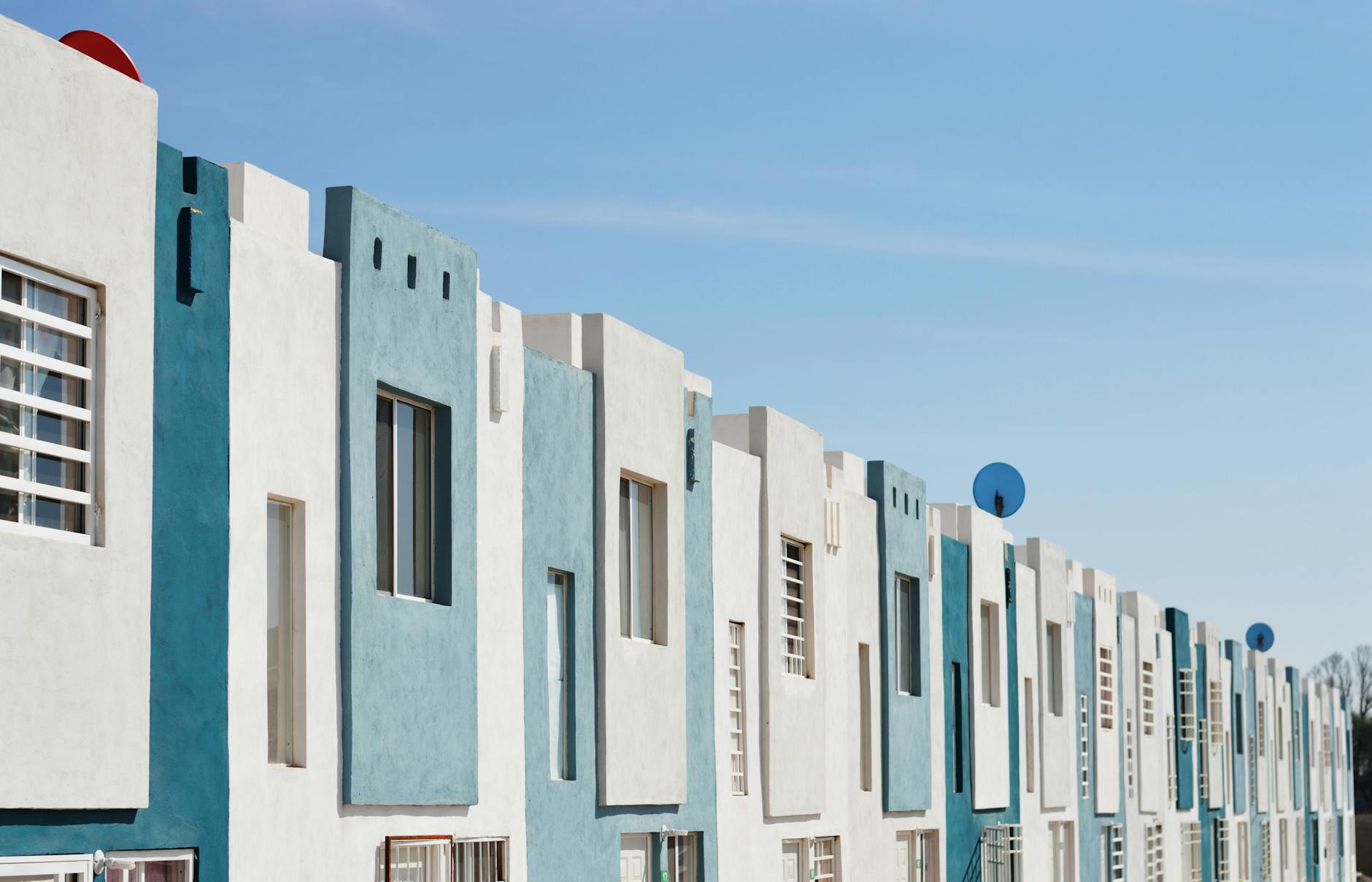
(This reminds of a 2013 book looking at affordable housing built in New Jersey where one of the goals was to design the multi-family housing units in a way that people passing by would not identify them as affordable housing. With some design work, this was largely accomplished and relatively few neighbors opposed the project.)
More than one-third (36%) of Gen Zers and millennials who plan to buy a home soon expect to receive a cash gift from family to help fund their down payment…
Young homebuyers are also receiving help from family members in other ways. Roughly one in six (16%) Gen Zers and millennials say they’ll use an inheritance to help fund their down payment, and 13% plan to live with their parents or other family members.
Working to earn money is the most common way for young buyers to fund down payments: 60% report they’ll save directly from paychecks, and 39% are likely to work a second job, the most common responses to this question…
Just 18% of millennials used a cash gift from family to help fund their down payment in 2019, according to a Redfin survey from that time, and the share had only increased to 23% by 2023. Note that the 2019 and 2023 survey results noted here are for millennials only, while the 2024 results in this report are for millennials combined with Gen Zers.
This is one way that wealth is passed from one generation to another. As the parents have resources (including possibly through the increase in value of their own residence), they can pass them along to their children at key moments to improve their prospects. And if parents do not have these resources, it would then take longer to amass a down payment.
One twist here is the suggestion that more parents are providing funds for down payments than in the past. The comparison is between 2019 and 2024. Were the numbers ever higher at some point in the past or perhaps higher among certain segments of the population?
What would it take for third parties to get in on this? Imagine a lending company says we will provide a large percentage of the down payment and you then owe us X amount of dollars when you sell the home at fair market value. I remember receiving some solicitations in the mail with a similar scheme for home equity loans; why not for down payments with bigger returns for the investors down the road?
In consecutive years, developers brought two different proposals for redeveloping an almost empty set of suburban office buildings into apartments. The first was turned down, the second was accepted. One factor was the size of the proposed apartments. From the first proposal:
Photo by Miguel u00c1. Padriu00f1u00e1n on Pexels.com
At an initial public hearing in August, the developer indicated he would target grad students with young families. According to the original plan, each apartment would have four bedrooms.
“If the target market demographics is going to be students, that’s more like a dormitory, not a residence. It’s a residential hall, but it’s not what we would envision in a neighborhood such as ours,” nearby resident Roberta Stewart told the zoning board.
The developer modified the proposal after the zoning board expressed concerns over a lack of details and too much parking. The property now has 80 parking spaces, most of which fall within a flood plain.
The revised plan shows three-bedroom units with offices in both buildings. There’s an “unmet need” for that size apartment in the area, Che said last month.
The previous zoning request was ultimately denied by the council last November in part due to the use of nontraditional floor plans — originally calling for four-bedroom units — and a surplus of on-site parking spaces, according to city documents.
Under the current plan, the buildings would contain a dozen one-bedroom units and 10 two-bedroom apartments, totaling 22 units. The proposed rents are approximately $1,674 a month for a one-bedroom unit and approximately $2,000 for a two-bedroom, said Mike Mallon, founder of Mallon and Associates, who represents the developer.
“We believe that our proposed plan will meet the residential demand in the market,” Mallon told city council members earlier this month.
It does not sound like the idea of apartments is the problem. The suburb was working with a plan that “recommends low-density multifamily residential development and repurposing existing structures.” The issue was the size of the apartments or the kinds of residents. If this was student housing – pitched by the developer as “grad students with young families” – then neighbors expressed concerned about dorms. Big apartments will lead to too many people near single-family homes.
Where are suburban residents to find larger apartments? Which suburban communities are approving construction of apartments with more bedrooms? Are the only concerns about students? Both developers said there is a market for their units but I would guess relatively few suburban apartments under construction have four bedrooms.







 Legally Sociable