Call them “logistics centers” rather than warehouses and I do not think suburbanites will like trading suburban HQs for them

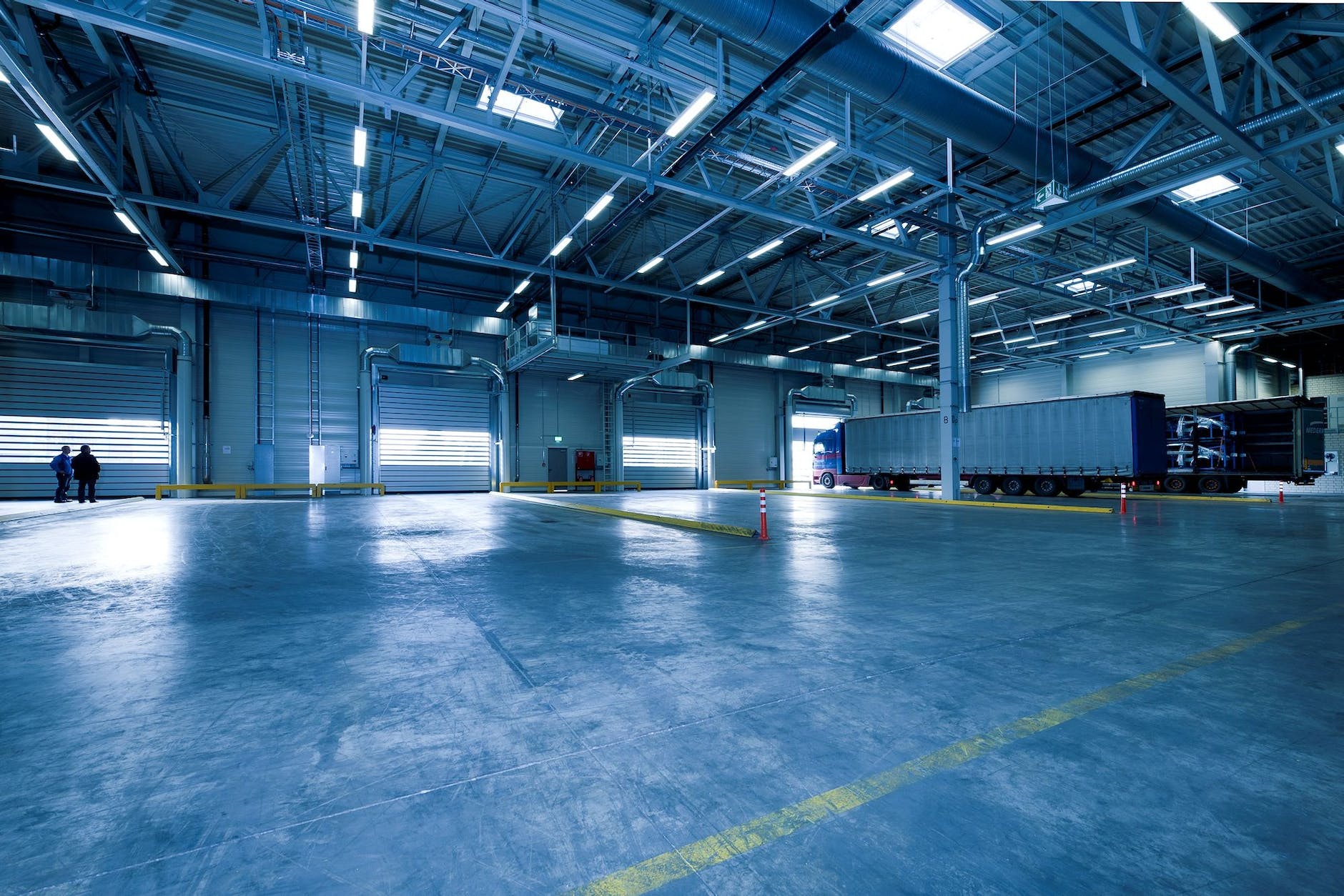
With reduced demand for large suburban office buildings and headquarters, properties around the Chicago region are turning into logistic centers:

Photo by Pixabay on Pexels.com

Catalyzed by the pandemic, the demise of corporate campuses has created a development explosion, as dormant office space is transformed into industrial use for the digital age. Data centers provide the infrastructure for online commerce, while logistics centers deliver the goods to your doorstep.

The warehouse facilities also deliver tax revenue for municipalities, construction jobs and depending on the use, some permanent jobs as well. But the economy-boosting days of 5,000 employees descending on a community may be a thing of the past…

Chicago has the most transportation, distribution and logistics firms in the U.S., and Illinois ranks No. 4 among states with 20,500 companies employing more than 331,000 people, generating nearly $39 billion in annual economic output, according to Intersect Illinois.

In October, with many of its 5,400 Chicago-area employees working remotely, Allstate sold its north suburban corporate campus along the Tri-State Tollway for $232 million to Dermody Properties. The Nevada-based developer is turning the 232-acre property, which was annexed by Glenview, into a 10-building, 3.2 million-square-foot logistics park…

The project, which is expected to cost more than $500 million including land acquisition, will be one of the largest urban logistics developments in the U.S., bringing a projected 1,900 jobs, a new streetscape and vastly different traffic patterns than the former insurance headquarters.

It is best to state this at the outset: empty properties are not desirable in suburbs. Even if something is paying the property taxes, empty properties decrease the status of a community and do not bring in additional benefits like jobs and tax revenues.

That said, many communities and suburbanites would see the trade from a prestigious headquarters or office park to warehouses as a big downgrade. They will not be fooled by calling them “logistics centers.” Gone are white-collar jobs and a Fortune 500 company. In are trucks, traffic, and blue-collar jobs. Gone are steel and glass buildings that signify progress and higher status. In are preformed panels and boxy structures. Residents like having goods delivered to them quickly but they do not necessarily want to see the fulfillment and delivery process happen next door.

The truth is that not every community will attract developers who want to build a large mixed-use development. Or, waiting for a developer who has an attractive idea and does not want too much public money might take a long time. Some communities will move faster than others to turn vacant structures into working properties. Others will resist and be able to turn down these options.

But, the spread of warehouses in suburban areas to even middle- and upper-class suburbs means changes for these communities. Once marked by pristine offices serving as status symbols, some of these communities will now be home to logistics centers sending out goods far and wide.

Brazil leads the world in exporting corn; consequences for Chicago and the Midwest?

A new nation is the world leader in exporting corn:

Photo by Todd Trapani on Pexels.com

Brazil is set to overtake the U.S. this year as the world’s top corn exporter, reflecting both a bumper harvest and logistical breakthroughs such as the consolidation of northern export routes, which are boosting the competitiveness of the South American grains powerhouse.

Corn exports through Brazil’s northern ports, which use the waterways of the Amazon River basin to ship grains globally, are on track to beat volumes via the most traditional port of Santos for a third consecutive year, according to a Reuters analysis of grain shipping data.

The shift underscores how Brazil, which churns out three corn crops per year and still has huge expanses of under-used farm land, is finally overcoming some of the infrastructure bottlenecks that have long made it hard to get its bountiful harvests to global markets.

That and a new supply deal with China announced last year suggest Brazil may be opening a longer era of supremacy over U.S. corn exports, unlike the last time the Brazilians briefly grabbed the global corn crown during North America’s drought-hit 2012/13 season.

Three thoughts connected to this shift:

-The image of the Midwest in the United States often involves corn. Corn mazes, corn palaces, endless fields of corn. Does this diminish anytime soon in the Midwest? Does Brazil have similar regional and cultural connections to corn?

-One of the reasons Chicago grew rapidly and became a global city is because it became a center for buying, selling, trading, and shipping commodities like corn. Corn poured into the city and helped make it wealthy and influential. Now, activity involving commodities has increased elsewhere. Will the traders in Chicago be betting on Brazilian corn?

The number of people involved in agriculture in the United States dramatically declined in the last 120 years. Food production has continued to grow. So, if more food s grown outside the United States, do most consumers notice? I wonder if we would ever see Brazilian corn at a store near us.

The environmental consequences of big (electric?) trucks on the roads

The United States depends on goods shipped by truck. This comes at an environmental cost:

Photo by 500photos.com on Pexels.com

According to the Department of Energy, even though medium- and heavy-duty trucks account for only 4% of the vehicles in the United States, they consume 25% of total highway fuel and create nearly 30% of highway carbon emissions. Stricter standards on smog-forming emissions on trucks will take effect in 2027, which could force companies to turn to electric versions such as this Tesla fleet.

Since trucking is essential, even small improvements to gas mileage and emissions could go a long ways. I am not sure that having full fleets of electric trucks or even autonomous electric trucks in a few decades time would look that futuristic but it sounds like they could help.

Why might suburban residents oppose the sale of park district land to a church? Here are some reasons

I have studied opposition to religious groups using buildings and land (article one, article two). One plan in the Chicago suburbs to sell park district land to a religious group has led to issues as nearby residents have filed a legal complaint in county court. Their concerns? From an online petition:

Photo by cottonbro studio on Pexels.com

1.  Allow Area N to remain a wetland and preserve the open space in line with the South Barrington park district’s overall mission.

2.  If Area N will be sold for a development, access should not be granted through Acadia Drive.   Acadia Drive is within a residential community that has no sidewalks and permitting access to the development through the residential community, without sidewalks (the Woods of South Barrington), presents a nuisance and would be grossly negligent on behalf of the Village and the South Barrington park district.  There is a walking trail (that is accessed from Acadia Drive or feeds residents onto Acadia Drive) where the access would be granted and children and residents are outside after school, on weekend and holidays.  These are all peak worship times.  The school also presents this same safety issues at the end of the school day where children who live in the residential community are walking home from being dropped off by the school bus.  The residential community should remain residential and not be subject to increased development traffic.  As repeatedly noted, this is a significant safety concern.  The safety of our children and residents should be top priority for the Village and the South Barrington park district.  

3.  Further we request access not be granted on Bartlett road at all to preserve the surrounding residential communities from the same safety concerns.

Additionally, some of those signing the petition offered reasons they do not want this particular church in their community.

While this is about a particular piece of land and a particular religious group working within a particular suburban community, these reasons are fairly standard from what I have seen in my research. They have concerns about losing open space/natural space and park land. They are worried about traffic in residential neighborhoods. They do not want a group that multiple commenters call a cult in their community.

This will work its way through the legal system and local government bodies. Suburbanites who do not want certain land uses nearby can be quite persistent in their efforts to make sure proposals they do not like reach a certain outcome. Whether they can guarantee the outcome they want is another matter.

The ongoing transformation of the Bell Labs site that helped create modern Naperville

A large office building is coming down at the northwestern corner of Naperville and Warrenville Roads in Naperville. This is not just any office building; this is the site that helped jumpstart Naperville’s growth and status. Here are some details on the changes:

Constructed in 2000 at the northwest corner of Naperville and Warrenville roads, the five-story glass and steel complex at one time was touted as a technological hub with the potential to sustain thousands of jobs.

But with the recent arrival of cranes, excavators and other heavy equipment, a new era is beginning for the 41-acre site that’s part of the city’s Interstate 88 corridor.

Oak Brook-based Franklin Partners — which in April finalized the purchase of 1960 Lucent Lane for $4.75 million — in June received a demolition permit from the city to raze the 500,000-square-foot building and the three-story parking garages on either side…

Discouraged by city officials to develop warehouses on the property, Franklin Partners replied by saying it would seek a technology-based alternative.

I describe this property’ contribution to Naperville in a 2016 article titled “A Small Suburb Becomes a Boomburb” in the Journal of Urban History:

The arrival of a high-status tech company on this suburban plot helped give rise to more white-collar employers in Naperville plus numerous subdivisions.

This property has been ripe for change for a while now. Last year, I noted the amount of available parking behind the facility and a new subdivision back there as well (sign for the development, a new park).

It is too simple to say that the fate of this land could do much to affect Naperville’s future trajectory. At the same time, it is a large parcel of land that once helped affect Naperville’s future. It sounds like the city clearly does not want the property to become warehouses, but what could arise here that contributes to a vibrant future?

Quickly describing the worst-case scenario of “the urban doom loop”

What might an urban doom loop look like? Here is one brief description:

Photo by Stas Knop on Pexels.com

The worst-case scenario would go like this: With more people working from home, companies from Milwaukee to Memphis are rethinking their leases or pulling out of them altogether. That drives vacancy rates up and makes it harder for landlords to attract new tenants or sell buildings for a healthy price.

Then property owners might struggle to pay off their mortgages or clear other debt. Business districts would dry up, stifling tax revenue from commercial properties or employee wages. Shoppers and tourists would have fewer reasons to venture downtown to eat or shop, choking off spending and forcing layoffs at restaurants and retail stores.

“Once those offices are empty, there are few alternatives and not a lot of life after hours,” said Stijn Van Nieuwerburgh, a professor of real estate and finance at Columbia University’s Graduate School of Business who is one of the authors of a paper that coined the “urban doom loop” phrase. Midsize cities “have a much bigger chasm to cross than what New York City has to go through. The situation is worse in those places with so little else in place.” He added, “It is a train wreck in slow motion.”

Once the primary use of a district starts disappearing, it can be hard to reverse the pattern. This is true in downtowns where much of the space is used for offices. It can be true for other uses as well, such as when retail dries up at shopping malls or a particular industrial activity slows down in a one industry place.

Is the primary way of addressing this right now simply to hope it the doom loop does not get too far? Are there any interventions that could help protect against worsening conditions? This could be an interesting time for experimentation across American cities as places and firms adjust to less need for permanent office space.

Adjusting rail transit to a decline in the 9-5 commuter

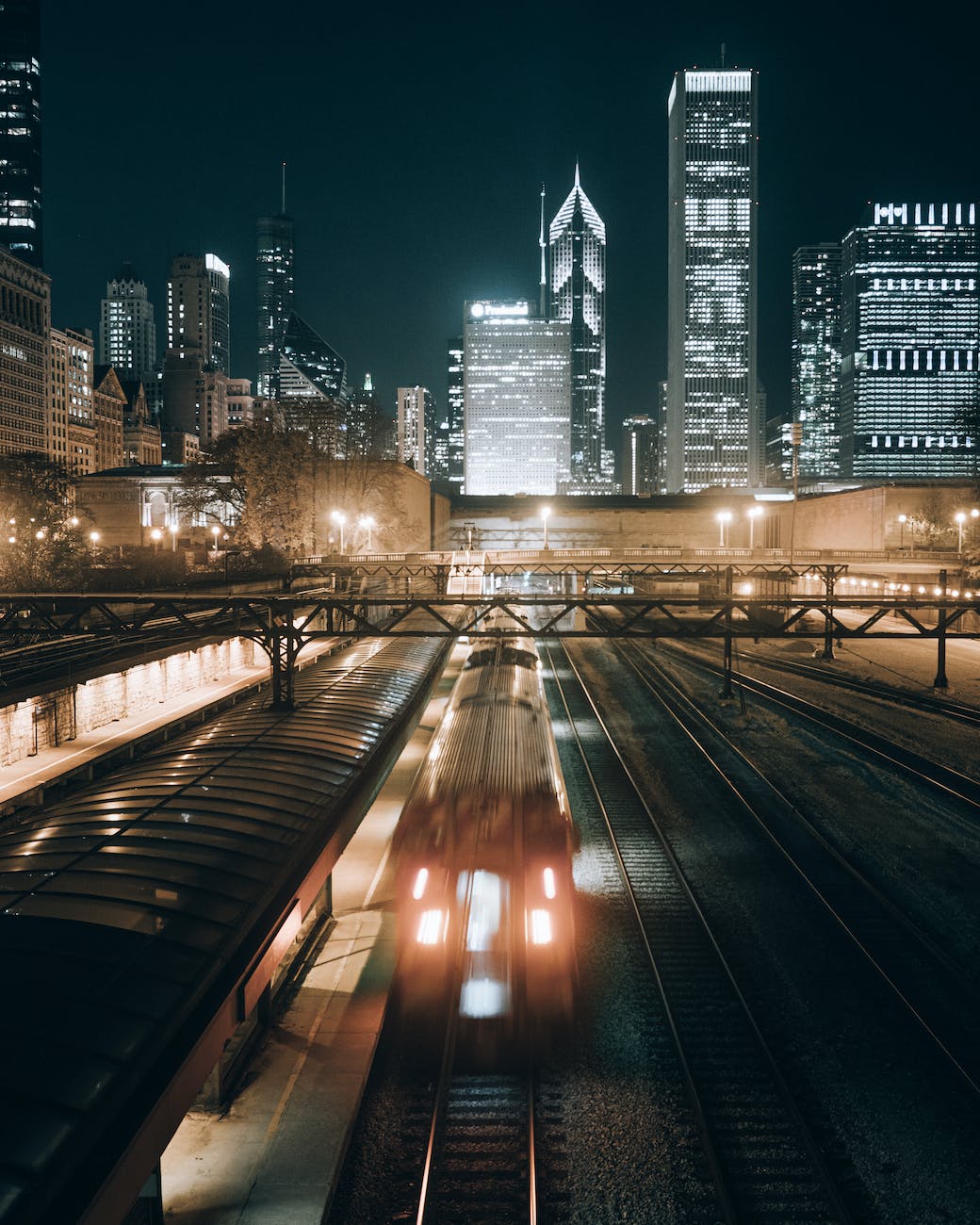
The Chicago region is built around a hub-and-spoke railroad system. But, what happens to those railroads when fewer people take the train into the city five days a week?

Photo by Josh Hild on Pexels.com

The 9 a.m.-5 p.m., five-days-a-week-in-an-office commuter is an endangered species on the brink of extinction. And that reality poses an existential crisis for transit agencies, especially commuter rails like Metra.

Now the agency’s post-pandemic recovery plans are coming into focus, and commuters could soon feel changes, from some increased fares to new ridership packages that will make a popular 10-ride card obsolete.

But perhaps the most interesting shift is Metra’s attempt to market itself as more than a vehicle to get white-collar workers downtown…

The plan is also focused on promoting non-downtown trips, which Metra sees as a growth opportunity. To encourage a trip to the zoo, for example, one-way tickets that don’t include a downtown starting point or destination would cost $3.75 regardless of distance…

Even if Metra wanted to add more frequent trains — which Gillis said it does — that change can’t happen overnight. Mixing up schedules would likely require infrastructure updates and new agreements with the freight railroads that share the tracks Metra trains travel on. All that would come at a cost, which may be out of reach for an agency barrelling toward a budgetary crisis.

One issue that is very difficult to address: is the railroad infrastructure in the Chicago region just not in the right places? The hub-and-spoke model worked for decades but more commuting is suburb to suburb. The region needs rail lines and other mass transit options that link suburbs and suburban job centers. Even just adding one or two dependable connector options between the Metra lines could be a big help. (See the proposed STAR Line.)

Another route to pursue: continue to encourage communities to build more transit-oriented development that can help create a larger residential base who can easily hop on and off railroad lines. I was recently on a suburban railroad line and saw a family with small kids hop on for three stops and get off. If more people can easily walk to a station, travel quickly and reliability, and find something interesting within a short walk a few stops away, they will do so. What might be good for local development can also be good for Metra.

Housing migrants amid a tight housing supply

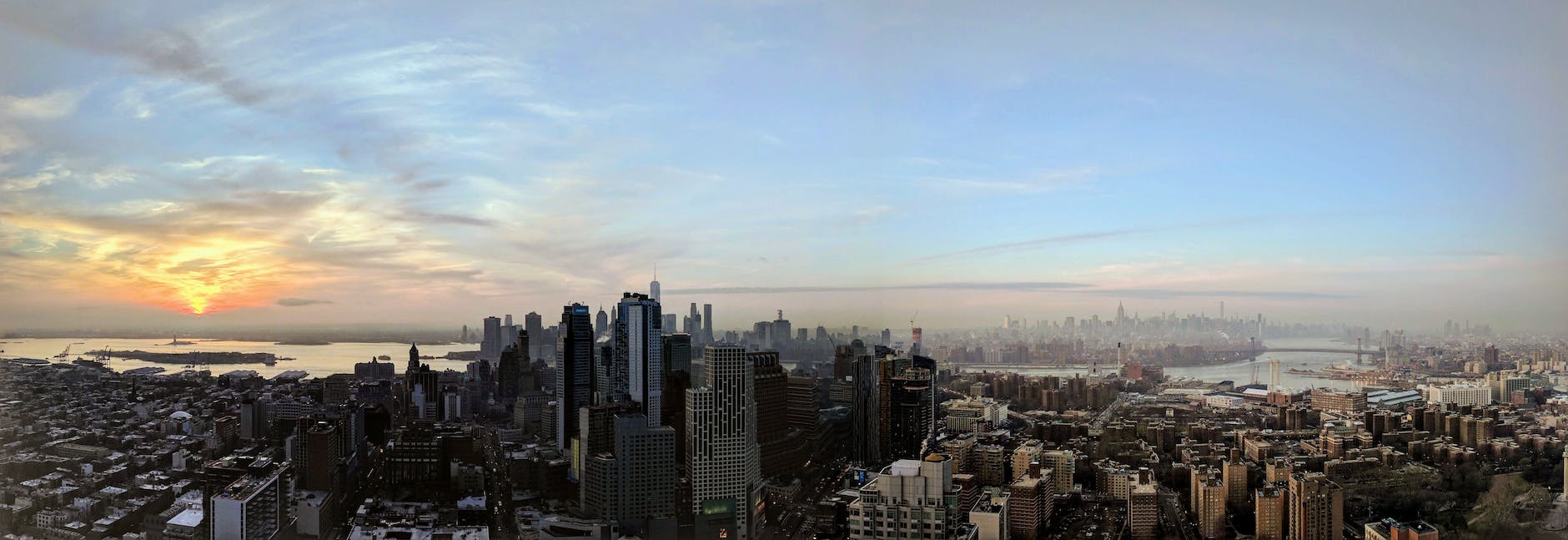
New York City does not have much available housing and this leads to problems:

Photo by Pixabay on Pexels.com

You can see it by looking at residential-vacancy rates, which have been as low as 2 percent in recent years. You can tell by looking at the size and price of rentals and homes for purchase: The average rent in Manhattan is more than $4,000, and the average home in Brooklyn costs roughly $1 million. You can see it in the shrinking of New York’s middle class and the stagnation of its population and the widening of its income and wealth inequality. Housing supply has simply not kept pace with housing demand, squeezing everyone except for the very rich.

The same forces shunting families to the suburbs are weighing on the migrants. The same forces driving New Yorkers out of unaffordable apartments and into homeless shelters are weighing on the migrants. Migrants cannot afford housing for the same reason that the city itself struggles to raise money for new facilities. New York really is full…

High housing costs have a way of making every problem a housing problem. A homeless person needing help with a substance-abuse disorder needs housing first. A migrant requiring legal aid more pressingly needs a roof over their head. And high housing costs, of course, force millions of vulnerable people into homelessness. “Our homeless-response system has turned into a crisis-response system,” Gregg Colburn, an associate real-estate professor at the University of Washington’s College of Built Environments, told me. “So many other systems have failed or delegated responsibility to it.”

The opposite is also true: Low housing costs make other problems simpler to solve. Cheap housing reduces the number of people who become homeless. It also allows the entities providing assistance to do more for less, because their overhead costs are lower. And it frees up lawyers to work on immigration cases, substance-use experts to work on substance-use issues, and mental-health counselors to work on mental-health issues.

It is enough to make one think that seriously and sufficiently addressing housing should be a major priority!

The problem is not just limited to New York City. Multiple big cities in the United States need more housing units and lower-priced yet good quality housing. Having a stable place to live at a reasonable price goes a long way to better life outcomes and opportunities.

But, adding a lot of good housing takes a lot of work and there does not seem to be political will to address it. Additionally, it can be easy to look for other solutions to some of the different problems listed above. Would building more good housing automatically solve these issues? No, but it could help a lot and make it more possible for people to live and enjoy major cities.

Chicago once had the country’s busiest port

Chicago is a transportation center, and it once was home to a thriving port:

Photo by Pixabay on Pexels.com

In 1871, the city’s one-of-a-kind water link between the Great Lakes and the Mississippi River helped make it the country’s busiest port, one that lured more ships than New York, San Francisco, Philadelphia, Baltimore, Charleston and Mobile combined, according to the Encyclopedia of Chicago

These days, Chicago is much better known for busy railroad lines, air traffic, and highways.

Intriguingly, Chicago still has access to major bodies of water. Whether they are in as much demand as the past and whether they are in good enough shape to handle more traffic (the subject of the article cited above) are other matters. Could there be a future world where more goods and materials go by ship and Chicago benefits from its location that can link the Atlantic, the Great Lakes, and the Mississippi?

Founding a new city in 2023? Quietly buying up property, sending out text surveys

If you wanted to found a new community today, how would you do it? One group is buying up a lot of acres in the Bay Area and sending out surveys:

Photo by Jan Kroon on Pexels.com

Amid a flurry of rumors about a mysterious buyer who has purchased 52,000 acres in Solano County, local residents have received a survey gauging support for a “new city with tens of thousands of new homes.”…

Screenshots of the survey reviewed by SFGATE show an extensive market research campaign. It starts by informing recipients that they will be weighing in on “a description of an initiative that might be on the ballot in Solano County next year” regarding a new development in eastern Solano County.

“This project would include a new city with tens of thousands of new homes, a large solar energy farm, orchards with over a million new trees, and over ten thousand acres of new parks and open space,” the survey continues…

Since news of Flannery’s acquisitions broke, locals have speculated the buyer could be planning anything from a deep water port to a regional airport to even a nuclear power plant. But building a new city from scratch would present its own set of challenges. For one, the developer would need to acquire water rights to support large suburban housing tracts. And, according to Farley, it would need to change Solano County’s “orderly growth” policy, which restricts urban development in many parts of the county.

Buying up land quietly has a long history. If plans are made public, land prices can go up. People start raising objections. Thus, developers try to acquire land behind the scenes and then make a proposal.

The text polls are interesting. Presumably, they can help the buyers/developers tweak their plan and/or public pitch for development. The data might not be great – how many local residents will respond to an anonymous poll? – but it could provides hint of what locals see as doable or what they do not like.

Almost regardless of what is proposed for this land, expect a lot of response. Housing is needed in the Bay Area but neighbors and leaders will certainly have concerns. Additionally, I would expect commentary on how the process has progressed to that point.