The suburbs as the perfect places for drone deliveries

Where might drones make deliveries? One project in Texas suggests the suburbs make a lot of sense for such deliveries:

Photo by Darrel Und on Pexels.com

Flytrex, which specializes in on-demand, ultrafast delivery for food and retail, is bringing food and grocery orders via drone to front and backyards.

According to a release, the service will be based in Granbury, in a partnership with restaurant chain Brinker International, home of Chili’s Grill & Bar, Maggiano’s Little Italy, and two virtual brands: It’s Just Wings and Maggiano’s Italian Classics.

The service is operating in cooperation with longtime partner Causey Aviation Unmanned under a newly granted Federal Aviation Administration (FAA) waiver allowing a delivery radius of one nautical mile – reaching thousands of potential homes. Eligible households can order food via the Flytrex app.

Their focus is on the suburbs, where on-demand delivery has previously been viewed as commercially unviable, since traditional couriers can make only two deliveries per hour in such areas. They have a video showing a drone at work on YouTube.

Granbury is a small town of just over 11,000 residents roughly 30 miles southwest of Fort Worth and on the edge of the Dallas metropolitan area.

More broadly, it is interesting to note that the population densities of Granbury and the suburbs are what might make delivery by drone viable. Americans tend to like suburbs and driving. But, this is not as good for delivering food or other items. The same kind of space Americans like for their suburban homes does not work well with quick deliveries.

How many deliveries can drones make in an hour compared to vehicles? Are there also advantages to suburban deliveries from not having to encounter many tall buildings or obstacles?

If drones are better for suburban deliveries, are suburbanites open to drones flying above their homes to bring them things they have ordered? Suburbanites also like a connection to nature and drones may not provide that if they are flying or they can be heard above homes. The same drones that enable a consumer lifestyle do not necessarily fit with an image of quiet suburban properties.
“Anybody can be suburban. It just takes money…” misses the intersection of class, race, and local control

As some states pursue affordable housing guidelines for communities, one critic argues it just requires money to live in the suburbs:

Photo by Travis Saylor on Pexels.com

Racial discrimination is abhorrent and should be prosecuted. But as a Brookings Institution analysis of the 2020 census shows, race isn’t a barrier to suburban living. Blacks are moving to the suburbs at a faster pace than whites. Anybody can be suburban. It just takes money — especially in Connecticut. In 2017, developer Arnold Karp purchased a colonial house on tree-lined Weed St. in small, ultra-wealthy New Canaan. There are no commercial or multifamily buildings on the street. He now wants to build a five-story, 102-unit apartment complex with 30% set aside for affordable housing.

The data does suggest people in all racial and ethnic groups are moving to suburbs. Here is what William Frey concluded from 2020 Census data:

This analysis of suburban and primary city portions of the nation’s major metropolitan areas shows that these big suburbs are more racially diverse than the country as a whole. Moreover, in contrast to how white flight fueled growth there in the past, most big suburbs have shown declines in their white populations over the 2010-20 decade. Their greatest growth came from Latino or Hispanic Americans, Asian Americans, persons identifying as two or more races, as well as Black Americans—continuing the “Black flight” to the suburbs that was already evident the 2000-10 decade. 

Today, a majority of major metro area residents in each race and ethnic group now lives in the suburbs. And for the first time, a majority of youth (under age 18) in these combined suburban areas is comprised of people of color.

But, as a sociologist of suburbs, here is what is missing from the critics’ analysis: people of different racial and ethnic groups are not evenly distributed across suburbs and not all racial and ethnic groups have the same wealth, income, and resources to obtain suburban homeownership.

In other words, because social race and race and ethnicity in the United States are connected, it is not just about money in reaching the suburbs.

What is really at stake? From the critic:

Local control will be obliterated. Albany will call the shots on what your town looks like, how much traffic there is and ultimately what your home is worth…

Ensuring a supply of affordable housing within a region is more reasonable than demanding every town alter its character.

Suburbanites like local control and local government. These arrangements allow leaders and residents means by which to decide who can live in their community. This is often done through housing values and prices; ensure the land and homes or rental units expensive enough and the community can be exclusive.

Additionally, one of the problems of affordable housing – and other land uses less desired by suburban homeowners (including drug treatment centers and waste transfer facilities) – is that few suburban communities want it. Communities with means and political voices will keep affordable housing out. This means affordable housing is not plentiful often and is often clustered in particular locations. One reason states are pursuing this at a metropolitan level is that there is not enough affordable housing in the current system that prioritizes local decision making over what is good for the region.

Suburban residents may not like the idea of affordable housing arriving in their community. However, the legacy of housing in the United States is often one of exclusion and restriction, not about communities and residents coming together to provide housing for all.

State of Illinois has grant money to help develop megasites of 200+ acres, including suburban locations

A new grant from the state of Illinois makes money available to develop “megasites”:

Photo by Jahoo Clouseau on Pexels.com

Gov. J.B. Pritzker on Monday announced the creation of a $40 million grant program to help businesses find and build on large development-ready areas known as “megasites” across the state, including several in the suburbs.

Megasites are large swaths of land intended for businesses such as factories, warehouses and distribution centers. Pritzker said developing these sites will help make Illinois more competitive, especially as sectors including clean energy and manufacturing are rapidly expanding in the U.S…

Intersect Illinois, an independent economic development nonprofit working with the state on the program, lists among 151 megasites two in Hoffman Estates, one in West Chicago, four in Lake County and five in the Fox Valley. Several more are in South and Southwest suburbs, and more than two dozen are southwest of Joliet around Minooka, Channahon and Morris…

The program is open to private entities, nonprofits and local governments, and the application portal is open through April 6. Those receiving the grant must match each dollar granted by the state with other private or local funding.

This is a good example of how governments and private interests work together in the United States to develop land. The state government provides money in concert with more local funding in order to help spur development. Without the government money, the development may not happen.

This money is marked to help with large projects. Is the assumption that it is difficult to entice companies to such sites in Illinois or that local governments do not have enough resources to address needs for properties this large?

If these properties are not developed as megasites (versus being developed in parts), how much is lost?

This will be worth checking on in a decade or two to see what exactly emerges on these megasites.

Collective efficacy and the number of sidewalks cleared of snow, Part Three

Given the issues of clearing snow on sidewalks, why not conduct a multi-site investigation of snow clearance and collective efficacy? I could imagine two different kinds of research proposals:

Photo by Vishal Rapartiwar on Pexels.com

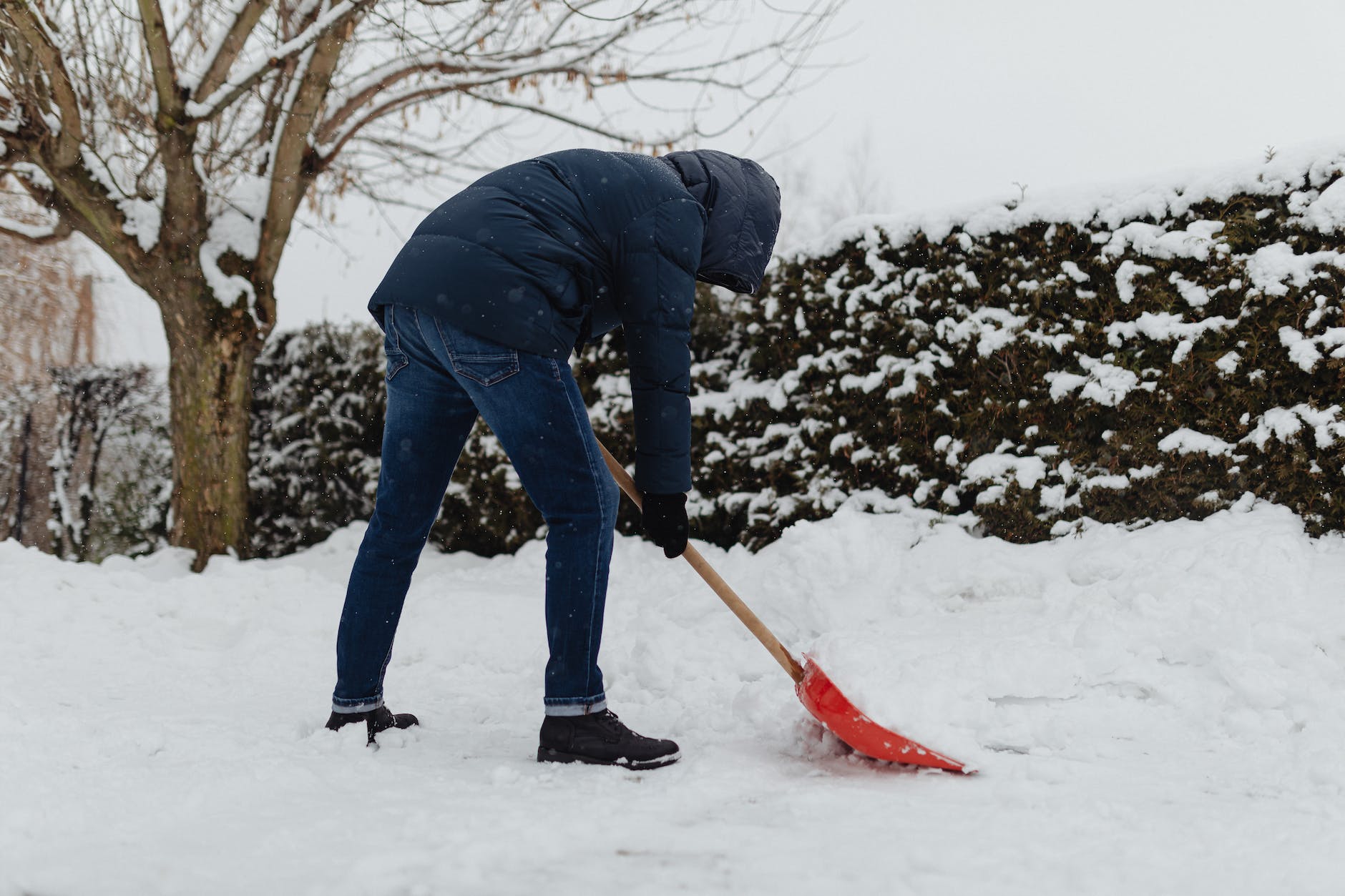
-A lot of researchers across the United States commit to walking their neighborhoods for a week after major snow storms in the United States to see if the sidewalks are clear. They do a visual check and take some pictures to document conditions. This is all uploaded to a single site where patterns can be compared, mapped, and discussed.

-Scholars use more indirect observation, whether it is from Google Street View images of places after a snowstorm or camera feeds that are publicly available or even observations from above. Again, they could compare across locations and write up results.

With this data, researchers could look at how different characteristics of neighborhoods affect snow removal including all sorts of demographic data available through the Census, housing type and stock, and local regulations regarding snow removal.

But, perhaps what is most interesting is this question of whether snow removal on sidewalks indicates something about the collective efficacy of neighborhoods and communities. Do people help others clear sidewalks? I think of the example in Chicago of the dibs system where individuals clear out street spaces and then claim them. This system is touted as one where residents overcome the weather odds – and their neighbors – to secure their own parking. This is not a story of communities coming together to help each other. Or, I think of some of the unshoveled sidewalks I have observed around schools in my community. If property owners will not clear snow for kids, when would they?

Across three posts, this is the question that could be answers: what are the kinds of communities that collectively come together to clear snow from the sidewalks?

Collective efficacy and the number of sidewalks cleared of snow, Part Two

Continuing to think of sidewalks cleared of snow (or not), why are sidewalks often viewed as the responsibility of a property owner? Are sidewalks a collective phenomena that benefit all or are there they parts of private property that individual property owners are responsible for? The latter response makes it easier to blame individual property owners for not clearing the snow. But, it is hard to imagine walking only the sidewalk in front of one property; the sidewalks connect to many other sidewalks.

Photo by Karolina Grabowska on Pexels.com

Several factors contribute to less interest in a collective responsibility for sidewalks:

  1. Laws and regulations can differ by municipality regarding sidewalks. Are property owners responsible for repairing and maintaining sidewalks? Are they asked to clear their own sidewalks?
  2. As noted yesterday, fewer people are outside. Some people use sidewalks a lot but many people use them rarely. Snow and cold also reduce use.
  3. The suburbs are individualistic, people may not know their neighbors well, and property values are only partly dependent on the neighborhood. People want to act self sufficient.
  4. There is little interest in or experience of the kind of thriving sidewalk life Jane Jacobs described in The Death and Life of Great American Cities. In the picture Jacobs provides, people are constantly using sidewalks in a variety of ways. There are always people out and about, helping to create social norms and providing numerous opportunities for social interactions. Sidewalks in many suburban neighborhoods are more like empty tableaus where an occasional person and sometimes dog passes by. People would often prefer to live in quiet neighborhoods.
  5. Help is often associated with payment. Yes, a neighbor could clear snow as a favor but kids occasionally look to make money by shoveling, people pay to have their driveways cleared, and HOAs take care of this in many neighborhoods.

Put these all together and a good number of sidewalks contain snow and ice. This could suggest that collective efficacy is low in these neighborhoods; I will explore a possible multi-site research design tomorrow.

Collective efficacy and the number of sidewalks cleared of snow, Part One

Judging by conversations on Nextdoor and my own observations of nearby streets, there are a good number of property owners who do not shovel their sidewalks to remove snow. What levels of shoveling indicate the neighborhood takes collective ownership of the sidewalks? 50%? 67%? Over 75%? What fewer shoveled walkways might mean about a neighborhood and neighborliness:

Photo by Karolina Grabowska on Pexels.com
  1. People do not walk outside much. If so, they would shovel more. Not shoveling makes it more difficult for pedestrians to get by. When the snow starts melting a bit and is trampled down, it becomes icy. I have observed numerous houses where the driveway is clear but not the sidewalks.
  2. There might be several socially acceptable reasons for not shoveling: illness, old age, and being away from home. Even then, it would be possible to arrange with others to have the sidewalks shoveled.
  3. Dog walkers might be the most interested people in shoveling (this could be tested): they are regularly walking and their dogs too could benefit from cleared sidewalks.
  4. Neighbors do not help neighbors shovel. This might require a lot of effort or not. On sidewalks near me, clearing out a one shovel wide width down multiple sidewalks would not take long (if the snow was not too deep). Or, I hear stories of people with snowblowers clearing a long stretch of sidewalks quickly.
  5. The best cleared sidewalks I see are the ones in neighborhoods with homeowners associations. Residents pay for the cleared snow, among other things.

Put these all together and there is a patchwork of cleared sidewalks mixed with uncleared sidewalks. Tomorrow, I will explore a related question: are the sidewalks a collective responsibility or the responsibility only of individual property owners?

Punxsutawney Phil is worse than a coin flip in predicting the weather

How well does Punxsutawney Phil predict the duration of winter? Not so well according to one source:

Photo by Oleg Mikhailenko on Pexels.com

Phil’s track record is not perfect. “On average, Phil has gotten it right 40% of the time over the past 10 years,” according to the National Centers for Environmental Information, a division of the National Oceanic and Atmospheric Administration, which manages “one of the largest archives of atmospheric, coastal, geophysical, and oceanic research in the world.”

The three-month temperature outlook for February through April 2023 calls for above normal temperatures across the eastern and southern US and below normal temperatures for the northwestern US, according to the Climate Prediction Center…

Despite his mixed record when it comes to actually forecasting the weather, there’s no doubt Phil’s fans still hold him in high regard.

After all, his full title is Punxsutawney Phil, Seer of Seers, Sage of Sages, Prognosticator of Prognosticators, and Weather Prophet Extraordinary.

In other words, Phil is worse than a coin flip in predicting the coming weather. This is not good; any expert would hopefully be better than that.

However, there is some evidence that many expert predictions about the future are not great. How well can people predict the future performance of the stock market or natural disasters or geopolitical change? Not so well. And it is not just that it is difficult to predict the future; we think we can predict the future so it can be even more damaging when projections are wrong.

I suspect very few people care if Punxsutawney Phil is right or wrong. They like the tradition, the ritual, a festive gathering in the middle of winter. Still, Phil offers a window into our own abilities and confidence about knowing the future…and it is a cloudy window at best.

Max Weber, American capitalism, and betting on weather

In having a class recently read several chapters of Max Weber’s The Protestant Ethic and the Spirit of Capitalism, I was struck by one of the conclusions:

In the field of its highest development, in the United States, the pursuit of wealth, stripped of its religious and ethical meaning, tends to become associated with purely mundane passions, which often actually give it the character of sport.

According to Weber, by the early 1900s the practice of capitalism in the United States was taking on “the character of sport.”

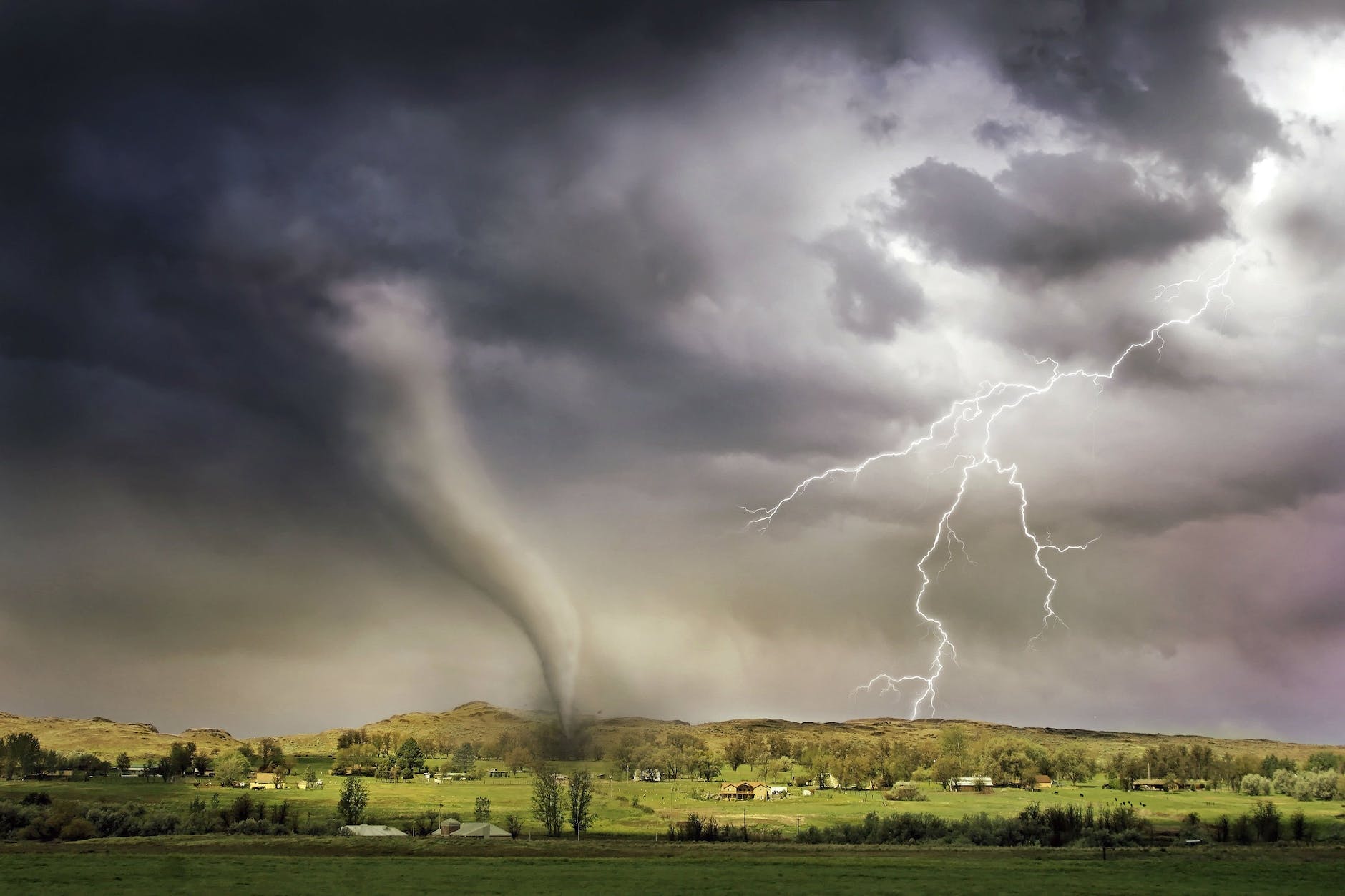
How much more might this be true today? I then read a story about betting on the weather is taking off:

Photo by Ralph W. lambrecht on Pexels.com

Weather betting emerged and gained popularity during the pandemic.

“When the pandemic hit and sports shut down in March, most people will remember the NCAA tournament was canceled and within a day virtually everything shut down. There was nothing to bet on. The sports world naturally shut down and sports books were looking for something to attract customers. One of the popular things that emerged was betting on Russian table tennis and another was betting on the weather,” says Holden…

“There will be a proposition like, ‘Will there be rain on this day?’ and then individuals can select yes or no. Much like in over under betting for sports, the bookmaker sets a line where the total points can either go over or under and the better selects which will occur.”

Betting laws are strict in the U.S. and at the moment, weather betting is not regulated. However, it is allowed in places like Canada where sportsbooks are taking bets on the weather.

Some might say that betting on the weather is just another opportunity for gamblers to try to make money and for those in the gambling industry to make money. Following the quote from Weber above, perhaps it is just another outworking of capitalism in the United States. Why not make it like a sport? Why not try to generate money off the weather?

McMansions and SUVs arose together; SUVs won

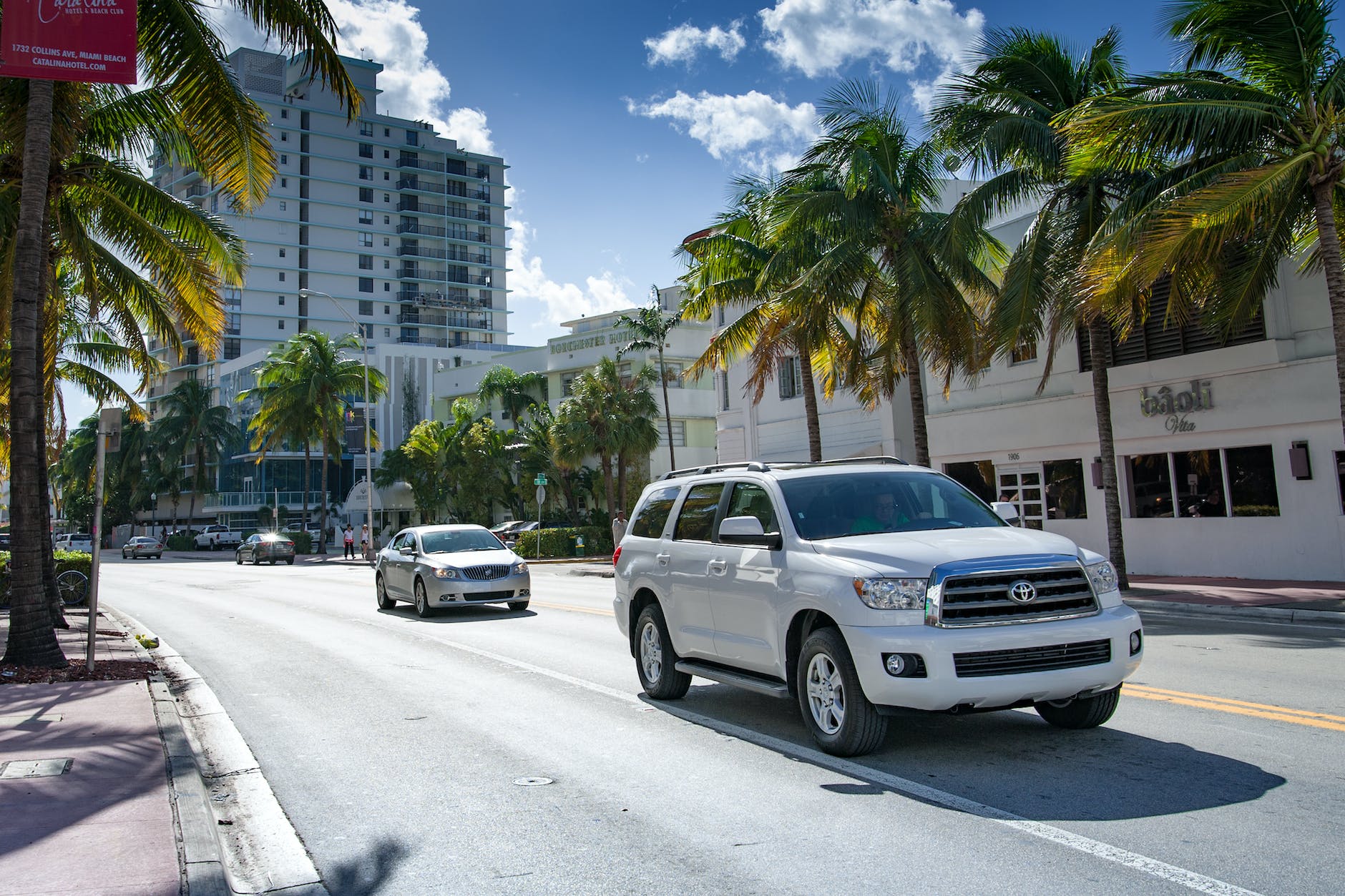
When I set out to study McMansions, I found regular reference to McMansions alongside SUVs. In the time period I examined, the New York Times put these two phenomena together 33 times. Both the homes and vehicles emerged in a similar time period, the end of the twentieth century, and embodied a consumption economy with a bigger is better mentality.

Photo by mali maeder on Pexels.com

Looking from the vantage point of 2023, SUVs far exceeded McMansions. Even accounting for the differences in price and resources needed, can we declare the SUV the more successful cousin? This particular statistic helped me come to this conclusion:

Today 4 in 5 new American cars are SUVs or trucks, up from less than 1 in 2 in 2000.

That adds up to a lot of SUVs in a country that prioritizes driving.

The best counter-argument I can imagine would go like this: do bigger vehicles and more driving enable McMansions or does a love of single-family homes fuel driving SUVs? Americans like big houses and this encouraged more big vehicles to travel to and from these hours.

However, the sheer number of SUVs is hard to overcome. Millions upon millions. How many McMansions are there? Plenty, but they are clustered in particular places. The SUVs are everywhere and not fading anytime soon.

A suburban hospital creating a medical and commercial district

Northwestern Medicine is developing and opening multiple properties around its hospital in the small suburb of Winfield, Illinois:

Photo by Pixabay on Pexels.com

The once-blighted corner now boasts a $38.8 million medical office building designed to anchor the redevelopment of Winfield’s Town Center…

The health system also has built a parking garage and amenities in Riverwalk Park since forming an agreement with the village to inject new life into Winfield’s small-town downtown. Northwestern has set aside commercial and restaurant space on the ground floor of both the parking deck and the medical office building…

Winfield Station, a five-story apartment complex, is almost fully leased, Sorgatz said.

The site that once housed John’s Tavern is available for development directly west of the medical office building. The restaurant owner closed the business in 2017 after deciding to retire. Northwestern purchased the property.

The hospital and the town have not always seen eye to eye.

This story highlights the potential for a hospital to drive redevelopment. The hospital has money, nearby property is available. The new projects can theoretically benefit everyone: the hospital needs space, the village has property that would benefit from new buildings, the municipality can get more tax revenues, community members could hold jobs.

Bigger question: should hospitals drive development and redevelopment? There is a lot of money in health care, they provide employment, and they are often a long-term presence. Numerous communities in the United States have long-standing facilities that drive activity and local status. How many communities, cities, suburbs, or more small towns can happily connect in public-private partnerships involving hospitals?