The unusual albums that can move massive quantities in their first week, Taylor Swift edition

We are in an era of fragmented media consumption. Yet, some works can be blockbusters, such as Taylor Swift’s recently released album:

Photo by Vishnu R Nair on Pexels.com

Taylor Swift’s The Life of a Showgirl album is off to a sparkling start in the United States. On its first day of release, Oct. 3, the set sold 2.7 million copies in traditional album sales (physical and digital purchases) across all versions of the album, according to initial reports to data tracking firm Luminate. That marks Swift’s biggest week ever, and the second-largest sales week for any album in the modern era — since Luminate began electronically tracking data in 1991. The only larger sales week in that span of time was registered by the opening frame of Adele’s 25, which sold 3.378 million copies in its first week in 2015…

The sales of The Life of a Showgirl will increase in the coming days, with the current tracking week ending on Thursday, Oct. 9. The album’s final first-week sales number is expected to be announced on Sunday, Oct. 12, along with its assumed large debut on the multi-metric Billboard 200 albums chart (dated Oct. 18). If The Life of a Showgirl debuts atop the Billboard 200, it will mark Swift’s 15th No. 1 album, lifting her past Drake and JAY-Z for the most No. 1 albums among soloists, and becoming the sole act with the second-most No. 1s ever. She is currently tied with Drake and JAY-Z with 14 No. 1s each, and only The Beatles, with 19 No. 1s, have more, dating to when the chart began publishing on a regular, weekly basis in 1956.

So maybe it is not just the album we should be thinking about here; Taylor Swift is a rare artist who consistently sells albums. She has lots of fans and they consistently push her album to #1.

Thinking as a sociologist, here are questions I have moving forward:

  1. At what point does this sales record decline or the support not become as fervent from fans?
  2. What is it exactly about Swift’s music and persona that cuts through this fragmented media landscape? I recently saw some figures about what is popular these days to watch on cable TV; it is basically live sports and cable news as other programming does not draw large audiences. How is she so successful in this particular music and cultural landscape?
  3. Are labels and artists trying to replicate what Swift does – doing what she does for even one or two albums might make for a very successful artist – or do they acknowledge she is a singular artist?
  4. What will we remember about Swift with these massive sales and #1 record after #1 record? What narratives will emerge and how might these differ across different storytellers?
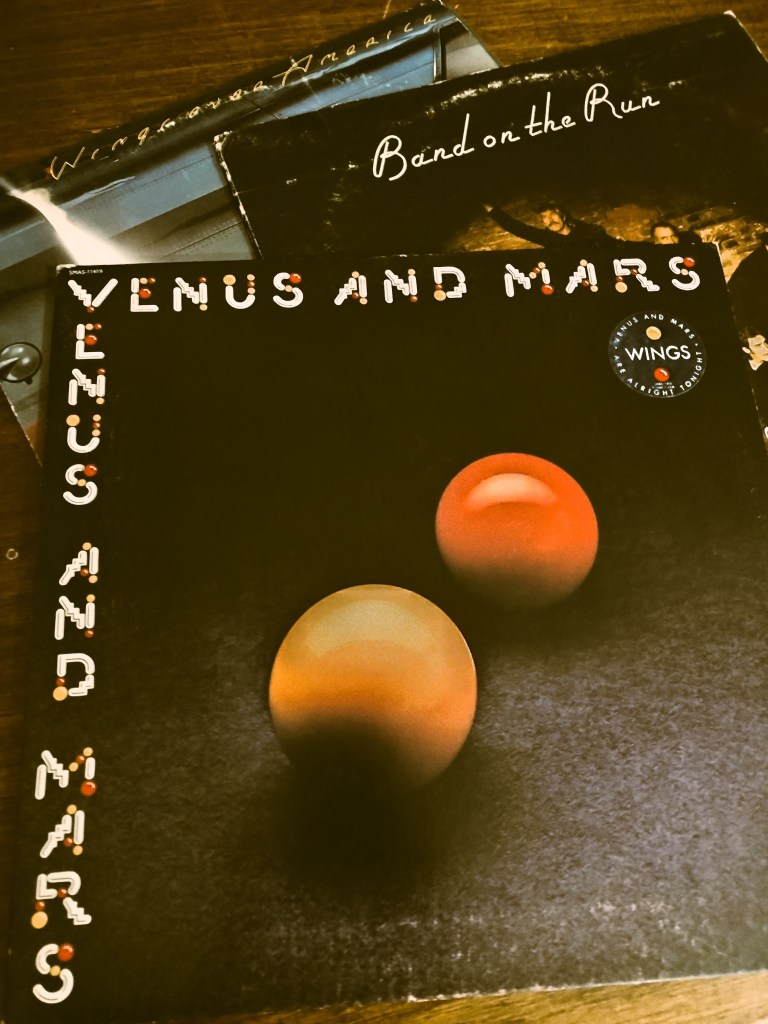

Small N and big percentage change, Paul McCartney and Wings edition

I saw this headline earlier this week: “Paul McCartney’s Wings Album Soars More Than 5,000% In Sales.” For an artist who has sold millions of albums over 60 years of making music, this sounded important. But here are the details of the story:

According to Luminate, Venus and Mars sold 2,500 copies in the U.S. in the most recent tracking week. That’s a strong number for a reissue of an album that’s been around for decades — and especially notable given how little it moved just a week prior. In the previous frame, the set couldn’t even manage 100 copies. That means that from one span to the next, the Wings title enjoyed a sales spike of 5,435%.

The Venus and Mars surge can be attributed to a recent reissue that targets McCartney’s most devoted supporters. The full-length was re-released on vinyl in a half-speed remastered form, which may not sound like a major change, but it was enough to grab the attention of collectors and audiophiles alike. While the music remains largely the same, the format offers improved sound quality and a what must be a unique listening experience.

What happened is that this album was reissued on vinyl. This pushed sales of the record up. But it went from under 100 copies sold to 2,500 copies sold. This is a big percentage increase but not a big figure. 2,500 records moved in one week is less than a drop in the bucket in numbers of popular music sold after World War Two.

The headline is technically correct. Sales jumped over 5,000%! Sales spiked for Paul McCartney! Is it a meaningful change? No. Barely any records were sold in either week. Maybe plenty of people will click on this story because of the shocking statistic in the headline – I did – but there is not much news here.

This is what happens when you have a small number of cases overall. A small shift in numbers either way, up or down, can lead to a really big percentage change.

Change how album sales are measured, change perceptions of popular music

The music industry changed in 1991 when how album sales were measured changed:

Photo by Maor Attias on Pexels.com

On May 25, 1991—30 years ago Tuesday—Billboard started using Nielsen SoundScan data to build its album chart, with all of its charts, including singles hub The Hot 100, eventually following suit. Meaning, the magazine started counting album sales with scanners and computers and whatnot, and not just calling up record stores one at a time and asking them for their individual counts, often a manual and semi-accurate and flagrantly corrupt process. This is the record industry’s Moneyball moment, its Eureka moment, its B.C.-to-A.D. moment. A light bulb flipping on. The sun rising. We still call this the SoundScan Era because by comparison the previous era might as well have been the Dark Ages.

First SoundScan revelation: Albums opened like movies, so for anything with an established fan base, that first week is usually, by far, the biggest. First beneficiary: Skid Row. And why not? “Is Skid Row at the height of their imperial period?” Molanphy asks of this ’91 moment. “For Skid Row, yes. But Skid Row is not Michael Jackson, Whitney Houston, Bruce Springsteen, or Stevie Wonder. Skid Row is a middle-of-the-road hair-metal band at the peak of their powers, relatively speaking. So it’s not as if they are commanding the field. It’s just the fans all showed up in week no. 1, and it debuts at no. 1. And then we discover, ‘Oh, this is going to happen every week. This is not special anymore.’”

Next SoundScan revelation: Hard rock and heavy metal were way more popular than anybody thought. Same deal with alternative rock, R&B, and most vitally, rap and country. In June 1991, N.W.A’s second album, Efil4zaggin, hit no. 1 after debuting at no. 2 the previous week. That September, Garth Brooks’s third album, the eventually 14-times-platinum Ropin’ the Wind, debuted at no. 1, the week after Metallica’s eventually 16-times-platinum self-titled Black Album debuted there. In early January 1992, Nirvana’s Nevermind, released in September ’91, replaced MJ’s Dangerous in the no. 1 spot, a generational bellwether described at the time by Billboard itself as an “astonishing palace coup.”

Virtually overnight, SoundScan changed the rules on who got to be a mega, mega superstar, and the domino effect—in terms of magazine covers, TV bookings, arena tours, and the other spoils of media attention and music-industry adulation—was tremendous, if sometimes maddeningly slow in coming. Garth, Metallica, N.W.A, Nirvana, and Skid Row were already hugely popular, of course. But SoundScan revealed exactly how popular, which of course made all those imperial artists exponentially more popular.

This is all about measurement – boring measurement! – but it is a fascinating story. Thinking from a cultural production perspective, here are three things that stand out to me:

  1. This was prompted in part by a technology change involving computers, scanners, and inventory systems. The prior system of calling some record sales and getting their sales clearly has problems. But, how to get to all music being sold? This requires some coordination and technology across many settings.
  2. The change in measurement led to changes in how people understood the music industry. What genres are popular? What artists are hot? How often do artists have debut #1 albums as opposed to getting discovered by the public and climbing the charts? Better data changed how people perceived music.
  3. The change in measurement not only changed perceptions; it had cascading effects. The Matthew Effect suggests small initial differences can lead to widening outcomes when actors are treated differently in those early stages. When the new measurement system highlighted different artists, they got more attention.

Summary: some might say that good music is good music but how we obtain data and information about music and then act upon that information influences what we music we promote and listen to.

Album sales on continued decline

I still buy a decent amount of music albums in CD form. But apparently I am part of a dwindling crowd: NPR reports that album sales are at a record low (even when accounting for digital tracks), 12% down compared to last year, and way off the peak in 2000.

So what’s the next plan for the music industry?