How many data centers does the United States have, want, and need?

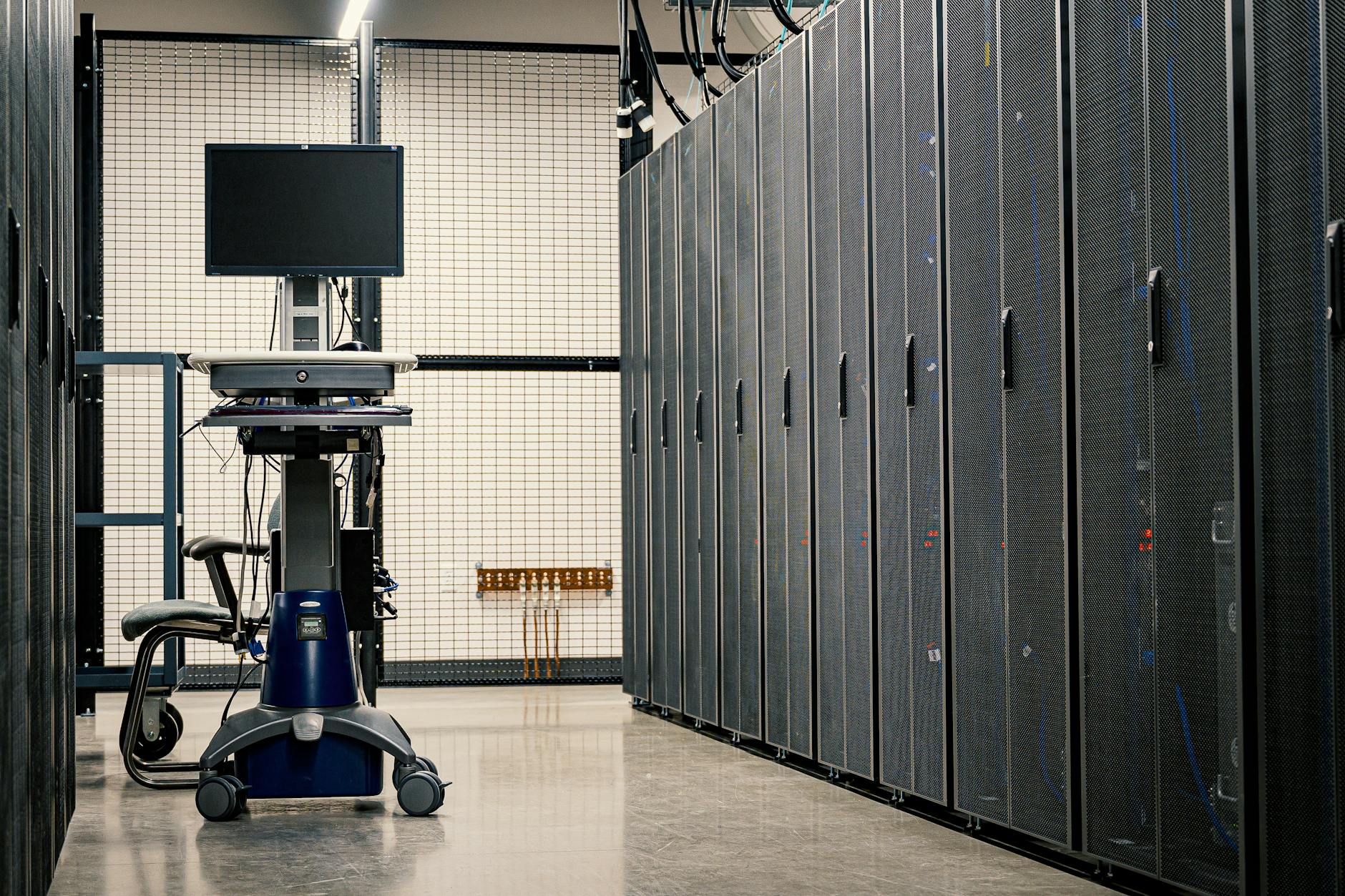
Datacentermap.com says there are 4,287 data centers in the United States.

Photo by Brett Sayles on Pexels.com

How do they know how many data centers are in the country? Their explanation:

Our data originates from multiple sources, primarily:

  • Operators: Data center operators and service providers use Data Center Map as a marketing tool, to promote their data centers, networks and services to potential clients. They have direct access to add and update listings.
  • External sources: We monitor multiple external databases, to identify missing or changed listings. They are automatically queued for manual review.
  • Manual sourcing: We manually identify operators that we are missing and manually add them to our database.
  • End-users: End-users send us tips and requests, about missing or outdated listings, that we manually handle…

As there are no regulatory requirements to register data centers in a central database, there are no complete resources available. All databases are based on voluntary data submissions and/or collecting data from providers or other sources.

How many data centers are needed for the United States? From what I have read, data centers are under construction in order to meet the current and future needs of AI technology. The future needs might be hard to forecast. Within a few years, what newer tech and AI products will be considered essential?

How many data centers are wanted? I am thinking of two possible scenarios. First, tech companies might want a certain number of data centers to meet needs and have extra capacity. But, they can only build so many and they can meet needs and maybe only a little more.. Second, communities and residents may not want some of these data centers. While this opposition often occurs community by community, this could add up to limit the number of data centers throughout the country.

It will be interesting to see where this number ends up. And if the number keeps going up, how many people living around them or driving by them will know and/or care they are there?

Data centers as the largest construction project ever in Indiana

Amazon plans to construct large data center facilities in northwest Indiana:

Photo by Life Of Pix on Pexels.com

Amazon plans to spend $15 billion for the largest construction project in Indiana history, building data center campuses in Northwest Indiana and creating 1,100 new jobs, officials said…

Sites for them have not yet been finalized, although AWS is in negotiations with multiple communities, he said Monday…

Not too many years ago, BP’s $3.8 billion Whiting Refinery expansion was considered the largest construction project in state history. The work at the refinery kept tradespeople working through the Great Recession, Ennis noted. Building data centers will keep tradespeople working in the region for years to come…

This project’s impact on the communities’ tax base can’t be calculated until the communities are chosen and incentives are finalized, but the impact will be huge. When Microsoft chose LaPorte for a $1 billion data center, Mayor Tom Dermody said it would effectively double the city’s tax base.

Indiana is not the largest state in size or population but it is not the smallest either: it is 38th in land area and 17th in population. So I think it means something that this would be the largest project in the state’s history. The amount of money, work, and land is worth noting.

The article mentions briefly that some Indiana communities have said no to data centers. Others seem interested (as noted above). I wonder if data centers and less desirable land uses will cluster in red states or certain communities where they are seen more as business opportunities rather than community liabilities. If tech companies say they need data centers, presumably some places will approve their construction.

In this particular case, what if some of the data center activity that could go in the Chicago suburbs located in Illinois ends up in northwest Indiana? Will some Illinois and Indiana communities look back and think they missed an opportunity or will they be grateful they had the foresight to say no?

The amount of building going on in the US to support AI

Perhaps contrary to those who argue the United States struggles to build, an AI construction boom is underway:

Photo by Victor Moragriega on Pexels.com

Many people believe that growth will only continue. “We’re gonna need stadiums full of electricians, heavy equipment operators, ironworkers, HVAC technicians,” Dwarkesh Patel and Romeo Dean, AI-industry analysts, wrote recently. Large-scale data-center build-outs may already be reshaping America’s energy systems. OpenAI has announced that it intends to build at least 30 gigawatts’ worth of data centers—more power than all of New England requires on even the hottest day—and CEO Sam Altman has said he’d eventually like to build a gigawatt of AI infrastructure every week. Other major tech firms have similar ambitions.

Listen to the AI crowd talk enough, and you’ll get a sense that we may be on the cusp of an infrastructure boom.

Throughout American history, growth is good. Construction is a sign of growth and provides jobs. A new industry is underway. Society is progressing. Data centers are all over the place (and will end up somewhere even if some communities do not all them). Americans are used to booming construction as this happened across housing and numerous industries throughout the country’s history.

What that growth might lead to is another matter. How do these data centers contribute to communities and landscapes? Do all the data centers in suburbs transform suburban life? When the growth slows, what happens then? Will the data centers still be there in 50 or 100 years or will they be vacant properties?

All this is a reminder that while many Americans will encounter AI through devices and data going through the air, it has a significant physical footprint. To power real-time AI responses to whatever we as users need requires buildings, land, resources.

Suburban moratoriums on data centers and warehouses; what might be built instead?

The suburb of Aurora has put a temporary hold on approving data centers and warehouses in the community:

Photo by Field Engineer on Pexels.com

Such concerns led Aurora’s city council to enact a temporary zoning moratorium on data centers as well as warehouses. Mayor John Laesch made clear officials are not against data centers as a whole.

“It’s just trying to give us time to make sure that we have the proper guardrails in place,” he said.

In neighboring Naperville, at least one city council member said he’s exploring the idea of a similar pause.

My longer-term question for Aurora, Naperville, and suburbs with similar concerns: what will they approve for the land that might be used by data centers and warehouses? Several options they could pursue:

  1. Green or open space on this land. This might be hard to do with land zoned for commercial and industrial use as suburbs hope such land will generate tax revenue and jobs. But residents might like this option if the alternative is something that generates noise and traffic.
  2. Pursuing office space or industrial uses with limited noise and pollution. The problem with this could be whether there is demand for such structures. How much vacant office space is there already in office parks and buildings along I-88? How long could a community pursue these options if the market is not favorable?
  3. Approving housing. There is a need for housing in the Chicago area and both Aurora and Naperville have experienced population growth in recent decades. But what kind of housing – expensive units without too many kids (so as to not burden local school systems)? Housing for seniors or young professionals? Affordable housing? Would neighbors like more housing – noise, traffic, potential water issues, etc. – near them?

Perhaps some suburbs can wait this all out. Will the boom in warehouses and data centers end at some point? If some suburbs say no to data centers and warehouses, they will end up somewhere. Will the warehouses end up not being in wealthier suburbs?

How about creating suburban communities that only contain data centers?

With some suburbanites concerned about data centers proposed for their communities, I have a possible solution: why not create new suburban communities that only contain data centers?

Photo by Josh Sorenson on Pexels.com

Imagine a suburban municipality full of data centers. It could help serve the needs of the surrounding region. It could draw on its own water and electricity supply (or make its own deals for these resources). It would not have to worry about being located near residences or other land uses where residents feel threatened.

This is not the first time I have thought of this idea. It could work for waste transfer sites. Landfills. Warehouses. Industry. Marijuana dispensaries. Religious congregations (see examples of opposition from my own research here and here)? This could work for the multiple land uses that suburban residents often object to or communities see as threats to their established way of life.

Creating such communities could be difficult. Given that many metropolitan areas are full of development, there might be three primary options to find land for such an endeavor:

  1. Locate the new municipality on the fringes of the region. This has the advantages of not changing densely developed land and it is already located further away from residences.
  2. Convert an existing suburb into such a place. While the image of American suburbs is often that of wealthy and exclusive communities, industrial suburbs have also been around for a long time. There are already suburbs with fewer residents that might be willing to take on more data centers.
  3. Take a bit of land from several existing communities and create this new municipality. This could be hard to do as suburbs are likely to resist losing land. But if the tradeoff is giving up land so that the perceived threat of a data center is not their responsibility, perhaps a conversation can start.

Any of these are unlikely. Not impossible. But suburban leaders and residents have resisted certain land uses for decades. The hope seems to be in each community that if they can successfully keep the land use out, that is success and good luck to other communities in addressing the issue.

The reasons Americans give for fighting against data centers in their communities

As the number of data centers in the United States is growing, some residents are fighting back:

Photo by Brett Sayles on Pexels.com

Meanwhile, grassroots resistance to unchecked growth is on the rise. In Memphis, locals are trying to shut down an xAI facility powered by turbines they say are polluting the air in a historically black community that already suffers high rates of respiratory illness. A couple in Georgia told reporters their water taps went dry after Meta broke ground on a $750 million development in Newton County. In suburban northern Virginia, where the massive warehouses have become a fixture of everyday life, citizens complain that the developments are encroaching on neighbourhoods and homes at an alarming rate. In Prince William County, locals have even coalesced to try to change local ordinances and put an end to the incessant low-grade roar produced by data centre cooling systems.

In Alabama, residents in McCalla and in the City of Bessemer are united against Project Marvel. “We might be fighting an uphill battle,” David says, “but we’re going to fight it to the very end.” Locals have spent months pouring over academic reports and technical documents, trying to understand how data centres have been received in other communities and what risks might attend the development. They’ve also built a substantial coalition of allies in opposition to the project location, if not to the project itself, including Jefferson County Commission President Jimmie Stephens, State Representative Leigh Hulsey, and a wide range of environmental and other public advocacy organisations.

Generally, American communities think growth is good but they do reserve the right to try to have growth on their terms.

Reading this article and seeing online conversation opposed to data centers near me, I wonder which if these factors is more influential in the concerns people have:

  1. The environmental costs of data centers including high water and electricity usage plus possible pollution and noise.
  2. The sense that a community could find or approve better uses for the land rather than for a data center. How many jobs will actually be generated? Will the community actually see some benefits?
  3. A sense that tech and/or certain companies are dangerous or they could corrupt communities.
  4. Resistance to a potential change in local character that having a data center might represent.

Some of these are common responses in American communities to proposals for land use and others are more specific to data centers.

According to this article, there are already over 5,000 data centers in the United States. How many communities will say no to data centers and which ones will say yes?

More data centers and AI, higher utility bills

With more AI and cloud-based activity in daily life, it may have one clear effect for people: higher prices for electricity.

Photo by Pok Rie on Pexels.com

As the Sun-Times reported in November, the demand for power from big data centers and a delay connecting new power sources, such as solar and wind, to the electric grid is resulting in ComEd customers seeing their monthly bills go up $10.60 a month on average…

Power demand across the country has skyrocketed as big data centers and artificial intelligence operations have created huge demand. Meanwhile, new sources of “renewable” energy, including wind and solar power, have been slow to get connected to an electric grid that spans from Northern Illinois to the East Coast, said Jim Chilsen, a spokesman for the consumer watchdog Citizens Utility Board.

How much will this register with Illinois customers – will they have no problem paying roughly $10 more a month to help support what they expect on their smartphone and online activity? Technology tends to have costs, even if people tend to think the benefits outweigh the downsides, but it can be hard to pin down. While all of the increased rates may not be due to computing activity, at least some is.

Considering indirect costs may just be difficult to do. Having direct feedback with technology probably elicits different reactions than these more indirect costs. Imagine the new AI feature on your phone comes with a $5 a month surcharge on your phone bill to cover its costs. Or each time you do an AI search you incur a charge. Contrast that with the costs of driving. Automobiles opened up all kinds of new opportunities but driving comes with numerous costs, some direct (like paying for gas, insurance, and maintenance) and some more indirect (taxes for infrastructure, changes in land use, pollution).

If asked how much they would be willing to directly pay for AI, what would Americans say?

Data centers as public utilities

As one company looks for approval to build a data center in an Illinois town, they made this argument:

Photo by Brett Sayles on Pexels.com

“When you use your phone to order an Uber or make a doctor’s appointment, it’s likely going through one of our data centers,” Baumann told a Minooka Village Board meeting in January.

“We consider ourselves a utility, like water or sewer or electricity. It has that kind of importance to everyday life,” he said.

But Equinix is not a regulated utility like ComEd or Peoples Gas. Equinix is a publicly traded company whose top shareholders are Wall Street titans such as BlackRock, State Street and Vanguard. 

It’s a supplier that’s kept on a tight leash by the big dogs of artificial intelligence, namely, its partners, including Microsoft and Google.

Contrasting opinions here from the corporation’s real estate director and the Chicago Tribune. On one hand, it is hard to imagine life today without the Internet, social media, and smartphones. All that data transmitted through the air requires infrastructure including cables, towers, and data centers.

On the other hand, all of this is not considered a utility in the same way by the federal and state government. Gas, electricity, and water have all sorts of regulations so that everyone can access them. They are considered essential to housing. The right to the Internet does not exist yet. And the nod above to the private market may or may make sense; other utility companies are publicly traded and seek profits.

Is this a convincing argument in the long run? Would local officials and residents be more inclined to approve a data center if they think of like a utility or more like a company?

Available electricity helping to make the Chicago region a desirable place for data centers

As data centers emerge in the Chicago suburbs and the Chicago region, here are some reasons why these are attractive locations:

Photo by Miguel u00c1. Padriu00f1u00e1n on Pexels.com

Illinois’ attractiveness for data centers stems from economic incentives, an already improved power infrastructure and its being a net exporter of electricity, he said.

Furthermore, the use of clean-energy sources, including nuclear power plants and solar, is a draw for public companies with an environmental awareness that lead the data center industry, Sitar added.

This reminds me of the book Urban Fortunes where sociologists John Logan and Harvey Molotch discuss some of the actors involved in and benefiting from growth machines. They include utilities. Growth means more potential customers. In this particular case, data centers need a lot of electricity. ComEd, the primary electricity provider in the Chicago area, can make that happen:

A number of factors contribute to the suitability of a property like the former Sears campus in Hoffman Estates for the development of data centers, but access to an extraordinary amount of electricity is one that’s a make-or-break element.

And while the developer and municipality must rely on ComEd for that side of the project, the electric company’s expertise doesn’t make such a task easy or routine.

The article suggests a new data center will require its own substation.

Of course, one could ask about the impact of using all of that electricity. At the same time, the utility likely has a big customer who will be there for a while.

Chicago is a global leader in data centers

The Chicago region is a world leader in data centers:

Photo by Manuel Geissinger on Pexels.com

The Chicago area is tied with Atlanta as the fourth-largest data center market in the world, behind Northern Virginia, Silicon Valley and Singapore, according to a new study by Cushman & Wakefield. The study cites low cost of land, a robust development pipeline and lower power costs than most large data centers as advantages for Chicago.

The study also notes that Chicago-area sites come with “sizable incentives,” a factor that helped bring Facebook/Meta to DeKalb.

In 2019, Illinois created the Data Center Investment Program, offering an exemption from state and local sales and use taxes for companies that invest at least $250 million and create 20 new operational jobs in a data center. The program also requires the data center to be carbon-neutral.

In other words, there is money to be made by putting data centers in the Chicago region.

But, what do data centers offer back to the community? They might sit in buildings that the public does not know are data centers. They may not offer that many jobs; the data center under discussion in DeKalb in the article cited above is a more than 2.3 million square foot facility on 505 acres that will employ 200 people. They are getting tax incentives.

Of course, this is the way the development game is played in the United States. If these deals are not cut, companies will claim they will go elsewhere and they can find more favorable conditions elsewhere. The new data center will end up in Iowa or a “business-friendly climate.” The tech companies are desired by many communities so they will get good offers.

More positively, part of Chicago’s strength over the decades is its position in key infrastructure. The center of important railroad routes. Busy airports. The convergence of commodities from the whole Midwest. The creation of financial instruments. And now data centers.