New golf courses as signs of wealth

If you are wealthy, building a new golf course may just be the way to put that money on display:

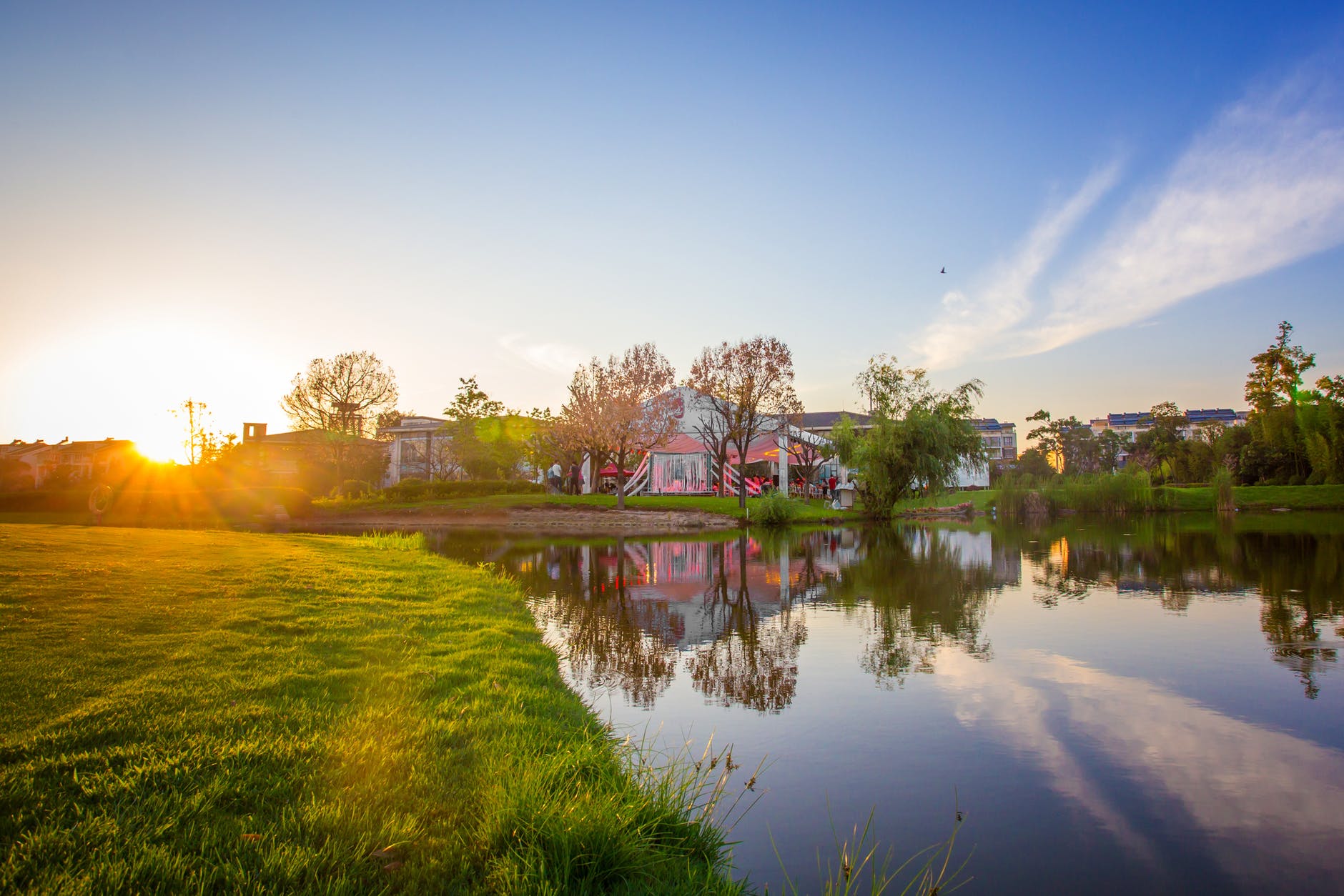
Photo by Thomas Ward on Pexels.com

Lately, though, there’s a rash of billionaires breaking ground on new golf clubs for reasons that seem to defy economic logic and environmental sanity. It seems they are so rich that they are willing to spend whatever it takes to build their dream playgrounds, and it’s less important, in many cases, whether the new enterprise makes money or not.

“Many are ‘financed’ by wealthy people who want to do something great, and know how to work the system to get tax breaks etc. from localities eager to have a great project providing jobs and tourism [dollars] in their backyard,” Tom Doak, the great golf-course architect, wrote on Golf Club Atlas, a popular blog, last year…

Last year, more than 25 new golf courses were opened around the country, the most in the past decade. Many of these were add-ons to existing resorts or in remote private locations, such as Mauk. Land and building costs have become too pricey to justify the construction of new golf courses and clubs in Metropolitan areas, according to the National Golf Foundation, but in remote locations like Mauk, there’s plenty of room and the costs are often low…

Ground zero of golf madness is almost certainly Florida, which has more courses than any other state in the country by far, with nearly 1,200. Between the warm, humid weather; the flat, sandy terrain; and the abundance of wealthy retirees with plenty of time and money on their hands, the state is incredibly attractive to developers. It doesn’t hurt that the rich are flocking there in droves, thanks in part to the fact that there’s no state income tax…

“It’s all about controlling the number of people who have access to maintain the quality of the experience,” Nathan explains. “That’s the funny thing about golf. Every golfer’s dream is to be on this amazing piece of land, on this perfectly manicured golf course. And to be out there alone with their group.”

I am interested to know the scale of tax breaks available for such courses. If local governments are willing to offer tax breaks, does this mean they find a golf course and associated development to be an improvement over the current state of the land? If so, how much money do they expect that course to generate (vs. how much it could generate without the same tax break or with the ongoing non-golf course use of the property)? It sounds like this is a tool for more rural areas to quickly jump start development but it is harder to know the longer-term consequences.

It would also be interesting to know what happens to golf courses and clubs long-term after they get past their opening and first generation of members. It is one thing to plan the course and see it come to fruition. Do kids and grandkids then continue that legacy or do they sell their portion? Do these courses become their own institutions that go on for generations beyond or even in different directions compared to the original vision cast?
What can happen when residents move to be near a golf course and then the golf course shuts down and becomes overgrown

The icing on the cake may be the “spite fence” but the broader story is an interesting one to consider: residents want to be near a golf course but then the golf course is no more and becomes a problem.

Photo by Pixabay on Pexels.com

The Villages at West Neck was also Foster’s baby. He developed the community of 934 homes for ages 55 and older to complement the golf course. Its serene streets are lined with neatly manicured lawns and ranch houses…

About six months after the golf course closed, in the spring of 2020, W.C. Capital bought it in foreclosure. The company was organized in New Mexico, but it’s unknown who owns it. The sole member is a citizen of Florida, according to Attorney John McIntyre of Norfolk, the company’s registered agent. McIntyre declined to identify the owner.In the beginning, W.C. Capital sporadically mowed the golf course grounds, but it wasn’t as frequent as when the golf course was operating, Luckman said…

Residents rallied to try to save the golf course and formed an advisory committee. They reached out to a local, prominent developer to see if he would consider buying it. They tossed around the idea of the homeowners association stepping up, Luckman said. It would require millions of dollars just to restore it, let alone buy it.

Over the summer, the City of Virginia Beach sued W.C. Capital for not maintaining the golf course property. A bench trial is scheduled for April 2022, according to Deputy City Attorney Christopher Boynton.

In July, W.C. Capital met with Virginia Beach’s planning staff to propose developing senior living apartments on the golf course land. It would require a change in zoning; the land is zoned for preservation. At the urging of the staff, the company has held meetings with residents to garner feedback.

This is a classic issue that residents might face: they move to a neighborhood or community and then that same place changes. Here, a golf course is a sizable feature as it offers green space, relatively undeveloped land, higher property values, and opportunities to play golf for those interested. Filling the space left by a golf course is not necessarily easy for communities.

To some degree, all places change over time. People move in and out, outside conditions change, leaders make decisions. Few places can remain frozen in time.

And regardless of the change, it can be a difficult process for the property in transition and neighbors. The place is changing, developing a new character. Some people will leave in response, some will stay, others will fight the changes.

If indeed the property ends up becoming senior living apartments, in a decade or two the golf course may be a distant memory. The neighbors will move on. The new residents may only hear word of the former land use. The community will go on. But, the memories and experiences of that golf course may still linger among residents and the community even if its physical forms are long gone.