Keep driving – just do so on a green highway

Will it be even easier to justify driving in the future if it done so on roadways that emphasize sustainability and community life?
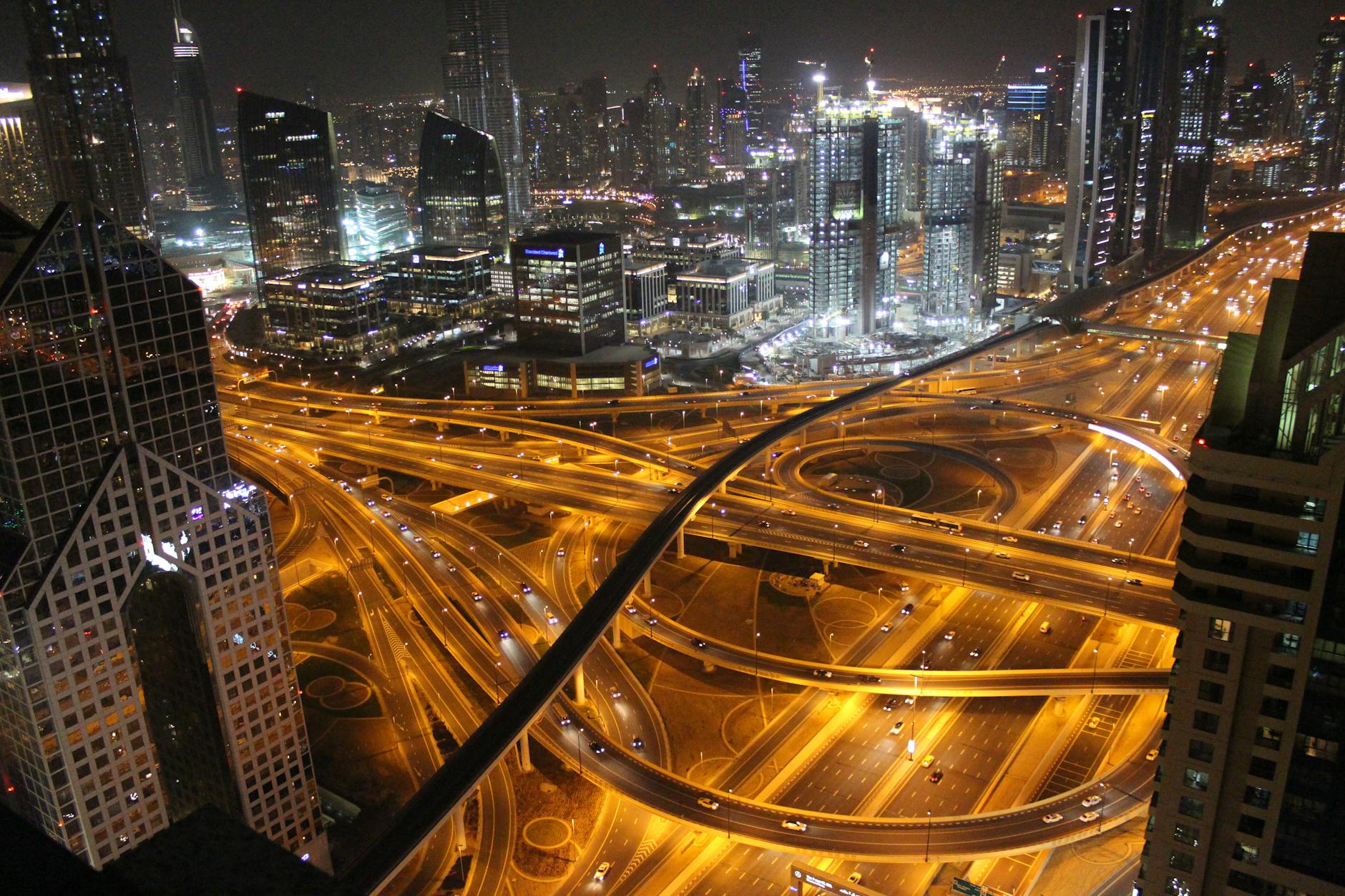
Photo by Lina Mamone on Pexels.com

URB has released conceptual designs for a 64-kilometer-long highway that would see Sheikh Mohammed Bin Zayed Road, one of the city’s main traffic belts, transformed into a “Green Spine,” complete with autonomous, solar-powered trams and smart traffic management…

The autonomous solar-powered tram is just one aspect of the proposed highway’s transport system: above the tram line, a network of green areas, parks and overpasses would increase connectivity and walkability of the city, which is currently tough to navigate on foot.

The highway would also integrate smart technology, such as “internet of things” (IoT) sensors, to manage traffic and optimize energy use.

Bagherian’s designs allow for 300-megawatt solar panels and a storage system to be embedded in the tracks, that would power the tram line, as well as generate clean energy for an estimated 130,000 homes.

And the green spaces — including parks and community gardens — would provide space for one million trees, which would also help cool the city and improve air quality.

Does making driving greener and roads less invasive in communities make driving more palatable to critics? A number of critics want to reduce driving all together for a variety of reasons including reliance on fossil fuels and changing the scale of communities from human oriented to moving heavy boxes quickly and efficiently.

Perhaps this sort of approach is pragmatic. It might be very difficult to get rid of cars and vehicles. Transitioning to alternative fuels will take time. Cars have some advantages compared to other transportation options. Reducing the impact of vehicles could be the way to go: the vehicles keep moving but they are less visible and less disruptive.

I would not be surprised if driving continues at similar volumes in the future and roadways are transformed in ways that mean they do not just serve the vehicles traveling on them.

Considering what the “green Loop” might look like

Amidst talk of eco-cities, a Chicago architectural firm has put together a plan to reduce carbon emissions by 80 percent within Chicago’s Loop. How to accomplish this: retrofit older buildings rather than building a lot of new, green buildings.

The architects break what they call the Central Loop into four types of buildings: heritage buildings (1880-1945), which are clad in heat-absorbing masonry and have operable windows; midcentury modern buildings (1945-75), which hog energy due to their vast expanses of glass and heavy reliance on air conditioning; post-energy-crisis buildings (1975-2000), which show greater energy-efficiency but are burdened by an unanticipated rise in computer use; and energy-conscious buildings (2000-present), which continue to improve efficiency but are in relatively short supply.

That brings us to the heart of the matter: The key to cutting pollution isn’t building new green buildings. There simply aren’t enough of them to make a difference. The only way to lower our carbon footprint is to make the buildings we already have more energy-efficient.

That’s possible, as evidenced by the recent transformation of the Merchandise Mart, the massive yet graceful Art Deco commercial and trade show building along the Chicago River. At 4.2 million gross square feet, it’s one of the world’s largest buildings. By taking a variety of steps — from installing energy-saving water pumps to promoting eco-friendly products to the building’s tenants — the Mart cut its overall energy consumption by 21 percent from 2006 to 2010, executives there say.

I wonder how this plan would be received by businesses and building owners. While they suggest energy costs will decrease in the long run and rents may increase, such retrofitting could be costly in the short-term and there could be some anxiety about doing these things in the middle of a tough real estate and business market.

And how much would the City of Chicago really get behind this? Mayor Daley has drawn plaudits in the past for promoting ideas like rooftop gardens but these are limited in number. The City itself faces significant financial troubles in the coming years and I imagine issues like jobs, pensions, crime and the number of police in the streets, will dominate conversations for a while.

I would enjoy seeing their charts or models to see which particular buildings in the Loop use more or less energy. The picture that leads this report on the plan probably shows carbon emissions or energy use by building.