Founding a new city in 2023? Quietly buying up property, sending out text surveys

If you wanted to found a new community today, how would you do it? One group is buying up a lot of acres in the Bay Area and sending out surveys:
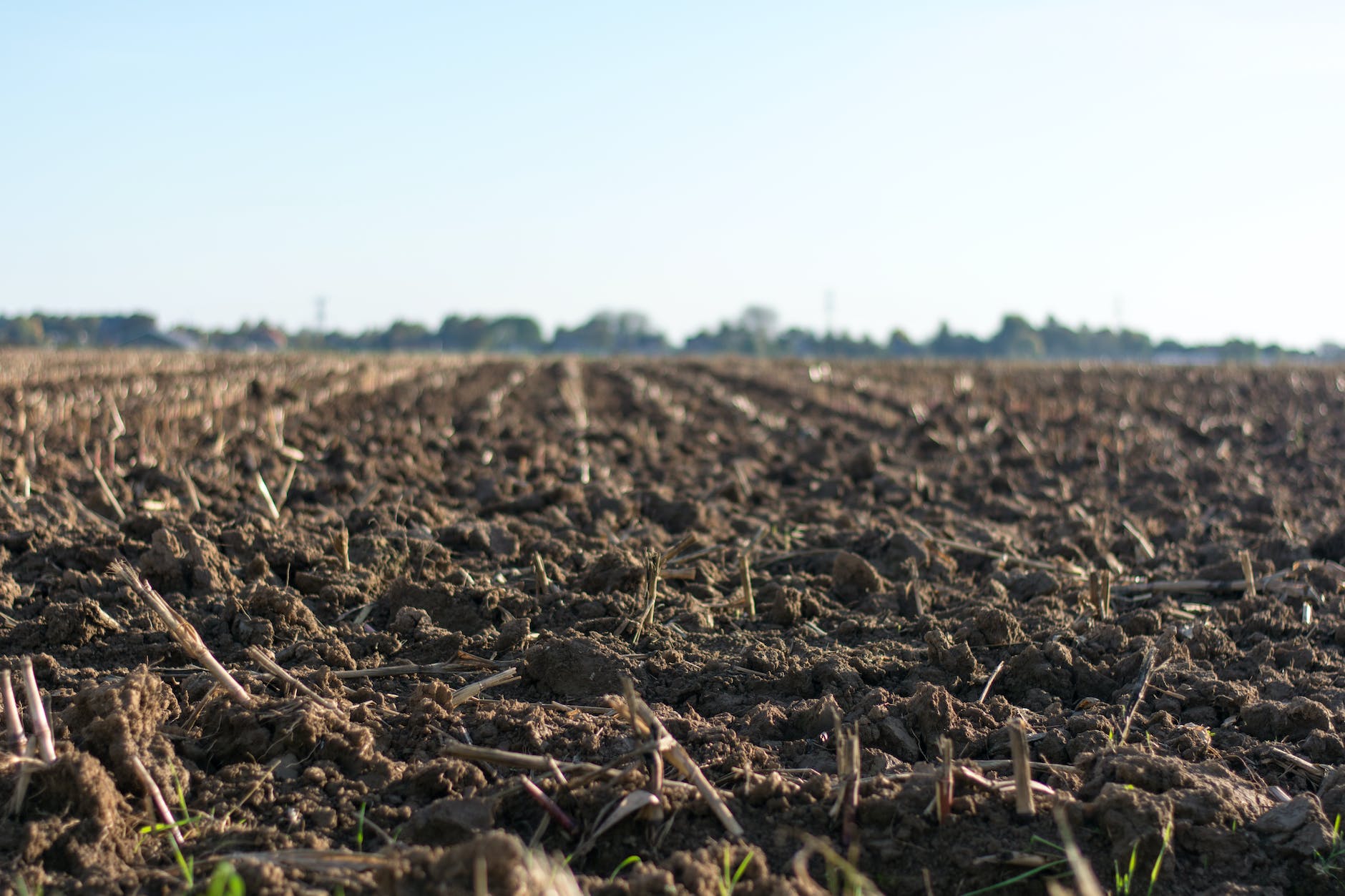
Photo by Jan Kroon on Pexels.com

Amid a flurry of rumors about a mysterious buyer who has purchased 52,000 acres in Solano County, local residents have received a survey gauging support for a “new city with tens of thousands of new homes.”…

Screenshots of the survey reviewed by SFGATE show an extensive market research campaign. It starts by informing recipients that they will be weighing in on “a description of an initiative that might be on the ballot in Solano County next year” regarding a new development in eastern Solano County.

“This project would include a new city with tens of thousands of new homes, a large solar energy farm, orchards with over a million new trees, and over ten thousand acres of new parks and open space,” the survey continues…

Since news of Flannery’s acquisitions broke, locals have speculated the buyer could be planning anything from a deep water port to a regional airport to even a nuclear power plant. But building a new city from scratch would present its own set of challenges. For one, the developer would need to acquire water rights to support large suburban housing tracts. And, according to Farley, it would need to change Solano County’s “orderly growth” policy, which restricts urban development in many parts of the county.

Buying up land quietly has a long history. If plans are made public, land prices can go up. People start raising objections. Thus, developers try to acquire land behind the scenes and then make a proposal.

The text polls are interesting. Presumably, they can help the buyers/developers tweak their plan and/or public pitch for development. The data might not be great – how many local residents will respond to an anonymous poll? – but it could provides hint of what locals see as doable or what they do not like.

Almost regardless of what is proposed for this land, expect a lot of response. Housing is needed in the Bay Area but neighbors and leaders will certainly have concerns. Additionally, I would expect commentary on how the process has progressed to that point.
The role of land in new rankings of the most disadvantaged and advantaged places in the United States

A new analysis ranks the most disadvantaged and advantaged places and one common factor is land and property ownership:

Photo by Kelly on Pexels.com

Immediately, the rankings revealed a stark geographical pattern. The first surprise—especially for professors who have spent our careers studying urban poverty—was that the most disadvantaged places on our index were primarily rural. But they didn’t fit the stereotypical image of rural America. Though some of these were majority white, most were majority Black or Hispanic. We could see, too, that many places with large Native American populations ranked among the most disadvantaged in the nation. Considerable poverty exists in Chicago, Los Angeles, and New York. But in our apples-to-apples comparison, none of those cities ranked among even the 600 most disadvantaged places in the nation. The only cities on that list were a relatively small number of industrial municipalities such as Cleveland, Detroit, and Rochester…

The places that our index identified as the 200 most disadvantaged are concentrated in three regions—Appalachia, South Texas, and the southern Cotton Belt. (Not one county in the West, apart from those with disproportionately large Native American communities, showed up on the list.) These places share a history of intensive resource extraction and human exploitation not seen to the same degree elsewhere in the United States. In each place, this economic pattern emerged (or, in the case of the Cotton Belt, fully flourished) in the late 19th or early 20th century. In each place, one industry came to dominate the economy, a pattern that held, broadly, until the 1960s, when King Cotton, King Tobacco, King Coal, and South Texas agriculture, would bow to the twin forces of automation and global competition…

Exploring the other end of our Index of Deep Disadvantage—the places identified as those of greatest advantage—was also vital to our research. Once again, we were surprised by where the index took us. It was not Manhattan or tech-rich Seattle. Instead, the list pointed us to the upper Midwest: Minnesota, the Dakotas, Wisconsin, Nebraska, and Iowa. Overall, poverty rates in these places are very low, babies are born healthy, people live to a ripe old age, and a low-income child usually has a similar chance of making it into the middle class as any other kid.

Counties that rank among those of greatest advantage began as agricultural communities with modestly sized farms, many originally secured through the 1862 Homestead Act that made landownership widely available. Many of these places have built on this history of broad-based wealth by making significant investments in schools, which has contributed to high graduation and college enrollment rates over generations. Using the best data available, we found that they have enjoyed the lowest rates of violent crime, income inequality, and public corruption in the nation. These counties are unusually rich in social capital: Residents are connected to one another through volunteerism, membership in civic organizations, and participation in other community activities.

Who owns land? Who benefits from working it? It sounds like the Upper Midwest offered more opportunities for settlers to purchase land and develop wealth over the long run. In contrast, the three areas of disadvantage identified had more disparities in land ownership versus who worked the land. Additionally, Native Americans were removed from land that offered opportunities.

Approaches to addressing inequality and poverty in the United States can often involve homeownership but less discussed is land. A house is often tied to a particular property that has its own value. The land identified in the rankings above were particularly important for subsistence. This is not so much the case with urban and suburban land today where the proximity of the land to amenities and the size of the lot matter more than the owner’s ability to live off of it.

The rankings above also hint at the long-term consequences of land ownership. Who can access and own land now will matter for decades, possibly centuries.

Curbed’s “Whale Week” highlights wealthiest landowners in the world

If you missed it, last week Curbed.com highlighted the world’s wealthiest landowners. Here were the five people featured during “Whale Week”:

At a spry 26 years of age, movie producer Megan Ellison might have been forgiven for moving back into one of her billionaire father’s many homes and whiling away her days on the beaches of his $500M private Hawaiian island or in a temple on his $100M Japanese-inspired Bay Area estate. Instead, she has carved out a professional niche as a backer of high-brow films, using—unsurprisingly—seed money from dad. While she was accumulating producer credits on films like The Master, True Grit, and Zero Dark Thirty, Ellison was also busy buying up prime property…

Brainy corporate raider John Malone might not be a household name, but he made a killing in the media industry and parlayed that fortune into his position as America’s largest landowner. Following a 2011 purchase of more than 1,000,000 acres of timberland in Maine and New Hampshire, Malone’s property portfolio now includes a whopping 2,200,000 acres. As the Daily Mail put it, “the total sum of Mr Malone’s land is nearly three Rhode Islands. Or two Delawares.” The low-profile Malone won’t say how much he paid for the latest million-acre addition, saying only that it was purchased for a “fair price,” but with a $4.5B net worth, the media mogul should have plenty of cash left over for further acquisitions…

Formula One chief Bernie Ecclestone turned a grassroots auto racing series into one of the world’s most watched sports, and made billions in the process. Now, when the time comes to spend some of that hard-earned wealth, he can afford some of the world’s most expensive real estate. But he doesn’t keep all the fun for himself, and has repeatedly splashed out to keep his two daughters, Petra and Tamara, ensconced in the height of luxury…

Boyish telecom mogul turned property whale Michael Hirtenstein may not be a household name, in fact, few outside of the NYC nightlife world have ever heard his name, but he has been behind more than a few high-end real estate deals. Since selling his start-up, Westcom Communications, for $270M in 2005, Hirtenstein has been linked to some of New York’s most coveted buildings, and not always positively. In October of last year, Extell Development’s Gary Barnett claimed that he had canceled Hirtenstein’s contract on a high-floor unit at the unfinished blockbuster One 57 after the Hirt paid a construction worker to snap pictures from his unfinished sky-high flat. Hirtenstein told the Post, “You want me to spend $16 million without seeing it? … All I was trying to do was be an informed, intelligent buyer. Apparently, that doesn’t sit well with Mr. Barnett. That’s not nice.”…

Of all the rich Russians to emerge from the post-Cold War turmoil, Roman Abramovich isn’t the wealthiest, but he is among the most publicly profligate. Between Chelsea F.C., the top British soccer club he acquired in 2003 for $220M, a huge art collection, a veritable fleet of yachts, and a host of luxury properties spread across the world, Abramovich is probably the ultimate whale. The 46-year-old who started off selling stolen gasoline under Soviet rule now commands a property portfolio that would make even an Ellison blush.

I’ve highlighted John Malone before but I suspect most Americans are not aware of the property held by these people. If they do know these people, it is because they cross over into other areas of life like sports or Hollywood. I propose a few reasons why we don’t hear more about the property ownership of these five:

1. Their properties are exclusive and generally out of the public eye. It is intentional that most people won’t get anywhere near some of these properties.

2. Perhaps having these kinds of properties or this much land is simply seen as obscene or excessive. With the example of Malone, what does one do with 2.2 million acres? Does anybody need this kind of land or house? McMansions are derided but they are relatively common (particularly emphasized with the Mc- prefix) and this might leave them more open for discussion.

3. Owning a lot or expensive land is simply not very interesting to people in a world of celebrity news and entertainment culture. Land is more permanent and inaccessible and lacks novelty.

John Malone: Largest US landowner with 2.2 million acres

I’ve never seen a list of the biggest landowners in the United States until now:

According to the newly released 2011 Land Report 100, which ranks the top land barons, John Malone is now America’s biggest individual landowner. The 70-year-old cable pioneer and chairman of Liberty Media now owns 2.2 million acres, after purchasing more than 1 million acres of timberland in Maine and New Hampshire earlier this year.

The purchase, which drew fire from plenty of environmentalists in New England, vaulted him past the longtime number one, Mr. Turner, who owns slightly more than 2 million acres. Mr. Malone and Mr. Turner are longtime friends and fellow cowboy-hat wearers from the cable world…

Mr. Malone told the Land Report that his love of land is due to his Irish genes. “A certain land hunger comes from being denied property ownership for so many generations.”…

Some might worry that Mr. Malone’s purchase may ease America back to its more feudal days when the rich owned most of the land. Environmentalists fret about an era of “Kingdom Buyers.” Others may see them as the most responsible long-term stewards. Either way, the wealthy are likely to continue looking at large tracts of land as the safest long-term, hard assets at a time of extreme market volatility and low borrowing costs.

Can there be a new cultural value of “land hoarding”?

According to the Land Report 100, it doesn’t sound like Malone wants to ruin the land:

Malone is an ardent conservationist, an ethic he shares with Turner. While the duo’s ends are the same, their means differ somewhat. “I tend to be more willing to admit that human beings aren’t going away,” Malone says. His 2011 Maine and New Hampshire purchase, which was brokered by LandVest’s Timberland Division, saw him acquire robust sustainable forestry operations from private equity firm GMO Renewable Resources. He intends to keep them in place. He applies this philosophy to his western properties, such as the Bell, where he raises cattle and horses. Ultimately, he plans to put all of his land in perpetual conservation easements.

Here is the top 20:

  1. John Malone
  2. Ted Turner
  3. Archie Aldis Emmerson
  4. Brad Kelley
  5. Irving Family
  6. Singleton Family
  7. King Ranch Heirs
  8. Pingree Heirs
  9. Reed Family
  10. Stan Kroenke
  11. Ford Family
  12. Lykes Bros. Heirs
  13. Briscoe Family
  14. W.T. Waggoner Estate
  15. Holland Ware
  16. D.M. O’Connor Heirs
  17. Drummond Family
  18. Phillip Anschutz
  19. J.R. Simplot Heirs
  20. Robert Earl Holding

In terms of land comparisons, these 2.2 million acres are significantly more than Rhode Island and more than Delaware.

If some of the American public has thoughts about people having too much money, are there similar thoughts about people having too much land? Obviously, it takes some money to have this much land: John Malone has a net worth of $4.5 billion and is #69 on the Forbes 400 list. How much is this land worth?

Bringing nature back to the city while still accepting cars and suburbs?

In modern history, the city has often been seen as the antithesis of nature or the countryside. With dirty factories, a multitude of noisy vehicles, and buildings crammed on top of each other, Americans (and others) responded in part by moving out from the city and into suburbs when the opportunity arose.

But there are still arguments about whether nature can return to the city and what exactly it might mean:

The following lies at the heart of the agenda of a growing number of designers and architects who refer to themselves as “landscape urbanists”: “the notion that the most important part of city planning is not the arrangement of buildings, but the natural landscape upon which those buildings stand.”…

“Proponents envision weaving nature and city together into a new hybrid that functions like a living ecosystem. And instead of pushing people closer together in service of achieving density … landscape urbanism allows for the possibility of an environmentally friendly future that includes spacious suburbs, and doesn’t demand that Americans stop driving their convenient cars. Americans have decided how they want to live, they argue, and the job of urban designers is to intelligently accommodate them while finding ways to protect the environment.”

And that’s the rub—the bit about cars and “spacious suburbs.” Architects who believe that a fresh commitment to urban living offers the best path to a sustainable future are deeply disconcerted by this quasi-green rhetoric, and by the way it’s catching on at trendy architecture schools. They call it a “a misguided surrender to suburban sprawl.”

This is part of a larger debate about land, density, lifestyles, and government funding: can we be truly “green” as long as there are any suburbs and cars? It sounds like one side says we need to compromise with the pro-suburban forces in America while another is holding out for a more urban world. Such a dividing line affects issues including sprawl, gas taxes, land use, high-speed rail, and more.

I’m not sure why it has to be an either/or question. Cities could adopt different tactics. Is Central Park a failure because it is compromised by several roads running through it? This seems more like an ideological battle rather than a discussion about what could happen in American cities in the near future.

County forest preserves benefit from economic downturn as they purchase cheaper land

The reduction in land values has not been bad for everyone: the Chicago Tribune reports that Chicago area forest preserves have bought up more land than anticipated in the past few years. Among the findings:

Flush with $185 million from a 2008 bond sale, the [Lake County] district went on a buying spree, gobbling up some 3,400 acres of land. The second-largest forest preserve system in the state at 29,300 acres, the 53-year old district has grown by nearly 12 percent since the onset of the recession.

“We spent down the money quicker than we had anticipated, mainly because there were so many good buying opportunities for us in 2009 and 2010, especially,” Hahn said…

Founded in 1971, the McHenry County Conservation District has essentially doubled over the last decade to just less than 25,000 acres…

Though the Forest Preserve District of DuPage County’s biggest growth spurt was in the 1970s, the 25,000-acre district managed to add some 2,400 acres over the last decade…

Racing the clock against development in one of the fastest-growing counties in the country, the Forest Preserve District of Will County has added about 8,300 acres since 1999, increasing its holdings by about two-thirds to nearly 21,000 acres…

The timing has been more fortuitous in Kane County, where the Forest Preserve District has added nearly 12,000 acres since 1999, increasing its holdings by 170 percent.

The only county forest preserve that didn’t add a significant amount of land was Cook County which likely has little available land. There hasn’t been too much news about these acquisitions in the Chicago area, even as these land purchases have been funded by bond sales approved by the public.

Overall, this has presented these districts with an opportunity to purchase land they might not have been able to purchase in better times. Particularly in some of the booming counties, such as Will or McHenry, this opportunity may have been the last one before suburban growth took up too much land.

This does lead to another question: how much land should Forest Preserves aim to have? I know there are recommendations about how much parkland or open space there should be for a set amount of people. Is most of this newly acquired land going to be open space/natural settings or more developed parks and recreation areas? Would there be a point where the Forest Preserves will stop purchasing or will they keep acquiring land forever?