A scary front lawn, not full of weeds or leaves but frightening Halloween decorations

Halloween provides an opportunity for homeowners to have a scary front yard. This does not mean the green lawn is marred by weeds or leaves but rather by certain decorations:

Photo by Alwin Johnson on Pexels.com

Mabon is one of a number of homeowners in and around the Chicago area who aren’t satisfied with simply slinging a fake web and plastic spiders across the front yard or spending a small fortune buying ready-made jump-scare creations. They share another important trait: the need (or maybe the obsession) to create something that wouldn’t look out of place in a professional haunted house or on a downtown stage…

When the sun goes down, Mabon’s house is transformed into a Halloween-themed faux nightclub, complete with booming music, colored lights and even a velvet rope. Mabon and his wife, Dawn Armstrong, even plan to dress up in black “Security” t-shirts to escort the V.I.P. kiddos along a red carpet to the candy stash on the big day…

Scattered upon the season’s withering plant life, the couple have erected a macabre art gallery: a thrift store still life to which Spata has seamlessly added a severed Medusa head; a copy of the Mona Lisa, her smiling face replaced with a skull and the painting’s title renamed “Moaning Lisa.” A dead shrub has become a netherworld creature — a nightmare of spiky, jutting limbs and platinum blonde hair…

Four faceless evil spirits — think the Ringwraiths from “The Lord of the Rings” or the Harry Potter Dementors — appear to float like smoke above the flowerbeds around Byrne’s otherwise perfectly normal Ravenswood Manor bungalow.

The largest evil spirit, which looks as though it is oozing out of the bungalow basement, is 16 feet long.

Halloween provides interesting social space to explore themes not always talked about or displayed. This extends to lawns, which homeowners in suburbs or city neighborhoods often keep prim and proper. For this portion of the year, the homeowners are allowed to fill what might be a lush, immaculate fall lawn with symbols of death, fright, and the macabre.

What might be truly scary is if the lawn is devoted to Halloween too early or too late. Imagine a full Halloween lawn that starts just after Labor Day. After all, if Labor Day is the unofficial end of summer, stores carry Halloween goods way before the day, and Halloween is the next major holiday, why not start early? Or, what if someone chooses to keep large Halloween displays up well into November, perhaps even past Thanksgiving and into Christmas decorations season? I am sure HOAs are on this.

Or there might be a point where the Halloween decorations pass from frightening to truly scary. What might neighbors and communities consider going too far? When does the lawn display go from celebrating the holiday to upsetting the neighborhood’s character?

All of this is part of the negotiations Americans engage in with their front lawns. On display for neighbors and people passing by, there are expectations what they can look like and be used for. Halloween may push the boundaries but there are still boundaries with ideas about the good or proper lawn.
The amount of water Americans use to water lawns

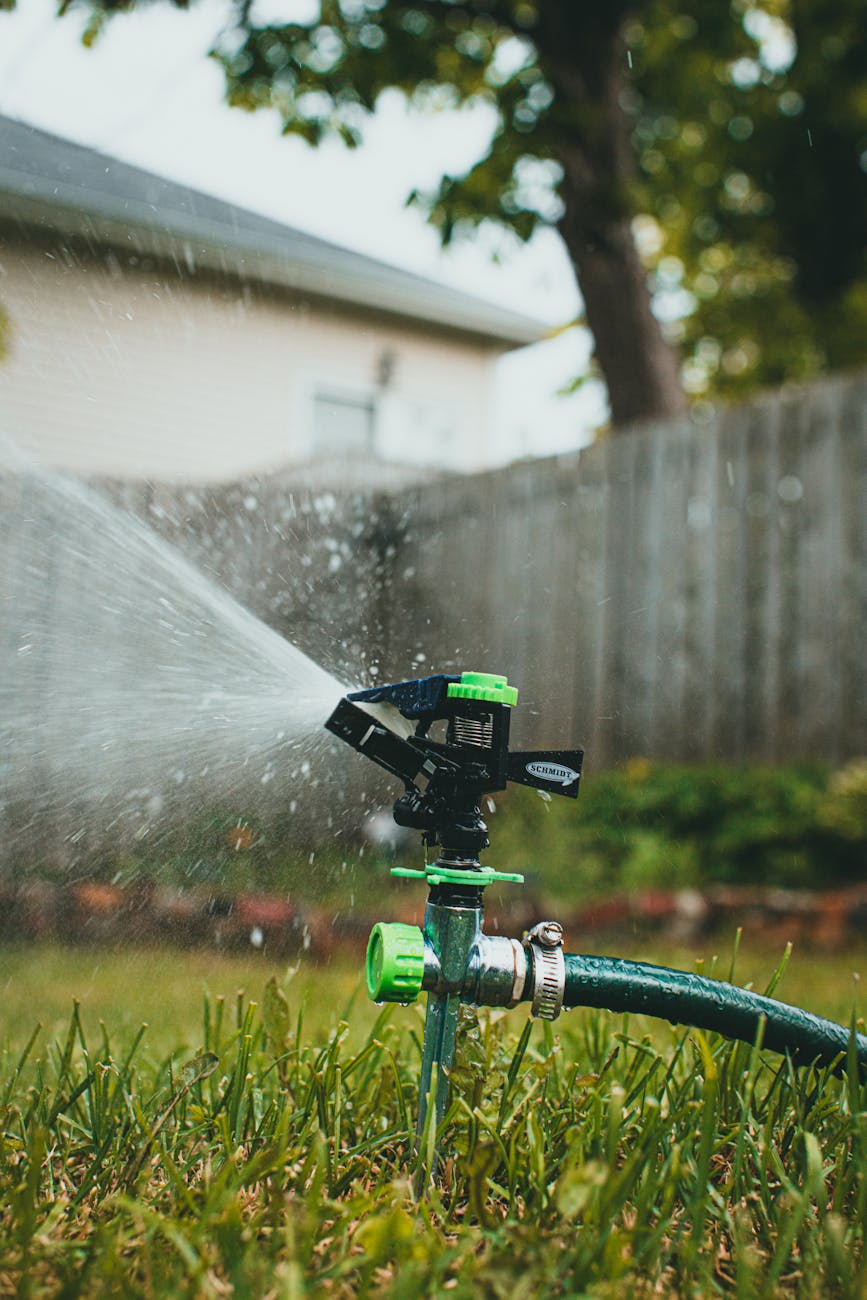
In this season of growing and mowing lawns, the EPA has a number regarding the amount of water Americans use to water their lawn:

Photo by Jonathan Cooper on Pexels.com

The average American family uses 320 gallons of water per day, about 30 percent of which is devoted to outdoor uses. More than half of that outdoor water is used for watering lawns and gardens. Nationwide, landscape irrigation is estimated to account for nearly one-third of all residential water use, totaling nearly 9 billion gallons per day.

The American lawn is alive and well – in part because of all this water. To get the lawn Americans typically want, green, well-manicured, and free of weeds, much is required. And without watering, it might not even get off the ground. Some parts of the country have regular rain that can support this kind of grass. But, it may not meet the standards of Americans and other areas do not have this rainfall. I, too, have had the experience of flying over the West and then seeing Las Vegas emerge with its telltale green lawns.

The American lawn is also alive and well because of expectations and values attached to this lawn. It signifies success and middle-class suburbia. Yes, it requires water. But if the water supply was severely diminished, would the lawns necessarily disappear? Or would people adjust their behavior to make sure the lawns remain in some smaller or similar form? Just how much water would Americans be willing to devote to green lawns?

Add political yard sign season to winter and construction

A Chicago area joke suggests there are two seasons: winter and construction. I would like to propose a third and occasional season: political yard sign season.

Photo by John Baker on Pexels.com

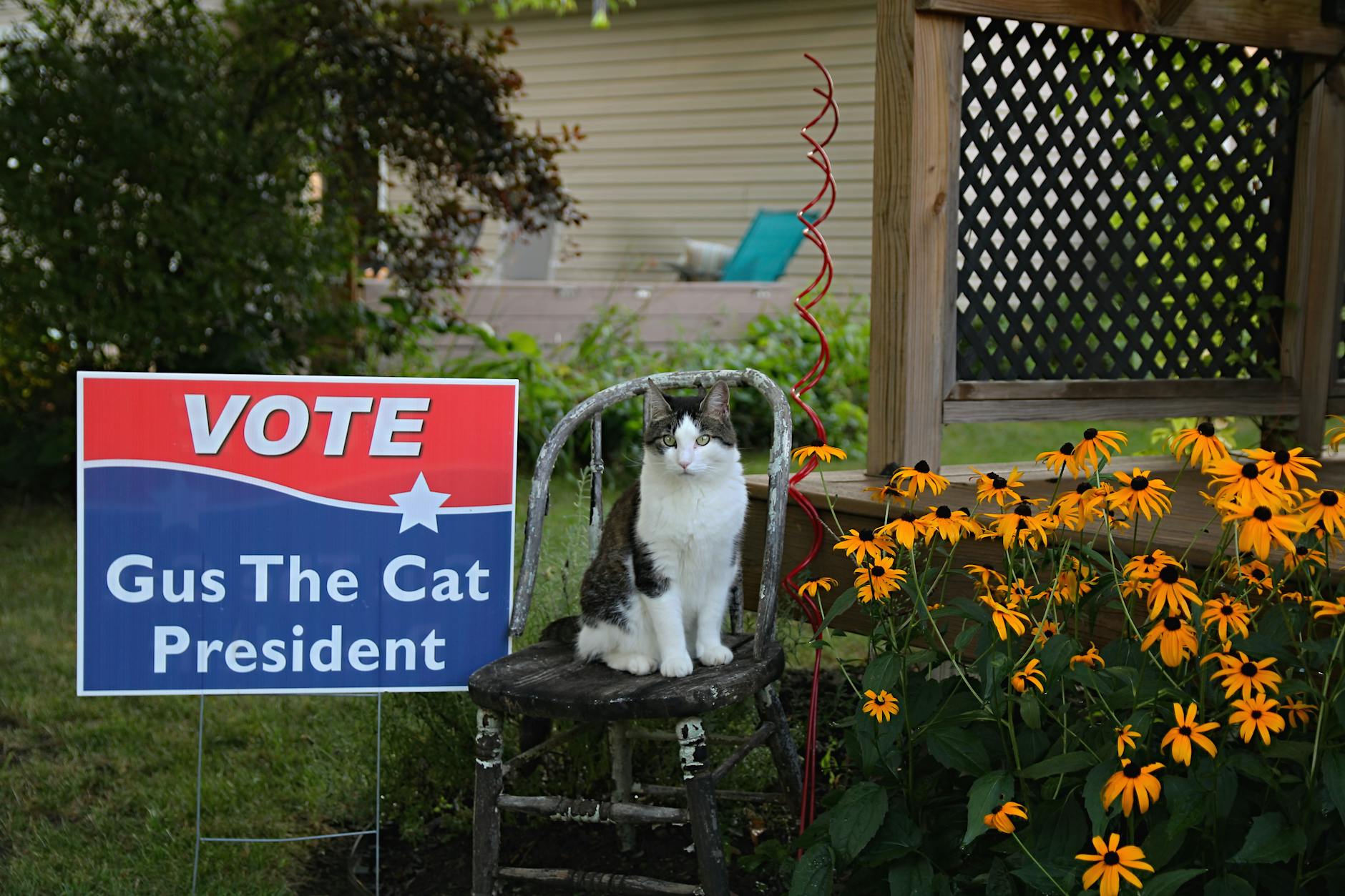
This season is a regular occurrence even as it does not show up every year, it might be more visible on the 4 year presidential election cycle, and it occasionally occurs during primary voting periods in the spring. On its more regular schedule, by early October numerous lawns and public intersections contain political yard signs. Lawns – usually clear of obstructions – broadcast political messages for those passing by. They range from national offices (president, Senate, House) to very local offices (townships, local forest preserves, etc.). They differ in size – some huge, some small and hard to read – and in color, often tied to the traditional colors of the two major parties with some occasional other colors thrown in.

Most lawns do not have signs. Some property owners have them each political yard sign season, others are more occasional participants. The corners of major intersections can be little battlegrounds as people place signs for different candidates and different races.

What difference does political yard sign season make? I do not know. Do those going by at suburban driving speeds (1) have time to read the signs and (2) ever change their preferences or voting patterns? Is it more about political mobilization among residents where signs are symbols of their fervor? For the stories and images I see of signs stolen or removed, do these actions change anything?

Soon political yard sign season will pass. Election Day comes and the signs disappear rapidly. Some might hang on for a while longer, braving the cold and snow of winter. Almost none will be around for the coming of the next construction season. For a short period, political yard sign season blooms and we all experience it.

The amount of grass lawn in the US matches the size of this state

The United States has a lot of grass lawns. What does this add up to?

Photo by rovenimages.com on Pexels.com

Lawns represent one of the largest, fastest growing landscapes in the U.S. These ecosystems — water-hungry, energy-intensive monocultures — extend far beyond the picket fence, including highway medians, cul-de-sacs, corporate office parks. De facto lawns also exist under solar arrays, on soccer fields, and in city parks. In the U.S., it’s a landmass that, by some estimates, covers an area about the size of Iowa.

I am not sure if this sounds like an impressive comparison or not. How big is Iowa? It is the twenty-sixth largest state by land area. That’s a good amount of space. Yet Iowa accounts for roughly 1.5% of the land area in the United States so lawns account for a small percentage of the total area.

Perhaps here is a way to put this into perspective: the United States idealizes single-family homes and the lawns around them. Those lawns get a lot of attention in terms of time and resources (and natural opportunities lost). But those lawns do not take up a huge percentage of space, even if their concentration in certain areas can cause issues.

Liking colorful leaves and flowers but preferring monotonous green lawns

Plenty of people like the colorful leaves at this time of year in the Midwest and other parts of the country. But, why do they like such colors in leaves or in flowers throughout the year and also prefer lawns that are green only?

The lush green lawn free of weeds and leaves is the ideal. People will even paint their lawn green. Why monotone green? A few possibilities:

-Green signals verdant and healthy.

-If green is the color of spring (for grass, leaves, etc.), then keeping that signal of spring and life as long as possible is a positive.

-The green lawn lobby has been very successful.

-Keeping a lawn green throughout the year is a sign of money and resources.

-A consistently green lawn provides possibilities for contrasts with other colors used for house exteriors and other landscaping. If yards were other colors, the contrast colors change as well.

-Americans likes earth tones less compared to green. They do not want to be reminded of earth but rather the ways humans have changed the earth.

I am sure there is a historical and cultural answer to this question. In the meantime, I will observe both the changing colors of leaves – it all happens relatively quickly – and how these leaves cover green canvasses across suburbia.

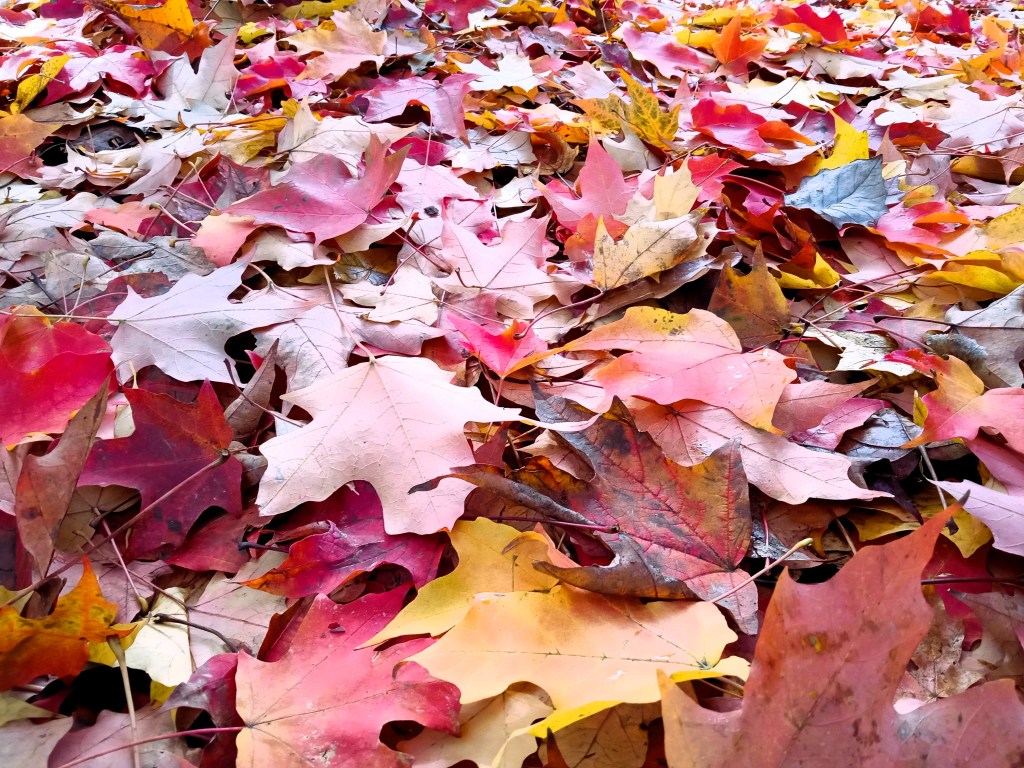
Leaves will soon be coming to suburban lawns – and homeowners will respond in one of a few ways

After a period of rain and wind in our area, I noticed that leaves are starting to fall from the trees. How will suburbanites respond to this threat or opportunity for their lawns this fall and in the years to come?

The general trend with American lawns is to leave them spotless, free of leaves, weeds, and other obstructions. Will this continue in the future? Some thoughts:

-There is more interest in battery-powered lawn equipment so clearing the lawn with a gas blower and gas mower may be on the wane. Using electric versions of these tools means clearing leaves will be quieter. This could also limit pollution.

-Or, if people do not want to use energy from gas or battery equipment, perhaps raking will be back in vogue.

-An alternative to both options above is that people could let the leaves stay on the lawn. This has benefits for the lawn as leaves break down. This goes against the spotless ideal of the American lawn but it requires no work and has benefits for the environment.

The well-tended lawn ideal with all or most leaves cleared will likely stick around for a while. Yet, there is a chance that shifts in practice and ideology about lawns changes how Americans treat leaves that come down each year.

What is gained and lost in trading a grass lawn for artificial turf?

Prompted by climate change and other factors, more property owners around the world are switching to artificial turf. What is gained in the trade?

Photo by Digital Buggu on Pexels.com

A couple of decades ago, artificial turf was often a thin carpet atop a hard surface—rough on the knees as well as the eyes. Athletes playing on it complained that it wore their legs out. But as the product improved, so did homeowners’ interest. From the US to the UK, artificial grass retailers have seen sales tick up during pandemic lockdowns, when housebound property owners put their money toward home improvements. Indeed, Google Trends shows a worldwide surge in searches for “artificial grass” during the middle of 2020.

Even the most famous grass enthusiasts like the All England Lawn Tennis & Croquet Club are open to the idea. The organization behind the Wimbledon championship is trialing hybrid court surfaces—real grass weaved with plastic fibers—to promote lawn tennis in climates worldwide and extend the season in the UK.

Still, all of this fake grass sprouting across the planet has sparked backlash. Some of the biggest protests have been in Australia, where synthetic turf installations became more common in home gardens and playing fields during the Millennium Drought—a roughly 12-year dry spell that ended in 2009. Many cities and regions faced extreme water restrictions that included a total ban on lawn watering in some areas…

The most obvious environmental problem with artificial grass is it’s rooted in the biggest climate nemesis of all: fossil fuel. Synthetic turf is made from a stew of petroleum-based components, making it nearly impossible to recycle. At the end of an artificial lawn’s useful life, which is about 15 years, it will likely go to a landfill or be incinerated…

Yet, even if artificial turf becomes easy to recycle, real grass will still in some ways be greener. Grass naturally absorbs carbon dioxide. Its soil supports wildlife from worms to birds. There are varieties for almost any kind of climate. Unless, of course, that climate doesn’t have enough water.

The legacy of the suburban lawn will be long indeed if the manicured green grass is replaced by green artificial turfs for decades. If it is no longer grass, is the desirable part the color or the nostalgia?

As noted elsewhere in the article, the artificial turf is not the only option. In places like Las Vegas, a rockscape or desert setting is more appropriate. Elsewhere, a yard may be filled with native plants or a garden. If the purpose of the lawn is to provide a connection to nature for the residents, these options can fit the bill in a way that artificial lawns cannot.

The real trick would seem to be creating an artificial turf that better mimics a grass lawn in look and feel without negative environmental impact. A soft and lush lawn that does not need watering, does not rely heavily on fossil fuels, and is similar to the image many Americans have of the proper yard of a single-family home? That may be the lawn worth keeping in yards across the country.

Have a more expensive house, keep the lawn greener with automatic sprinklers

With a recent heat wave plus the upcoming warmer days of summer, different methods for maintaining a green lawn are on full display across suburban neighborhoods. I live in a suburban location where a ten minute walk or run brings me to neighborhoods with homes in multiple different price points. One recent observation about homes at a higher price point: they are more likely to have automatic sprinklers to keep the grass green.

Photo by Q. Hu01b0ng Phu1ea1m on Pexels.com

On my street and with residences at lower price points, I have not seen any automatic sprinklers. I see people out with hoses or sprinklers attached to hoses. Or, some people might do no watering at all or all lawn care is left to a homeowners association.

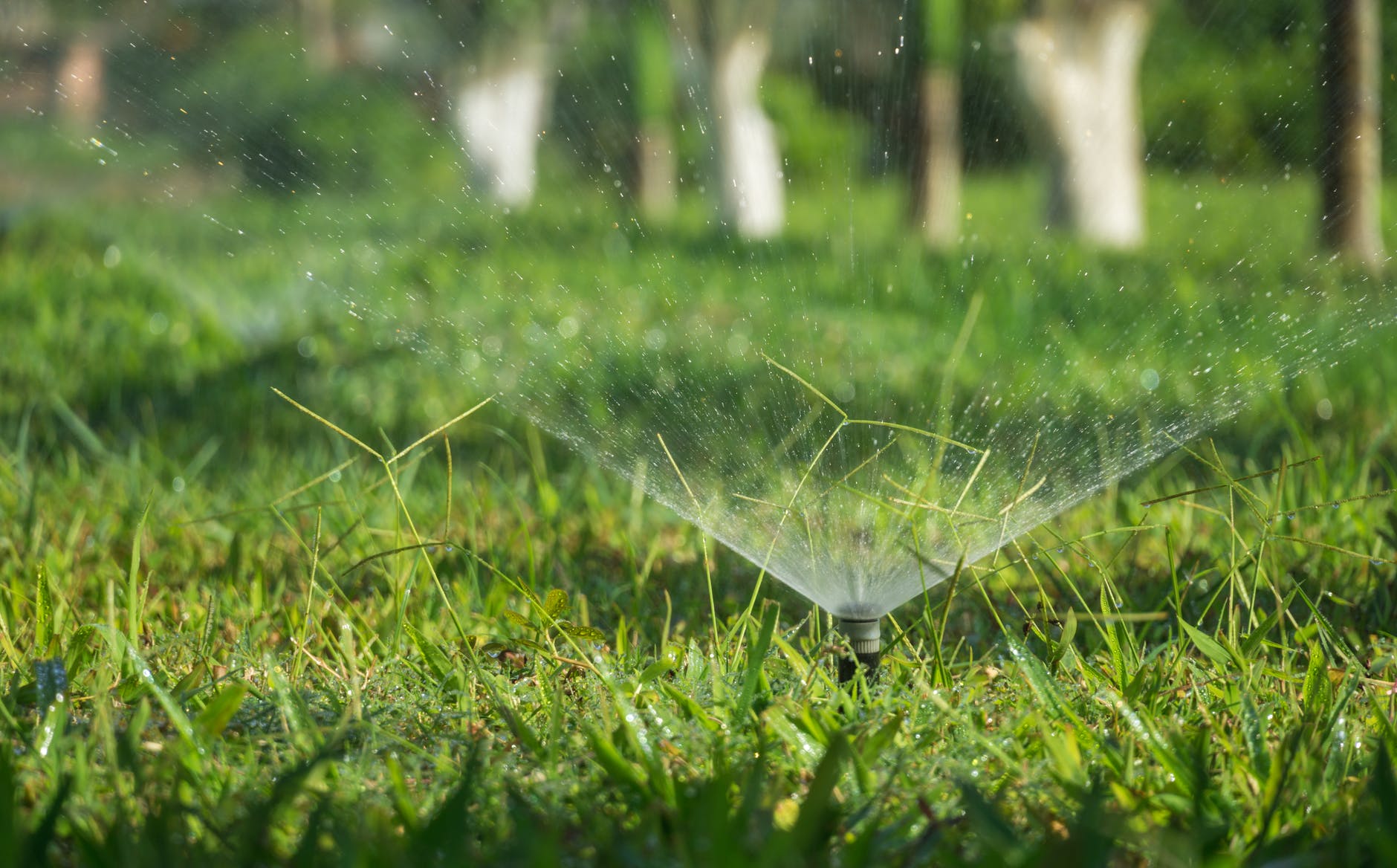
Step over to a different nearby street with larger and more expensive homes and a morning visit leads to seeing multiple homes with automatic sprinklers. The little black sprinkler heads can be viewed spreading water or the amount of water on the top of the grass blades suggests they were recently in action.

As I have chronicled the efforts of suburbanites to keep their lawn free of dandelions, weeds, and leaves alongside having a well-manicured green grass lawn, seeing the automatic watering of lawns among those with more resources leads to this thought: is the whole system of green lawns held in place by those with money and higher housing values as a means to signaling their status and pride in homeownership? The well-kept lawn is often tied to middle-class values but it costs money and time to keep the yard in a certain condition. And how much does the green lawn connect to higher financial and social standing?

National Association of Landscape Professionals defends the lawn

Trade associations are common in the United States and one is defending the green lawn as some Americans consider alternatives:

Photo by JJ Jordan on Pexels.com

Andrew Bray, vice president of government relations for the National Association of Landscape Professionals, a trade group, says lawns are still the mainstream choice. People want neat outdoor spaces for relaxing, playing and entertaining.

He says his group supports the goal of making lawn care more environmentally friendly, but believes some recent ordinances, like those against gas-powered blowers and mowers, have created a “fraught political environment.” He says electric alternatives to those tools aren’t feasible yet for the big lawns that professionals handle.

The landscapers’ trade group set up a new public platform this year, Voices for Healthy Green Spaces, to present its side of things. “Whether people want to have a large yard, plant a forest of trees in their backyard, or want a meadow and unstructured plantings,” all are green options, he said.

There is plenty of money in lawns. Many suburbanites see lawns as part of nature.

How green or environmentally friendly is the manicured and green lawn free of dandelions and leaves? It will likely take a varied approach to move many Americans away from these ideas. This could involve: displaying and marketing alternative approaches to yards; financial incentives to avoid a green grass lawn; increasing concern and action regarding climate change and its effects; and selling new kinds of lawn products. Put these together and the preferred lawn might change…over decades.

And keep an eye on how Big Lawn operates.

Communities moving to limit gas leaf blowers but leaving the leaves alone all together might be a hard sell

The movement to limit gas-powered leaf blowers appears to be picking up steam:

Photo by Pixabay on Pexels.com

More than 100 cities across the country have already passed regulations to ban or restrict gas-powered leaf blowers. For people committed to their manicured lawns, the good news is that powerful electric and battery-operated leaf blowers now exist, and they are quieter and greener and healthier than gasoline-powered blowers. Their market share is also growing rapidly; electric equipment now represents roughly 44 percent of lawn-care machinery sales.

But, would this movement extend to not doing anything about fallen leaves?

But the trouble with leaf blowers isn’t only their pollution-spewing health consequences. It’s also the damage they do to biodiversity. Fallen leaves provide protection for overwintering insects and the egg sacs of others. Leaf blowers, whether electric or gasoline-powered, dislodge the leaf litter that is so essential to insect life — the insect life that in turn is so essential to birds and other wildlife.

The ideal fertilizer and mulch can’t be found in your local garden center. They are available at no cost in the form of a tree’s own leaves. The best thing to do with fallen leaves is to mulch them with a lawn mower if your lawn consists of entirely of unvariegated turf grass (which it should not, given that turf grass requires immense amounts of water and poison to maintain). Our yard is a mixture of grasses and clovers and wildflowers, so we can safely let our leaves lie. If a high wind carries them away, it’s hard not to wail, “Wait! I was saving those!

And the leaves that fall across every inch of this wild half acre of suburbia are so much prettier than any unnaturally green lawn beaten into submission by stench-spewing machinery. All those golden sugar maple leaves hold onto the light, and for weeks it looks as though our whole yard is on fire, even in the rain. Who could be troubled by a blanket made of light? A blanket keeping all the little creatures safe from the cold?

A world without leaf blowers and/or all of the pieces of lawn equipment that sit within many suburban garages and sheds is hard to imagine. Suburbanites and lawn keepers in America can be very fastidious about what needs to be done: the lawn should be well-seeded, green, manicured, weed-free, and leaf-free. The lawn may even be “a window into your soul.” Simply leaving the leaves on the lawn…this would appear negligent, lazy, unkempt.

The argument above suggests the leaves are better for the lawn, creatures, and the environment more broadly. Perhaps this is the way to sell it: your lawn will be healthier if you leave the leaves. But, if the goal is a better relationship with nature, does this also mean other forms of lawn care should be undone as well? Once the leaves stay, what else about American lawn practices should be jettisoned?

The bigger question may not be about gas powered machines but about what a better suburban or single-family home relationship with nature might look like. Amid all of the sprawling land use and driving, how could the open space in individual lots better serve nature? Less emphasis on well-maintained grass could limit water use and provide more habitat space. Whether Americans could find this acceptable in appearance, for property values, and in connection to nature, is another matter.