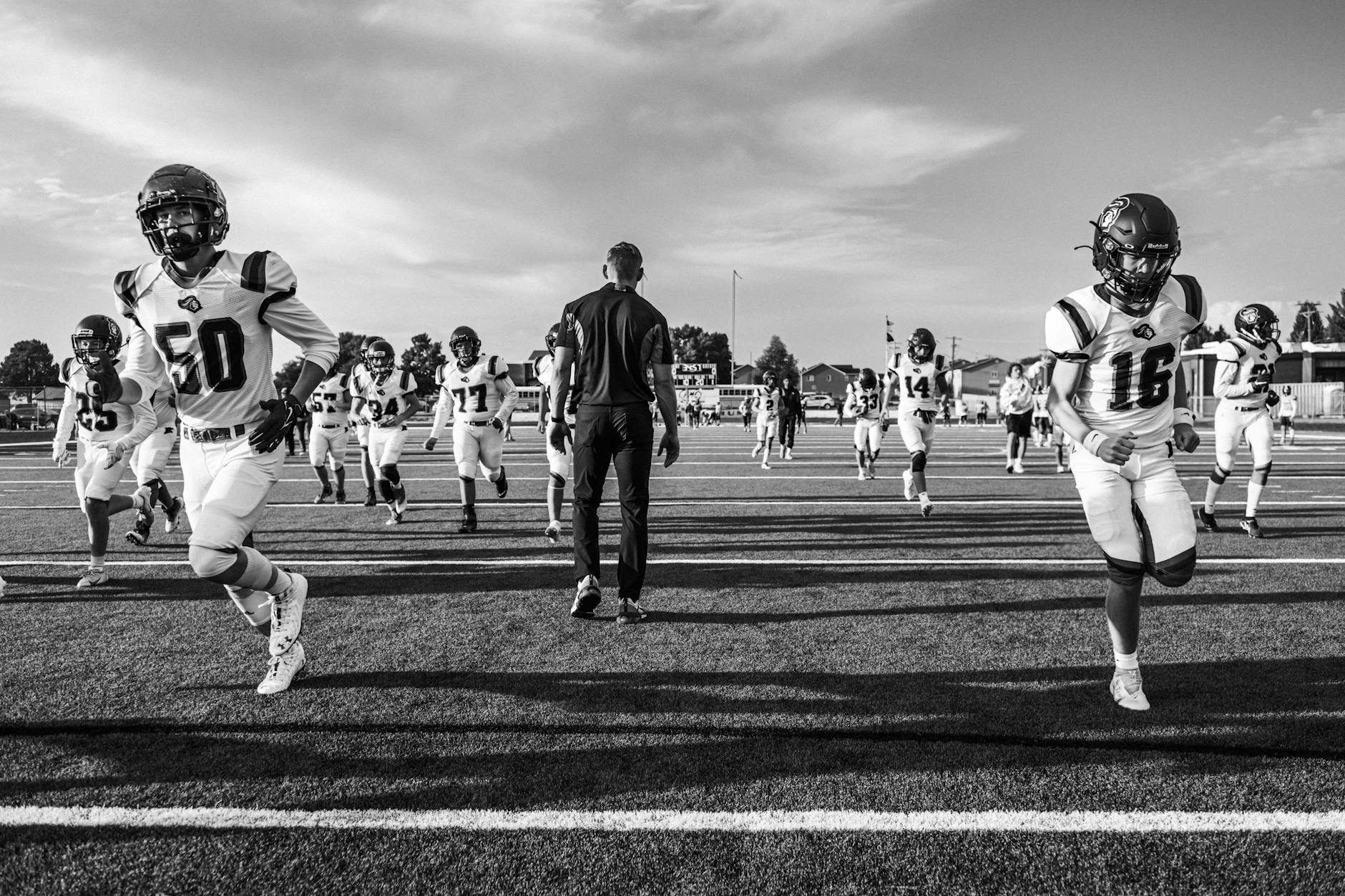
Nearly every high school nickname in Illinois, and across the country, is a product of a local history. Your nickname, blandly innocuous or a 300-year-old derogatory insult toward indigenous people, is not special. More than 30 schools in Illinois currently claim Native American-related nicknames. There are also 36 schools that are Eagles, 29 that are Bulldogs and 29 that are Tigers…
Heritage and lore are often behind nicknames: Outside Champaign, the Bunnies of Fisher Jr./Sr. High School took their name from a century-old tradition, when players carried rabbit-feet. The DeKalb Barbs nod to DeKalb as the origin of barbed wire. In Brighton, Southwestern High School — honoring the area’s Native background without making a whole group of people a caricature — are Piasa Birds, a reference to the mythical creatures found painted into cliffs on the nearby Mississippi River.
Some of the best Illinois nicknames play off a town’s industry: The Rochelle Hubs honor Rochelle’s history as a travel junction, where rail lines and several interstates converge. The Cornjerkers of Hoopeston — home of the National Sweetcorn Festival — is another example of a team turning an insult (here, against corn farmers) into a point of pride. There’s a similarly defiant streak about Farmington Farmers and Coal City Coalers.
Discussions of changing the mascot often invoke this history:
“My first death threat I ever got as a legislator was after I filed that first mascot bill,” West said. “You hear, ‘If I see you crossing the street, I promise to forget how to use my brakes.’ My goodness — over a mascot! You are coming for their traditions, they say. Tradition is always the main argument. Finances too — how much it will cost to get new uniforms and so on. But the energy, and anger, in these conversations is about history.”
Local history is important to many communities. But there are also plenty of moments in history where communities make decisions to go different directions. As they consider external pressures and internal pressures, communities come together and discuss how they would like to respond. My research considered decisions about development but this could also apply to mascots. Have the times changed? How do newer residents in a community feel? What is the broader purpose of schools? The discussion may be about the name of the high school names bu tit likely invokes broader questions about how communities think about themselves and the world around them.
Of the examples of high school mascots provided in the article, the names highlighting a local industry are intriguing. What might this look like in the twenty-first century? The Office Parks? The Hospitalists? The Data Centers or Warehousers? The Drivers? New traditions could begin with names fitting more recent work and industry patterns.
In addition to providing fun and distracting from what may be poor play by the team, sports mascots are important brand symbols. The symbolic nature of their existence and their importance in developing and sustaining a brand is highlighted in this summary of Benny the Bull’s life:
Benny accompanied Richard M. Daley to China. Benny has been sued and Benny has been ejected from games. Benny has topped the Forbes list of the most popular sports mascots and Benny has been arrested at the Taste of Chicago. Off the court, the people who played Benny didn’t get health insurance from the Bulls until the Jordan era (or a 401K plan for even longer). One owned a deli in Skokie, another was an evangelical Christian…
I know who Benny has been since he was born; seven people (and countless understudies) have slipped into Benny’s shoes since he debuted Oct. 17, 1969. I know the name and job title of the person playing Benny right now but agreed not to reveal it, because, well — for the sake of the children. The Bulls want to retain some mystery with Benny, so we will honor that — to a degree. As Benny developed as a brand, the Bulls have treated him increasingly as Disney treats Mickey: No one plays Benny! No one is inside Benny! Benny is Benny! That is, a cottage industry, and like any mascot, the face of a franchise. Players come and go, but only Benny remains….
As the Jordan era waned and the business of the Bulls rolled on, Benny gained new relevance. He acquired an entourage — including Lil’ Benny, Mini Benny, and, notoriously, Da Bull, Benny’s angrier brother. Bring up Da Bull to the Bulls today and they look at you as if you asked for a loan: The Chicago man who played Da Bull was arrested in 2004, near the United Center, for selling 6 ounces of marijuana (and later received probation)…
And so this summer Benny — who is being inducted into the new Mascot Hall of Fame in Indiana and getting a new van for appearances — also will be busy. The Bulls say he gets a work-life balance; and he is paid well (low six figures, whisper some close to the job). But the job itself never ends. Asked if he can relate to workaholic Benny, Landey Patton, the first Benny, said he couldn’t dribble, never mind dunk. He said, “It’s all razzmatazz and dancing now. And so corporate, you know? When I was Benny, families could afford tickets. And what are Bulls tickets now — $10?”
Four quick thoughts:
1. This relatively recent emphasis on mascots mirrors big shift in sports in recent decades: it is big business and big entertainment, in addition to being about winning games. The mascot can be an important part of the show that needs to go well to help enhance what are booming values of teams. The most recent valuation by Forbes suggests the Bulls are worth $2.9 billion and Benny is part of a well-oiled machine.
2. The article hints at this but I have to think much of this is about attracting kids and hoping they become lifelong fans (and customers).
3. Sports run on certain schedules, usually emphasizing the games, but mascots help the teams and sports stay in the public consciousness all year round. These are now year-round activities, even if the games stretch from late October to early June.
4. I have not attended many Bulls games over the years but I have always been partial to the Benny the Bull blimp who had plenty of airspace to navigate when the team moved to the more expansive United Center in the mid-1990s.

 Legally Sociable