
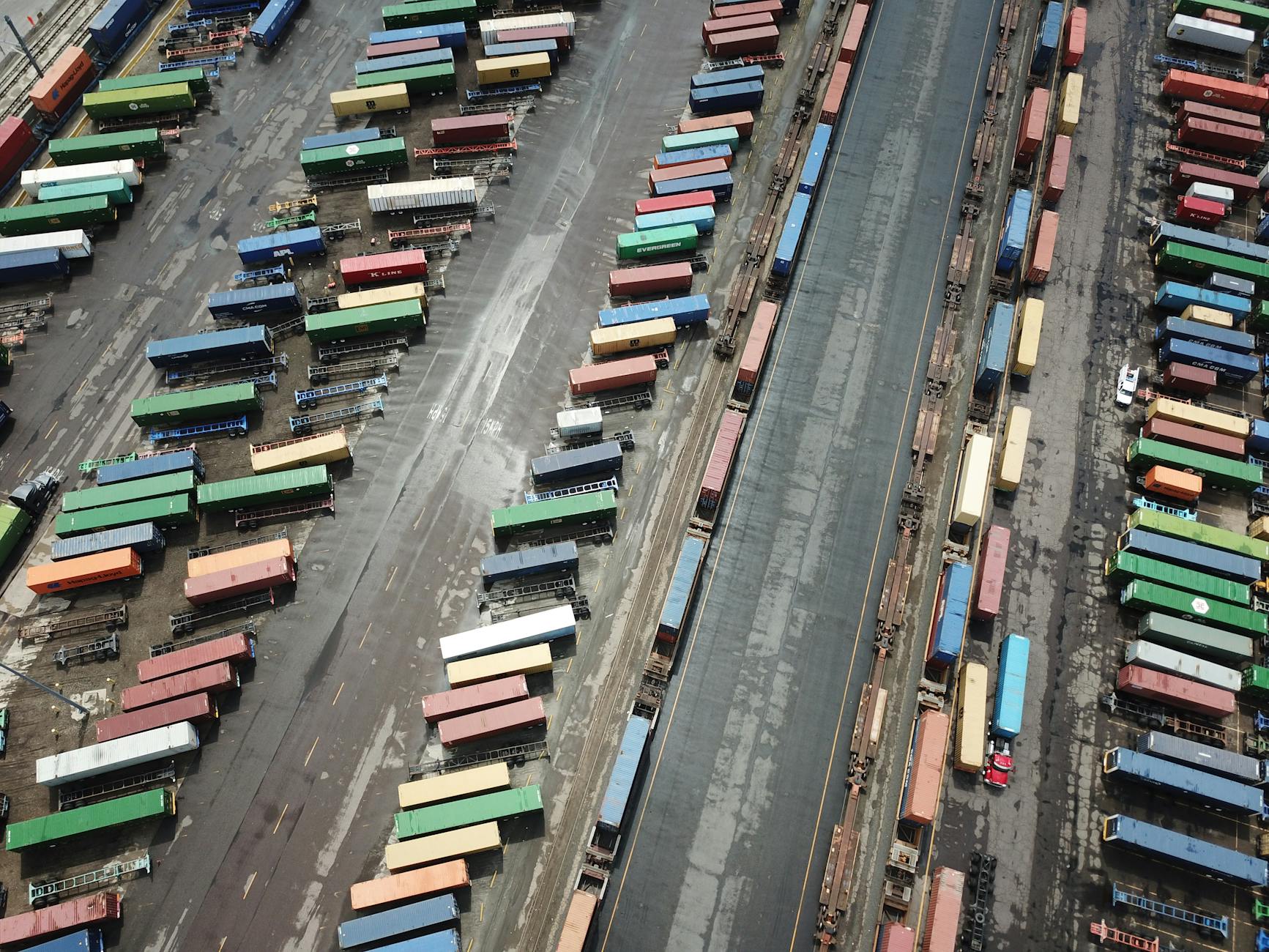
Starting in 1848, railroads raced to make Chicago the preeminent commercial and financial crossroads between booming factories on the East Coast and voracious markets and vast natural resources in the West.
But they always found it easier and cheaper to hand their freight off to each other in and around the city than to build transcontinental railroads that actually passed through Chicago. In some yards, including near McKinley Park 4 miles southwest of downtown, Union Pacific and Norfolk Southern exchange groups of railcars. Elsewhere, they hand off individual shipping containers to each other and to different railroads.
By running a single transcontinental railroad, Union Pacific says it can shave one or two days off the full week that 40-foot shipping containers now spend traveling from Los Angeles to Chicago and then on to, say, the western suburbs of New York City…
With a unified rail network, Union Pacific hopes to eliminate hundreds of rubber-tire container moves each day in and around Chicago, and hundreds more between Chicago and surrounding Midwest cities like Detroit; Columbus, Ohio; and Louisville, Kentucky.
There must be more to this story. How much of this has to do with the history of when railroads were founded and which areas they serviced? How much of this is about the railroad industry and companies working together and/or competing? How much of this is due to policies about railroad mergers?
In many industries, the trend over time does seem to be consolidation among the more powerful actors. This might appear to occur for good reasons, such as being able to ship goods through Chicago from coast to coast on one railroad system. But, as the article notes, this then affects markets, prices, and consumers with fewer companies.
At this point, the railroad industry in the United States is nearing 200 years old (1826 might be the first year of commercial operation). This is a long history compared to numerous other commercial or industrial sectors in the United States. What would it take to truly transform the railroad industry at this point as it operates in a much different context than it did when the first companies were founded? Railroads are an important part of the infrastructure of the United States and making it 200 more years might require foresight and adaptation.


 Legally Sociable