The use of former Catholic properties includes homes for other congregations and giving the land back to a Tribal Nation

When churches and properties of the Catholic Church are sold, what happens to them? In the last few days, I saw two articles that highlight several of the possible outcomes. First, they can become homes for other congregations:
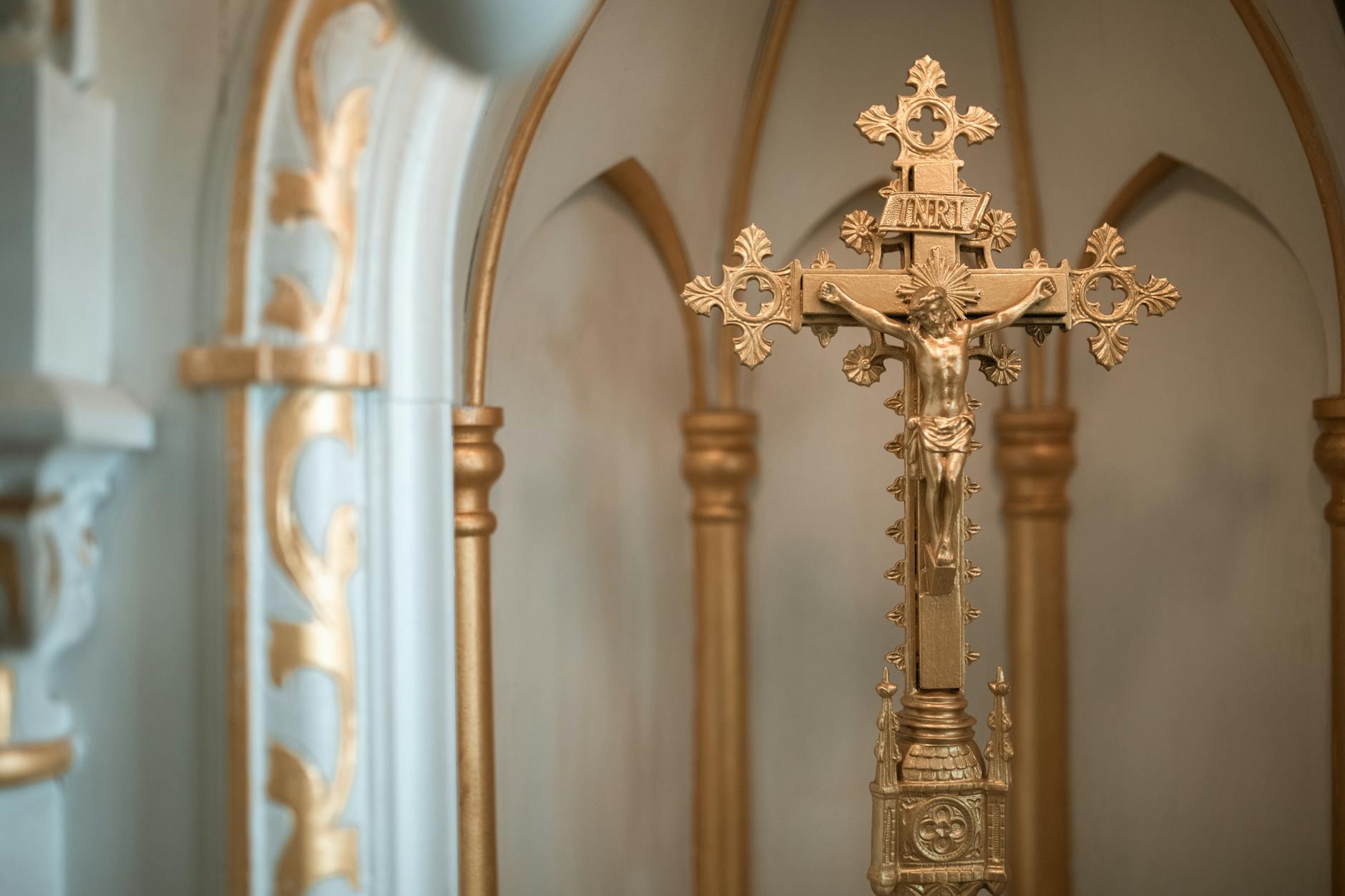
Photo by RDNE Stock project on Pexels.com

Local Catholic leaders tend to be grateful that others can use the space for worship and service. But it’s not always a smooth transition. Evangelical churches without experience with bigger facilities may not be ready for the upkeep. And local Catholic parishioners may feel the emotional sting of seeing their former sacred spaces dismantled and reused by other traditions…

Real estate broker Matt Messier, whose company Foundry Commercial has sold around 3,000 churches over the last 50 years, estimates that more than half of church properties—whether Catholic or mainline Protestant—get bought by a fellow faith group…

An ongoing study on Chicago churches by the University of Notre Dame researchers found the same. “The most common reuse of dedicated church buildings—not only Catholic church buildings—is reuse for another church,” said program director Maddy Johnson.

Second, a community of Sisters in Wisconsin sold their property to a neighboring Native tribe:

A Wisconsin religious community says it has completed the first known instance of a Catholic group returning land to a Native American tribe, hailing it as a move made in the “spirit of relationship and healing.”

The Franciscan Sisters of Perpetual Adoration announced the transfer in an Oct. 31 news release on its website. The community is located in La Crosse, Wisconsin, near the state’s border with Minnesota.

The sisters had purchased the land from the Lac du Flambeau Band of the Lake Superior Chippewa tribe in 1966 and used the property for its Marywood Franciscan Spirituality Center.

The sisters said they sold the property to the tribe for $30,000, the exact amount for which they paid for the land six decades ago. The modern sale price represented “just over 1% of [the land’s] current market value,” the sisters said.

The first set of outcomes is more common than the second. There are plenty of religious congregations who need buildings as constructing a new building is expensive – buying the property, erecting a building, etc. – and time consuming – it could take years to raise funds, obtain approval, complete the construction, etc. Given more recent discussion of colonialism and history, perhaps there will be more instances of religious groups giving land to Native tribes.

There are some guidelines in place regarding who the Church might sell to:

“Catholic bishops are required to protect former Catholic worship sites from what canon law calls ‘sordid use,’” said Notre Dame’s Johnson. “In addition, recent Vatican guidance has encouraged, where possible, proactively finding mission-aligned reuses. What this means for non-Catholic religious reuse of former Catholic sites is a point of debate.”

With the number of church closures in recent years and expected in the coming years, keep an eye out for research regarding what happens to properties, buildings, and congregations. My recently published look at how many congregations researchers can find online has implications for studying closed congregations and the fate of their properties.

Would you rather have been a European or Native American in 1491?

A 2002 article from The Atlantic about pre-Columbian North and South America includes this fascinating paragraph:

I asked seven anthropologists, archaeologists, and historians if they would rather have been a typical Indian or a typical European in 1491. None was delighted by the question, because it required judging the past by the standards of today—a fallacy disparaged as “presentism” by social scientists. But every one chose to be an Indian. Some early colonists gave the same answer. Horrifying the leaders of Jamestown and Plymouth, scores of English ran off to live with the Indians. My ancestor shared their desire, which is what led to the trumped-up murder charges against him—or that’s what my grandfather told me, anyway.

Some of reasons for making this choice:

Back home in the Americas, Indian agriculture long sustained some of the world’s largest cities. The Aztec capital of Tenochtitlán dazzled Hernán Cortés in 1519; it was bigger than Paris, Europe’s greatest metropolis. The Spaniards gawped like hayseeds at the wide streets, ornately carved buildings, and markets bright with goods from hundreds of miles away. They had never before seen a city with botanical gardens, for the excellent reason that none existed in Europe. The same novelty attended the force of a thousand men that kept the crowded streets immaculate. (Streets that weren’t ankle-deep in sewage! The conquistadors had never heard of such a thing.) Central America was not the only locus of prosperity. Thousands of miles north, John Smith, of Pocahontas fame, visited Massachusetts in 1614, before it was emptied by disease, and declared that the land was “so planted with Gardens and Corne fields, and so well inhabited with a goodly, strong and well proportioned people … [that] I would rather live here than any where.”

Smith was promoting colonization, and so had reason to exaggerate. But he also knew the hunger, sickness, and oppression of European life. France—”by any standards a privileged country,” according to its great historian, Fernand Braudel—experienced seven nationwide famines in the fifteenth century and thirteen in the sixteenth. Disease was hunger’s constant companion. During epidemics in London the dead were heaped onto carts “like common dung” (the simile is Daniel Defoe’s) and trundled through the streets. The infant death rate in London orphanages, according to one contemporary source, was 88 percent. Governments were harsh, the rule of law arbitrary. The gibbets poking up in the background of so many old paintings were, Braudel observed, “merely a realistic detail.”

The Earth Shall Weep, James Wilson’s history of Indian America, puts the comparison bluntly: “the western hemisphere was larger, richer, and more populous than Europe.” Much of it was freer, too. Europeans, accustomed to the serfdom that thrived from Naples to the Baltic Sea, were puzzled and alarmed by the democratic spirit and respect for human rights in many Indian societies, especially those in North America. In theory, the sachems of New England Indian groups were absolute monarchs. In practice, the colonial leader Roger Williams wrote, “they will not conclude of ought … unto which the people are averse.”

Much to take in.