Documentary series addresses “tsunami” of church closings that could come in the next decade

A new four-part series looks at church closings in the United States:
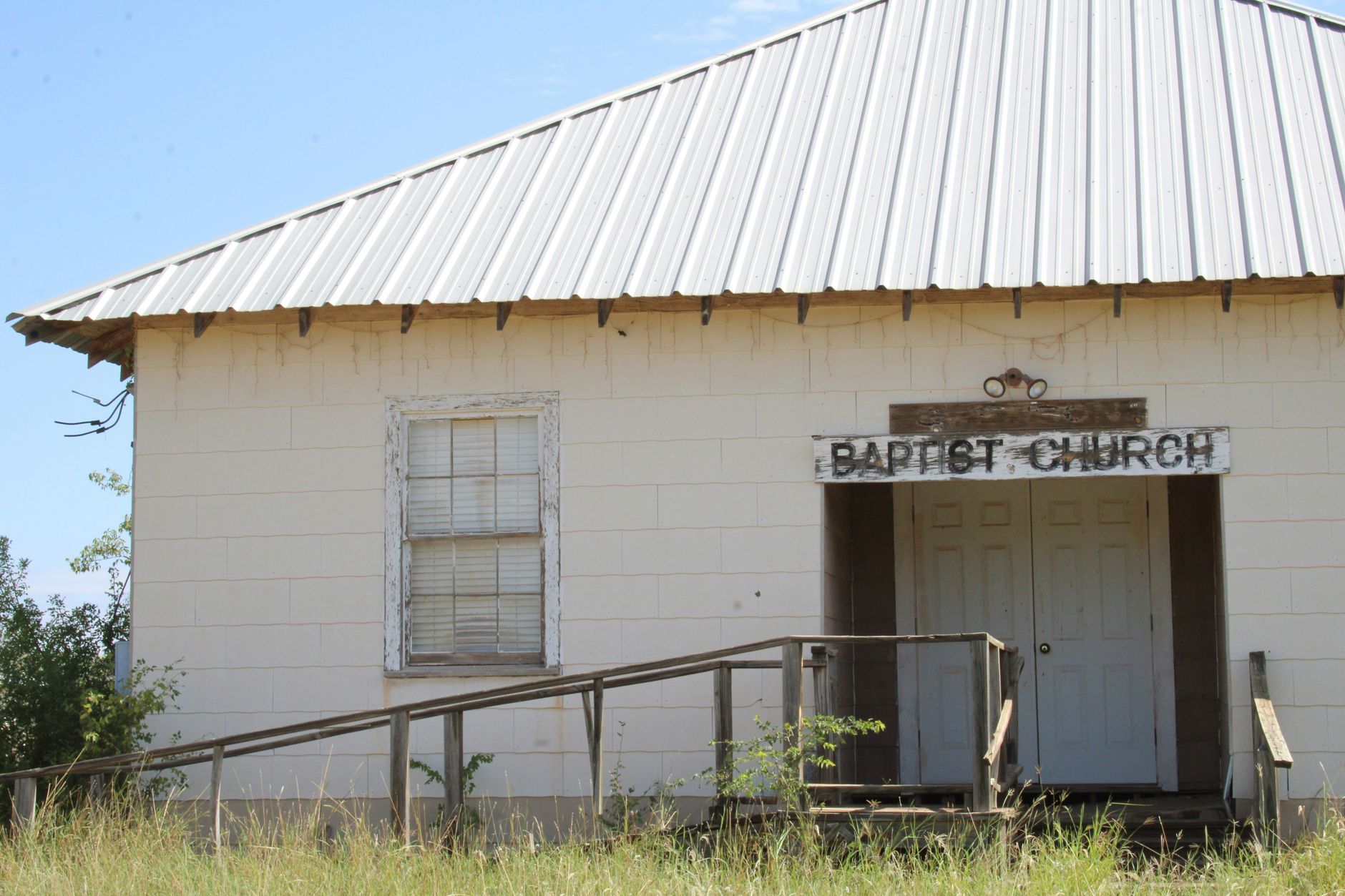
Photo by Megan Bailey on Pexels.com

What Wagner experienced with her shrinking congregation is arguably the most urgent challenge facing churches across America. Experts project an estimated 100,000 churches in the US will close or be repurposed over the next decade. Many churches will be unable to escape this “tsunami” of closings — a grim trajectory one pastor described as, “Every year the pews are getting emptier and the collection plates getting lighter.”

This is the challenge that “Christianity at a Crossroads,” a new TV documentary series, examines. The comprehensive four-part series, which premieres Thursday on PBS stations, features heart-wrenching scenes like the last days of Belding United Methodist Church. It also shows how mass church closures will hurt communities across America — including people who don’t attend church or care nothing for organized religion…

The shadow that hangs over the entire series, though, is the perilous future of the church. Christian leaders have been warning about the decline of American churches for decades. What’s new about the PBS series is that it presents portraits of the people and congregations behind this decline, along with specific numbers and a timeframe for the expected church closings.

As the documentary series shows some shared traits — accessible parking, lively music, powerful preaching and efforts to shower visitors with hospitality — seem mundane. But they are non-negotiable elements for growth. The film also spotlights the Church of the Nativity in suburban Baltimore, Maryland, which has learned another key to expansion: make church fun for young people. It draws about 800 kids and youths for its Sunday services.

A number of people have made such predictions in the last decade or two. The typical American church is small with roughly half having fewer than 70 or so people. Some church buildings are old and are expensive to maintain. An increasing number of Americans claim no religious affiliation. The decline of numerous denominations.

What would be interesting to see in the series (episode 1 is on Youtube) is the discussion of the impacts of closures. What happens to religious communities, both as collectives and the individuals within them? What happens to neighborhoods and communities when churches are no longer using those buildings or providing services? What might the American landscape look like with fewer religious congregations overall and perhaps fewer occupying prominent locations and buildings?

Robert Brenneman and I found in Building Faith: A Sociology of Religious Structures that some closed religious buildings were used by other religious groups. Newer congregations who did not have many resources could find older religious buildings that an older congregation needed to sell. The younger congregation might adapt that older structure to their own needs. My guess is that this will continue to happen, particularly in parts of the United States where populations are growing.

But if a tsunami of church closures comes and the rates of closures significantly increases, this could have cascading effects. Instead of a church or two disappearing, it could be 5 or 10 in a neighborhood or community. Are there enough ways that such buildings or properties could still benefit the community?
The use of former Catholic properties includes homes for other congregations and giving the land back to a Tribal Nation

When churches and properties of the Catholic Church are sold, what happens to them? In the last few days, I saw two articles that highlight several of the possible outcomes. First, they can become homes for other congregations:

Photo by RDNE Stock project on Pexels.com

Local Catholic leaders tend to be grateful that others can use the space for worship and service. But it’s not always a smooth transition. Evangelical churches without experience with bigger facilities may not be ready for the upkeep. And local Catholic parishioners may feel the emotional sting of seeing their former sacred spaces dismantled and reused by other traditions…

Real estate broker Matt Messier, whose company Foundry Commercial has sold around 3,000 churches over the last 50 years, estimates that more than half of church properties—whether Catholic or mainline Protestant—get bought by a fellow faith group…

An ongoing study on Chicago churches by the University of Notre Dame researchers found the same. “The most common reuse of dedicated church buildings—not only Catholic church buildings—is reuse for another church,” said program director Maddy Johnson.

Second, a community of Sisters in Wisconsin sold their property to a neighboring Native tribe:

A Wisconsin religious community says it has completed the first known instance of a Catholic group returning land to a Native American tribe, hailing it as a move made in the “spirit of relationship and healing.”

The Franciscan Sisters of Perpetual Adoration announced the transfer in an Oct. 31 news release on its website. The community is located in La Crosse, Wisconsin, near the state’s border with Minnesota.

The sisters had purchased the land from the Lac du Flambeau Band of the Lake Superior Chippewa tribe in 1966 and used the property for its Marywood Franciscan Spirituality Center.

The sisters said they sold the property to the tribe for $30,000, the exact amount for which they paid for the land six decades ago. The modern sale price represented “just over 1% of [the land’s] current market value,” the sisters said.

The first set of outcomes is more common than the second. There are plenty of religious congregations who need buildings as constructing a new building is expensive – buying the property, erecting a building, etc. – and time consuming – it could take years to raise funds, obtain approval, complete the construction, etc. Given more recent discussion of colonialism and history, perhaps there will be more instances of religious groups giving land to Native tribes.

There are some guidelines in place regarding who the Church might sell to:

“Catholic bishops are required to protect former Catholic worship sites from what canon law calls ‘sordid use,’” said Notre Dame’s Johnson. “In addition, recent Vatican guidance has encouraged, where possible, proactively finding mission-aligned reuses. What this means for non-Catholic religious reuse of former Catholic sites is a point of debate.”

With the number of church closures in recent years and expected in the coming years, keep an eye out for research regarding what happens to properties, buildings, and congregations. My recently published look at how many congregations researchers can find online has implications for studying closed congregations and the fate of their properties.