Pushing back against the housing plans of the wealthy in suburban Palo Alto

One elected local government official wants to limit what wealthy residents can build in suburban Palo Alto:

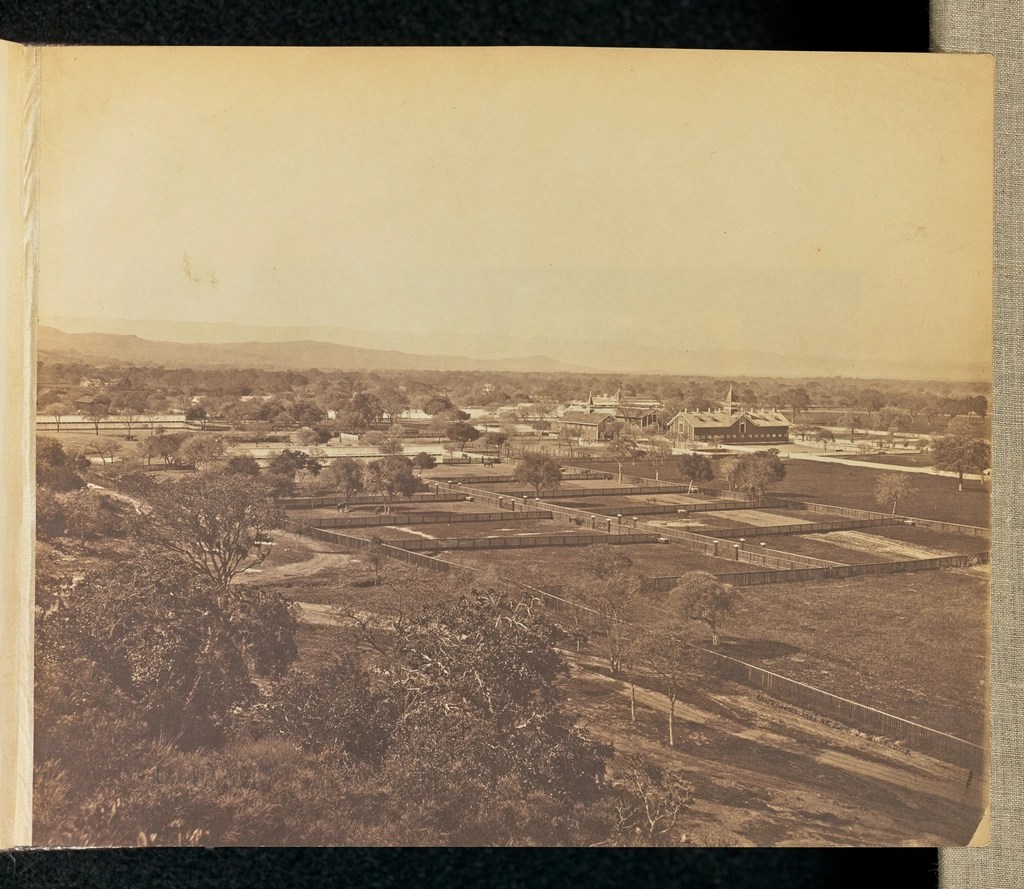
View Palo Alto, California Eadweard by thegetty is licensed under CC-CC0 1.0

The proposed legislation would apply to people who buy three or more homes within a radius of 500 feet, roughly the length of a city block. Any construction project expected to last more than 180 days would need a detailed daily schedule of construction work to prove it can be conducted without double-parking vehicles or blocking driveways or bike lanes.

After finishing one construction project, homeowners would need to wait three years to begin another unless a major emergency occurred. Homes could not be vacant for more than six months in any given year.

The proposal relies on neighbors for enforcement, leaving it up to another homeowner or tenant living within 500 feet to file a lawsuit.

The proposal would place new restrictions on private security guards across Palo Alto, not just those serving wealthy homeowners. All security vehicles would have to be marked and permitted by the city. Security guards would have to identify themselves to the public when asked. They would be prohibited from harassing or intimidating passers-by on public property…

The full Palo Alto City Council is likely to take up Mr. Stone’s proposal in January or February. Mr. Stone said he is confident that a majority of the seven-member council, which has taken a keen interest in housing affordability, would support the general framework but could send it to a committee or city staff member for refinement. It could take six months or longer to reach a final vote, he said.

Three things strike me about this proposal:

  1. It is clearly aimed at particular residents. Not just people with some wealth, who might be found across American suburban communities, but people who are truly wealthy and can afford this kind of construction and property ownership and all that goes with it.
  2. Communities often deal with these concerns at the zoning level. How big can a structure or house be? Are the guidelines in particular areas or in regards to property lines? The proposal above seems to deal with other matters that come along with regular approval of megahouses and properties.
  3. The regulations are about property but local conversations often have to do with local character and community life. Do such homes (and people) fit in the community? Who can live in a place where such properties are common? Who is Palo Alto for? Suburbs often implicitly or explicitly have these discussions while considering development.

Now that this proposal is out there, how do wealthier residents respond and what will the final local regulations be?

Limiting teardown McMansions with ordinances requiring demolitions reuse and recycle materials?

Palo Alto, California will soon require the reuse or recycling of the majority of materials for demolished buildings:

[W]orkers will now be required to systematically disassemble structures, with the goal of reusing or recycling the bulk of the material on the site. Based on experiences in Portland, Oregon, which has a similar law in place, staff believes that up to 95% of the construction debris can be salvaged — either reused or recycled — through “deconstruction.”…

Construction and demolition materials represent more than 40% of Palo Alto debris that gets disposed in landfills, according to an estimate from the city’s Public Works Department. As such, it represents a prime opportunity for diversion and recovery, staff told the City Council at the June 10 meeting, shortly before the council voted unanimously to adopt the new ordinance…

The new model calls for buildings to be systematically disassembled, typically in the reverse order in which they were constructed. Based on two recent pilot projects, deconstruction work using this method would take about 10 to 15 days to complete and require a crew of four to eight people, with the cost ranging from $22 to $34 per square foot….

The new deconstruction ordinance is expected to help the city divert 7,930 tons of waste annually (by contrast, the disposable-foodware ordinance that the council adopted at the same meeting would divert 290 tons). The deconstruction ordinance is also expected to reduce the city’s greenhouse-gas emissions by 22,300 metric tons annually (for the foodware ordinance, the number is 470 tons).

This would be an interesting way for communities to limit teardown McMansions without having to explicitly mention big houses. When there are public discussions about ordinances regarding residential teardowns, it often comes down to a discussion of property rights versus neighborhood or community character. These can get ugly. But, an ordinance like this does not have to explicitly mention residential properties or single-family homes in order to affect them. Going through the reuse/recycle mode would require more time and labor and this might either constrict what is built on the site or stop the teardown process before it begins. Of course, those pursuing teardowns might simply pay more to deal with the new requirements. People who have the money to buy a lot and house (sometimes a perfectly functioning or not very old house) and just tear it down and build a new one might just be able to easily pay these new costs.

With this ordinance in mind, I imagine there are other ways local governments could restrict residential teardowns without necessarily targeting them. Why set up a battle about property rights, aesthetics, and community if it can be avoided by regulations that nudge people certain directions?