Waterfront town, power plant cooling tower in clear view

Michigan City, Indiana is a small city on Lake Michigan. Driving through the community, here is what you see:

A cooling tower for a power plant is hard to miss. How does this affect development or the waterfront experience? A Chicago Tribune article from October 2025 describes the scene:

The city of 33,000, a mixture of blue-collar workplace and lakefront playground, has benefited from several major developments in recent years. It is the home of a planned $300 million luxury hotel and townhouse development called SoLa (South of the Lake).

Last year, the addition of a second railroad track and new train station on the Metra South Shore Line cut commute times to Chicago to about an hour. It also is a gateway to the Indiana Dunes, which saw the number of visitors in recent years jump to around 3 million after it became a national park…

Other new developments include a $100 million, 12-story, mixed-use building at the train station called The Franklin, and 33 new single-family homes at Woodland Ridge…

But any plan to increase tourism in town will have to address a lurking eyesore that dominates the otherwise gorgeous lakefront: a giant concrete power plant cooling tower known to some locally as “the monstrosity,” that mars the views of the lakefront from every direction. Though the structure is for a coal power plant, visitors often assume it is for a nuclear plant.

NIPSCO, the company that operates the plant, says it plans to close the facility by the end of 2028. But NIPSCO also has plans to open a new gas-powered plant to power a coming data center, so it’s not clear what will become of the old plant.

The contrast is clear: waterfront property close to Chicago that is less desirable because of industry and a cooling tower. Move away from the industry and power plant and property values are higher and redevelopment opportunities more enticing. Removing a cooling tower several hundred feet tall would definitely change the local scenery. It may be a while – or never – before a residential tower reaches similar heights but the development already happening hints that more could be on the way.

This is certainly not the only waterfront community in the Midwest or in the United States with a power plant on the water. From places I have been in recent years, I also recall a power plant on the water in Sheboygan, Wisconsin. Or communities with major industrial works. Gary, Indiana is not too far away or the southeast side of Chicago.

With ongoing needs for power and resistance to power plants when they are proposed for certain places, where could a power plant like this go? Few people today would proposed a power plant along the water in or near population centers. Northern Indiana does have more open space away from the water – but land would need to be acquired, local approvals would be needed, demolition in Michigan City would have to happen. Power plants have to go somewhere, even if they are addressing issues raised by construction decisions from decades ago.
More data centers means more power plants coming

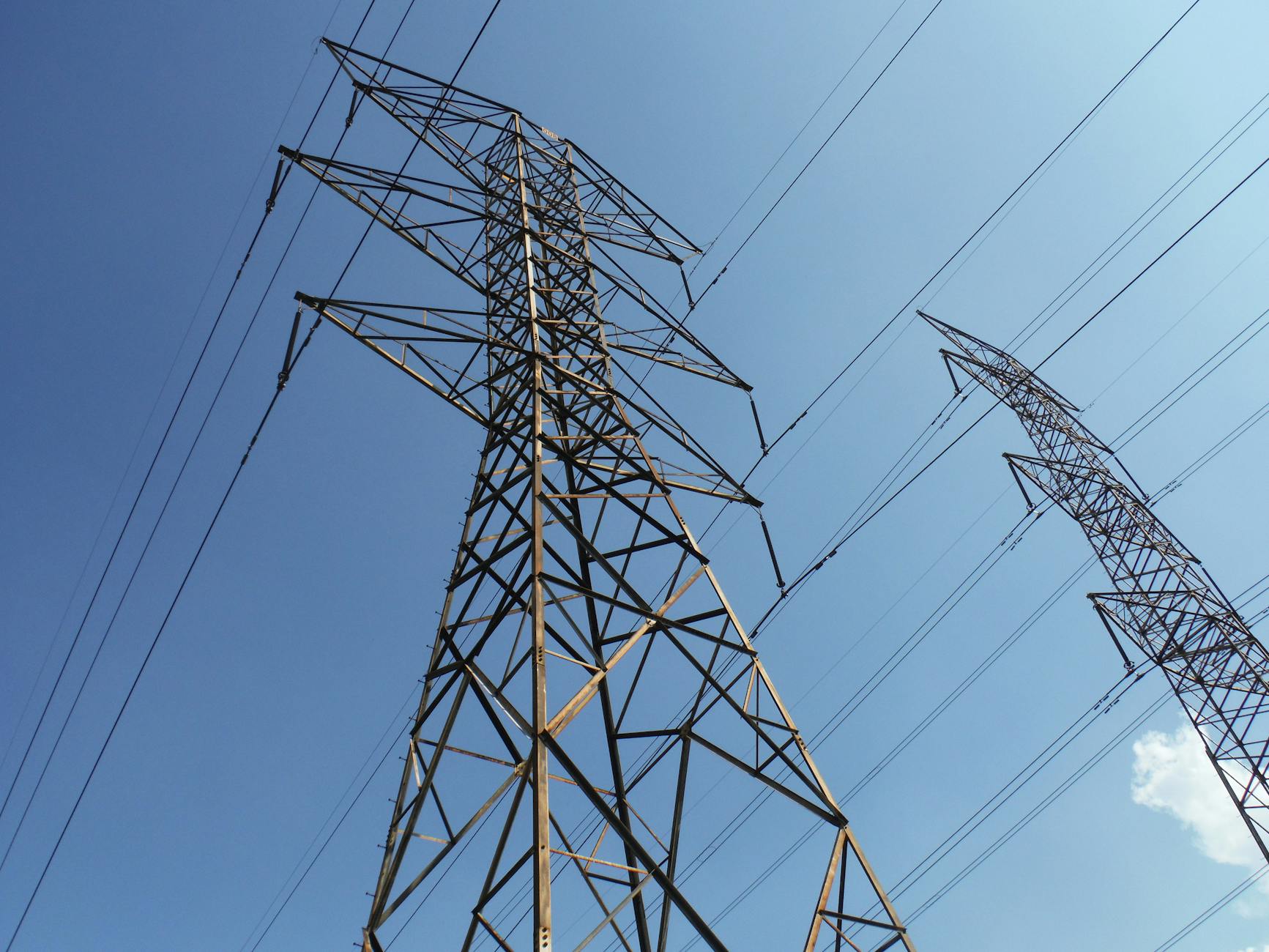
Where will the power come from for all the data centers recently built, under construction, and in the works?

Photo by Miguel u00c1. Padriu00f1u00e1n on Pexels.com

xAI’s rivals are all building similarly large data centers to develop their most powerful generative-AI models; a metropolis’s worth of electricity will surge through facilities that occupy a few city blocks. These companies have primarily made their chatbots “smarter” not by writing niftier code but by making them bigger: ramming more data through more powerful computer chips that use more electricity. OpenAI has announced plans for facilities requiring more than 30 gigawatts of power in total—more than the largest recorded demand for all of New England. Since ChatGPT’s launch, in November 2022, the capital expenditures of Amazon, Microsoft, Meta, and Google have exceeded $600 billion, and much of that spending has gone toward data centers—more, even after adjusting for inflation, than the government spent to build the entire interstate-highway system. “These are the largest single points of consumption of electricity in history,” Jesse Jenkins, a climate modeler at Princeton, told me.

Even conservative analyses forecast that the tech industry will drop the equivalent of roughly 40 Seattles onto America’s grid within a decade; aggressive scenarios predict more than 60 in half that time. According to Siddharth Singh, an energy-investment analyst at the International Energy Agency, by 2030, U.S. data centers will consume more electricity than all of the country’s heavy industries—more than the cement, steel, chemical, car, and other industrial facilities put together. Roughly half of that demand will come from data centers equipped for the particular needs of generative AI—programs, such as ChatGPT, that can produce text and images, solve complex math problems, and perhaps one day inform scientific discoveries…

The optimist’s case is that, by then, advanced nuclear reactors will have obviated many of the new fossil-fuel plants, and AI tools will have invented technologies that can solve the climate crisis. That may well happen. But today, “the market has converged on Add gas now, and then add nuclear later,” Jenkins said. In other words, if natural-gas turbines seem to offer the most expedient path to an AI-enhanced future, then clean air may have to wait…

Northern Virginia offers a glimpse into what the AI rush may bring to the rest of the nation. Loudoun is running out of space, but new data-center hubs are popping up in Phoenix, Atlanta, and Dallas. Amazon and Meta are building AI data centers in Indiana and Louisiana, respectively, that will each require more than two gigawatts of electricity, dozens of times more than standard facilities. OpenAI has proposed that the U.S. establish “AI Economic Zones”: little Loudouns everywhere.

Infrastructure is necessary to keep the modern world going but does not always get much attention until there are big changes (good or bad). We expect, electricity, water, the Internet, roads, and more to just be there and work just fine. Each of these required large-scale efforts to build and require a lot to maintain. AI may appear through the air but it is based by a massive infrastructure that includes land, servers, water, and electricity. Putting this all together is no easy task as it takes years, if not longer, to plan, find funding, get building approval, and complete construction.

Not noted as much in this article is how opposition to data centers has often focused on these infrastructure aspects. Who will pay for the water and electricity needed? What happens if there is air and noise pollution? Residents tend not to want to live near power plants, waste transfer facilities, and sewage treatment plants. How many people want to live near data centers?

Given the resources needed for data centers, how much are utility companies supporting these plans? Development, particularly intensive development, can generate new business. Growth machines, coalitions of local leaders and organizations, benefit from new development.

Games about infrastructure: street cleaning and the construction of power plants

Perhaps everything can go through the gamification process: I recently ran into two games that tackle issues involving infrastructure.

1. Here is a new street cleaning game recently released in Germany:

The game – known as Kehrmaschinen-Simulator 2011 in its homeland of Germany – puts the player behind the wheel of a street cleaning truck and promptly serves some of the dirtiest gutters and asphalt surfaces a city could provide.

Sadly, racing your sweeper at high speeds is not an option. What you can do is drive slowly, move the sweeping apparatus in a wide variety of ways, and – like a good street sweeper must – keep the streets clean. You can also get intimately familiar with the more mundane aspects of the street sweeping profession, from filling up the water tanks to turning on the truck’s various lights to checking your email…

Overall, the game provides what it promises: the player gets to clean city streets. How appealing that is depends on your personality.

“They say war games teach kids how to use guns and kill people and be violent; I don’t really believe in that,” one reviewer notes. “But if you do, maybe you should feed your kid some street sweeping games so he can get ready for his future job.”

The 15 minute video will give you a better idea of what the game is about.

2. We recently played the board game Power Grid for the first time. The idea of the game is that you have to build power plants, power them with resources you have to purchase, and then expand to new cities (which costs you) and also buy more powerful power plants (which also costs you more) to power more cities at a time. For an involved board game, the Amazon reviews are positive (4.5 stars out of 73), the review from Dice Tower is positive, and Board Game Geek offers a lot more information.

My takeaway comes with a caveat: anything can be made fun if done well. However, I do like thinking about infrastructure and city-building anyway so I may have more interest in such games.

Why not also pitch these games as learning opportunities? Give people the idea that playing a game might also be educational and these things might fly off the shelves. Power Grid requires a good amount of math to balance out how much new plants, resources, and city connections will cost versus how much a player will take in each turn based on their number of powered cities. While it is difficult to model complex events exactly in a game, these sorts of games could give kids and adults a better awareness of what it takes to clean streets or provide power. These are not unimportant tasks; I don’t think most citizens want dirty streets and dark houses.

Complaints about wind turbines: noisy and more

A number of wind farms built in more populated areas have drawn complaints from nearby residents, including the noise generated by the spinning turbines:

The wind industry has long been dogged by a vocal minority bearing all manner of complaints about turbines, from routine claims that they ruin the look of pastoral landscapes to more elaborate allegations that they have direct physiological impacts like rapid heart beat, nausea and blurred vision caused by the ultra-low-frequency sound and vibrations from the machines.

For the most extreme claims, there is little independent backing…

Numerous studies also suggest that not everyone will be bothered by turbine noise, and that much depends on the context into which the noise is introduced. A previously quiet setting like Vinalhaven is more likely to produce irritated neighbors than, say, a mixed-use suburban setting where ambient noise is already the norm.

A number of lawsuits against the turbines are now working through the courts.

An acoustic expert in the article suggests a solution: simply build the turbines further away from residences. However, there is a well-documented issue of a lack of high-capacity transmission lines that affects a lot of energy plant building.

How much of this is simply American NIMBYism in action: while people might generally support greener energy, how many want such plants built nearby?

h/t The Infrastructurist