A railroad merger that would stop Chicago area practice of freight handoffs between railroads

A proposed merger between Union Pacific and Norfolk Southern railroads would end a long practice of railroads meeting in Chicago and then moving their freight from one provider to another:

Photo by Blu2221ke on Pexels.com

Starting in 1848, railroads raced to make Chicago the preeminent commercial and financial crossroads between booming factories on the East Coast and voracious markets and vast natural resources in the West.

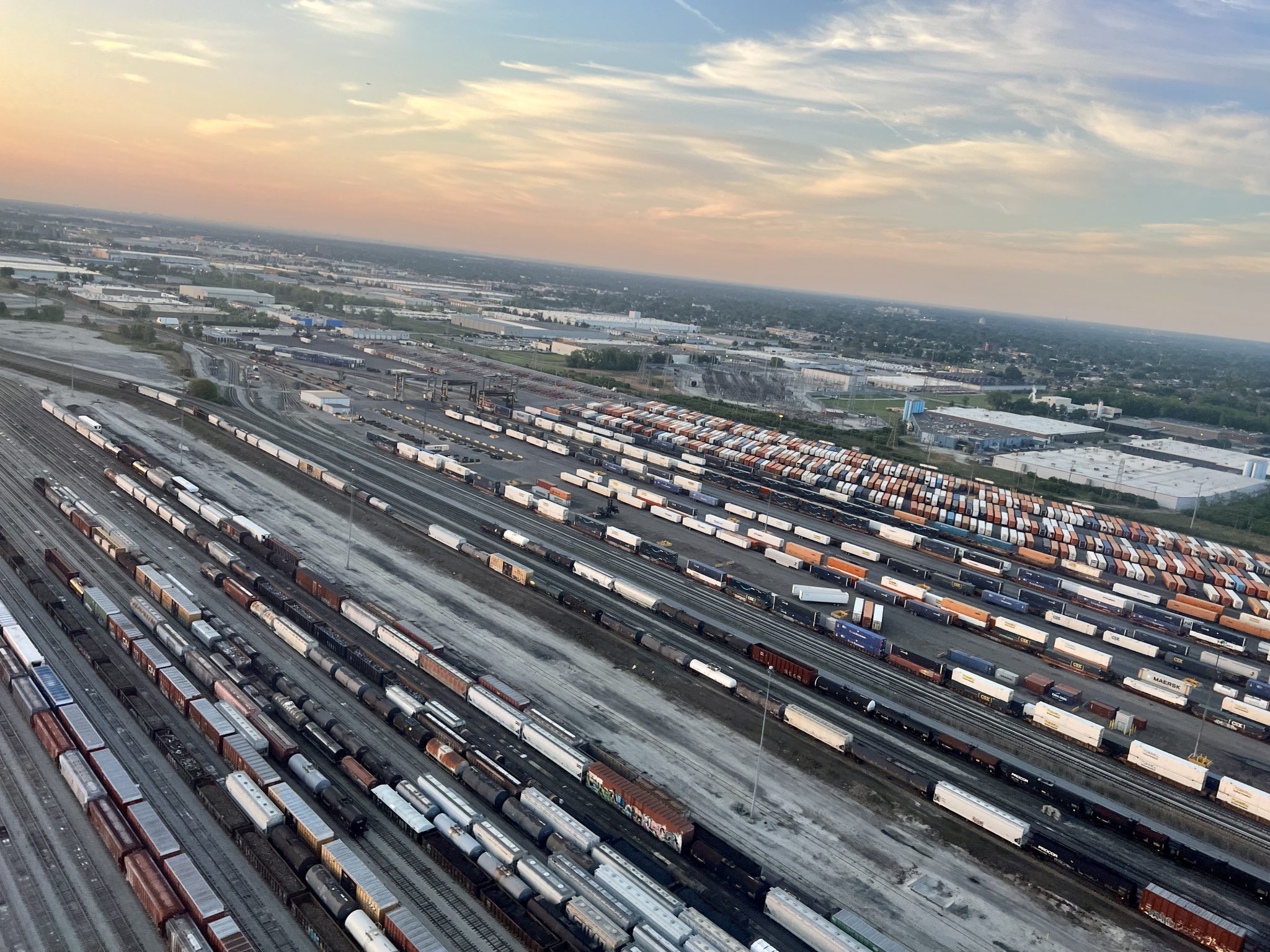
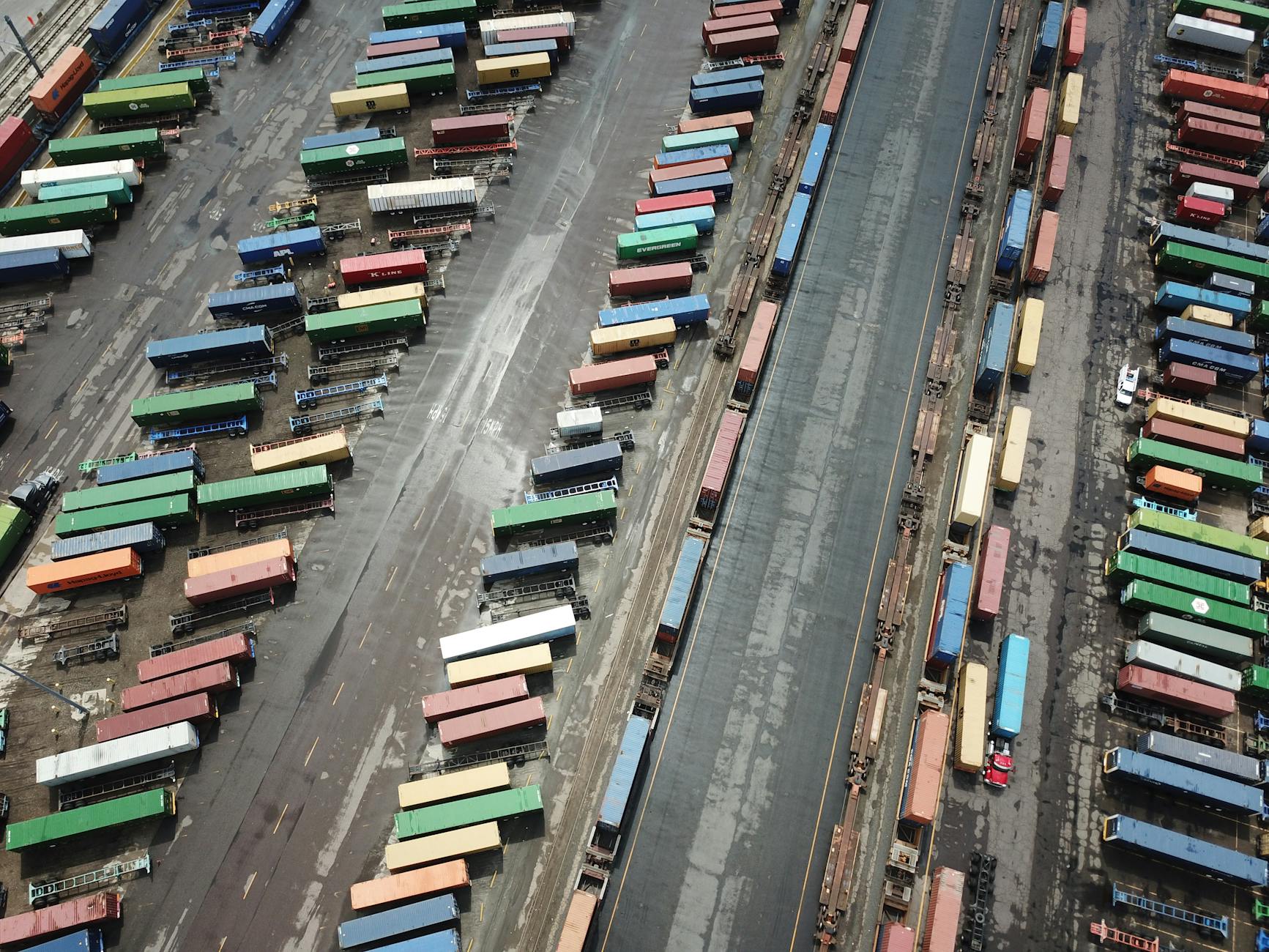
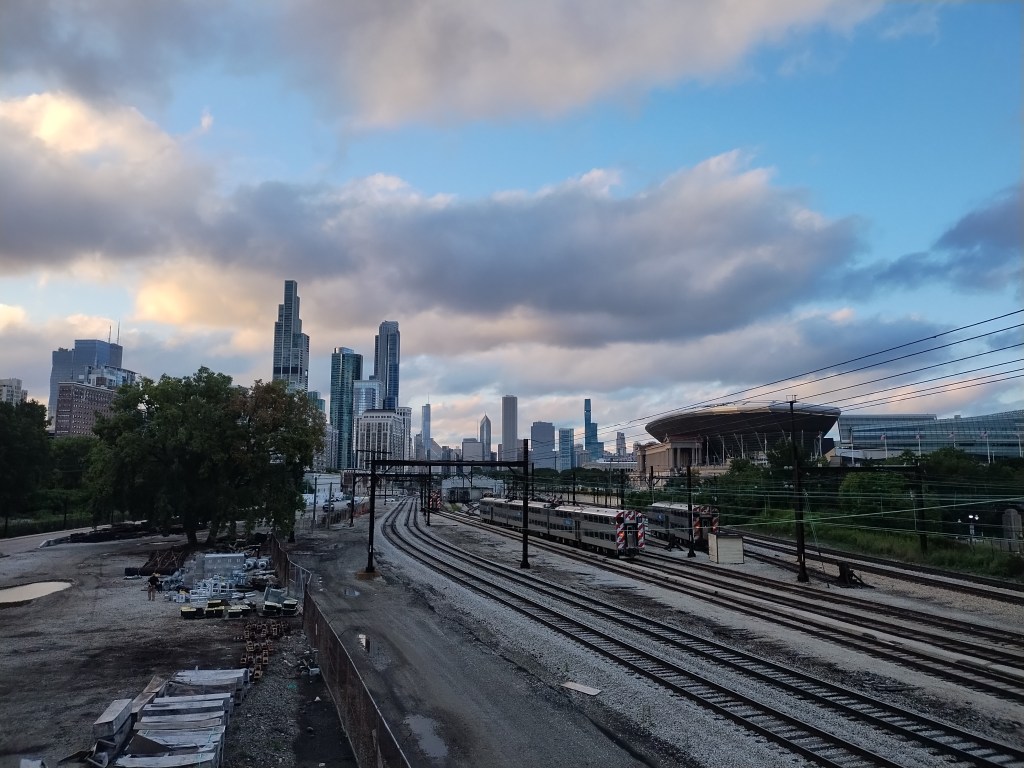
But they always found it easier and cheaper to hand their freight off to each other in and around the city than to build transcontinental railroads that actually passed through Chicago. In some yards, including near McKinley Park 4 miles southwest of downtown, Union Pacific and Norfolk Southern exchange groups of railcars. Elsewhere, they hand off individual shipping containers to each other and to different railroads.

By running a single transcontinental railroad, Union Pacific says it can shave one or two days off the full week that 40-foot shipping containers now spend traveling from Los Angeles to Chicago and then on to, say, the western suburbs of New York City…

With a unified rail network, Union Pacific hopes to eliminate hundreds of rubber-tire container moves each day in and around Chicago, and hundreds more between Chicago and surrounding Midwest cities like Detroit; Columbus, Ohio; and Louisville, Kentucky.

There must be more to this story. How much of this has to do with the history of when railroads were founded and which areas they serviced? How much of this is about the railroad industry and companies working together and/or competing? How much of this is due to policies about railroad mergers?

In many industries, the trend over time does seem to be consolidation among the more powerful actors. This might appear to occur for good reasons, such as being able to ship goods through Chicago from coast to coast on one railroad system. But, as the article notes, this then affects markets, prices, and consumers with fewer companies.

At this point, the railroad industry in the United States is nearing 200 years old (1826 might be the first year of commercial operation). This is a long history compared to numerous other commercial or industrial sectors in the United States. What would it take to truly transform the railroad industry at this point as it operates in a much different context than it did when the first companies were founded? Railroads are an important part of the infrastructure of the United States and making it 200 more years might require foresight and adaptation.

Chicago as the epicenter for the creation of American time zones

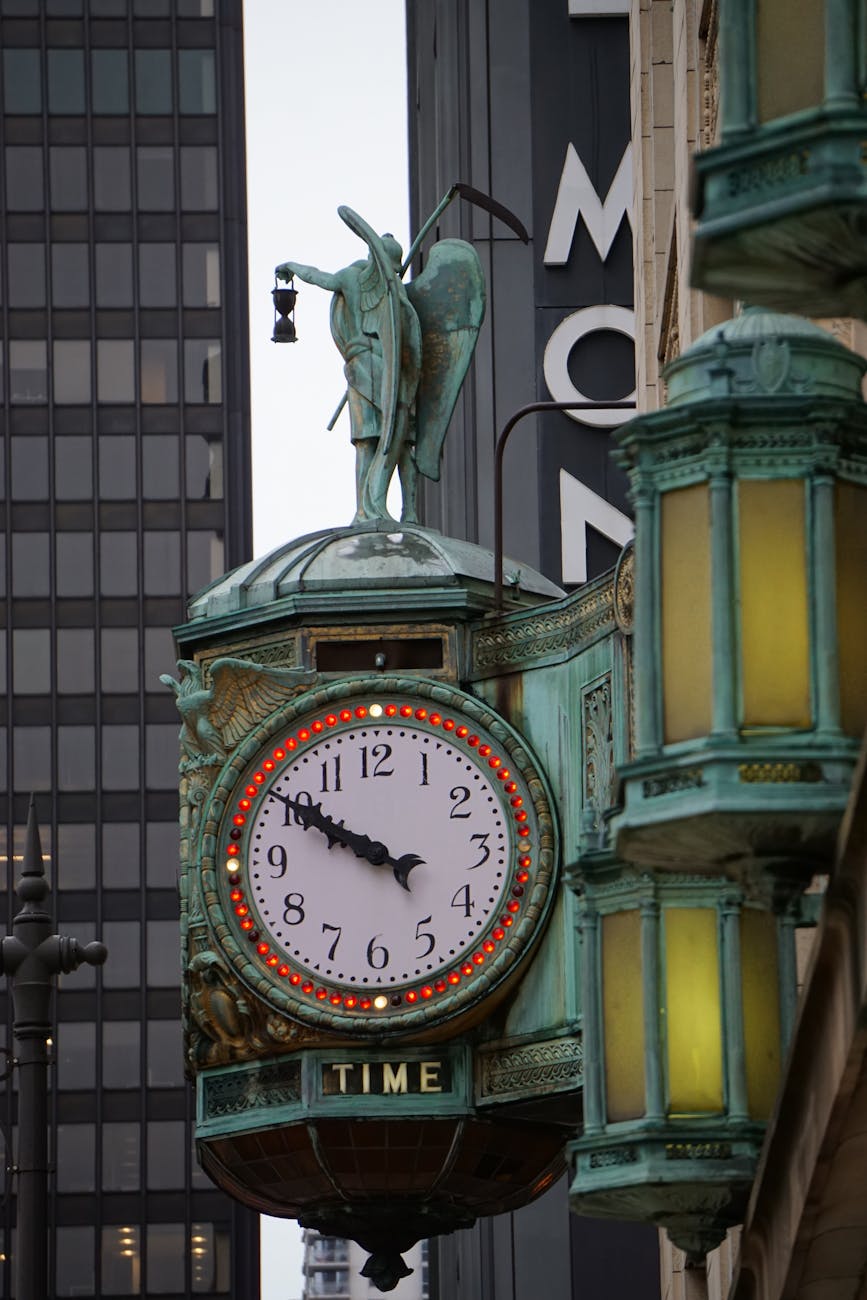
When Americans decided on time zones in the late 1800s, where did they gather to formalize the boundaries and clocks? Chicago, a railroad center:

Photo by Crono Viento on Pexels.com

Until 1883, a Chicagoan asked to tell what time it was could give more than one answer and still be correct.

There was local time, determined by the position of the sun at high noon at a centrally located spot in town, usually City Hall. There was also railroad time, which put Columbus, Ohio, six minutes faster than Cincinnati and 19 minutes faster than Chicago. Scattered across the country were 100 different local time zones, and the railroads had some 53 zones of their own.

To do away with the inevitable confusion, the railroads took the matter into their own hands, holding a General Time Convention in the fall of 1883 at the Grand Pacific Hotel at LaSalle Street and Jackson Boulevard. (Today, a plaque at the location — which is just north of the Chicago Board of Trade Building — notes its significance).

Its purpose: to develop a better and more uniform system of railroad scheduling. The Standard Time System — based on the mean solar time at the central meridian of each time zone — was formally inaugurated on Nov. 18, 1883, a day that came to be known as the “Day of Two Noons.”

Another summary of the same story ended this way:

But it was an astonishingly rapid and successful shift, syncing up almost the entire country in the space of a week, with all roads leading back to Chicago.

Three interrelated features of Chicago stand out to me as contributing to being the place where time zones were agreed upon:

  1. A railroad center with numerous major railways running in and through the city and region.
  2. Business leaders, specifically railroad leaders, pushing for standard time zones in order to help their commercial activity. Chicago was a center for commerce and industry.
  3. The ease of getting in and out of Chicago – lots of railroads, central location in the United States – helped facilitate a meeting there.

These features of Chicago still hold today. The city continues to be a railroad center with lots of traffic throughout the region. It is still a business center, a leading global city. And it still serves as a transportation hub. Just as the railroad executives found it a good place to gather, see the number of important meetings that take place near O’Hare Airport, in the city, and throughout the region.

Might such a meeting in 1883 taken place elsewhere? Perhaps. If something as consequential as time zones were to be decided in 2025, which American city might we expect to host the discussion: the political center of Washington, D.C.? The leading global city of New York? The tech capital in San Francisco?

When a suburb declines a train station along a proposed passenger line

The Chicago suburb of Huntley is a little more than 50 miles from downtown Chicago. With the planned opening of a new passenger rail line from Chicago to Rockford, here is how city officials responded:

Photo by Cody King on Pexels.com

Huntley officials confirmed Friday that the village has decided against having a train station come to town.

Huntley had been slated to have a stop on the Chicago-to-Rockford rail line that’s expected to start operations by 2027, but the village recently notified project leaders they no longer wanted a station.

Village officials cited potential parking and traffic issues, among other things, downtown as well as uncertainty with ridership numbers and village financial commitments…

In nearby Marengo, which isn’t scheduled to have a train stop despite the rail line going through the center of town, the City Council has expressed its support for having the train stop there.

For a long time, suburbs would have wanted a stop on a commuter rail line. This offers nearby residents – in the particular community with a stop but also residents in nearby communities – opportunities to go to the city. Not having a train station means other communities could benefit from the commuting options and the business and residential opportunities that might go with it.

But the reasons cited above suggest a railroad today might be seen as more trouble than its worth for suburban communities. Parking and traffic concerns come up with any new development. Ridership and money figures could be hard to forecast.

I wonder if another matter at play is the rapid growth of the community in the last few decades. As late as 2000, the suburb had 5,730 residents. In the 2020 Census, the community has 27,740 residents. Would a train line contribute to that change? Might it encourage denser development around a train station, something that has happened near numerous Chicago suburban train stations?

Also, the community already has transportation options. It is along a major highway, I-90, to and from Chicago. Residents can access train lines to Chicago in the nearby suburbs of Elgin or Cary, roughly 25 minutes drive away, if they really want a train.

Still, I wonder if the suburb will regret not having a train stop. The train will run through the community anyway; would a train station disrupt life that much and/or might it add something for residents?

The lingering reminders of the railroads that once marked Chicago’s lakefront

In its early history, Chicago’s shoreline with Lake Michigan was marked by railroad lines and activities. Trains pulled right up to the Chicago River, moving goods to the center of the city and its thriving port. You can see a late nineteenth century images of the lines of the Illinois Central right along the water here and here.

Today, it is harder to see evidence of the bustling railroad activity. The city still has sizable railyards and a large amount of railroad traffic. But it is now largely outside of the Loop and more railroad activity has been pushed to the edges of the metropolitan region.

I recently found a spot where an observer can still get a hint of the important railroad activity that marked the lakefront:

This passenger line comes into the central part of the city from the south and its station is underground. This angle gives a broader view of the tracks and the infrastructure needed to move trains and people.

The major cities of the United States, including Chicago, are still dependent on railroad lines. The average resident of a region may only travel via car and visitors from further away may primarily arrive via airplane but the railroad lines continue to deliver large amounts of goods and resources. Their presence may be less visible but keeping the trains running on time in and around cities still matters.

Local control is essential to understanding American suburbs

The mayor of Naperville thanked the City Council for not supporting a proposal that regional transit authorities could develop land within half a mile of train stations. He explained his opposition this way (via his Scott Wehrli for Naperville Facebook page):

Photo by cottonbro studio on Pexels.com

I’m proud of our City Council for standing together in opposition of this legislation that would give transit agencies the power to control development within a half-mile of our train stations—taking that authority away from the local officials you elected.

In Naperville, development decisions should be made by our community, through our City Council, not by transit agencies in Chicago. Local control has always been the foundation of our city’s success, and we’ll continue to protect it.

This is a good example for why I included local control as one of the seven reasons that Americans love suburbs. Suburban residents and leaders want to be able to make decisions about local land and monies as they see fit. They can resent when decision-making involving their land and money takes place elsewhere, particularly if it goes against what the suburban community wants or is perceived to be a threat to an established way of life.

This particular case involves transportation and land development. A popular idea in numerous cities and suburbs is to construct transit-oriented development which often involves higher residential densities adjacent to mass transit stops and a reduced number of parking spaces required. A number of Chicago suburbs have pursued this in recent decades; trains going in and out of Chicago pass apartments and condos in suburban downtowns.

But the key for many of these suburbs is that they made these decisions regarding development around train stations. These conversations often included debate about the size of new buildings and the number of units involved. How tall is too tall for a suburban downtown? How many units will be erected? What is the target population for these new developments?

Leaders and residents in Naperville and suburbs across the United States might pursue denser development near mass transit but they want to make the decision and steer development in ways they feel is consistent with the existing character and footprint of their community.

(I would also argue that local control is closely linked to the other six reasons Americans love suburbs.)

One thousand trains in and out of Chicago each day at the peak of train travel

The book Forgotten Chicago includes the claim that at Chicago’s railroad peak, 1,000 trains daily moved in or out of the city. One chapter of the book details the numerous train stations that are no longer standing that serviced these trains.

Photo by Josh Sorenson on Pexels.com

Chicago continues to be a railroad center in the United States even if the volume of trains is not close to the peak numbers.

And as train travel declined, the Chicago region became home to other transportation options. Two of these are worth considering after the golden age of railroads passed (and Chicago’s port activity also declined). As people used trains less to travel between cities and used trains less within the region as commuting between suburbs picked up,

First, O’Hare Airport is one of the world’s busiest. Today it has over 900 daily flights (mostly domestic, some international). By number of passengers, it is in the top ten among global airports. I do not know how many people moved through Chicago via train at the peak but the flight numbers are large.

Second, many people travel throughout the region and to other regions via highways. For example, one interchange of two interstates roughly 20 miles west of the city has about 300,000 vehicles daily. Numerous highways throughout the metropolitan area have daily traffic counts of over 100,000 vehicles. That is a lot of cars and trucks moving people and goods around.

Seeing a steam locomotive roll through suburbs created by such vehicles

At least a few suburbs in the Chicago area and outside cities throughout the United States owe their founding to early railroad lines that provided quick access to the bi city and other points beyond. So when a large steam locomotive passed along the same suburban tracks in 2024, at least a few people took note:

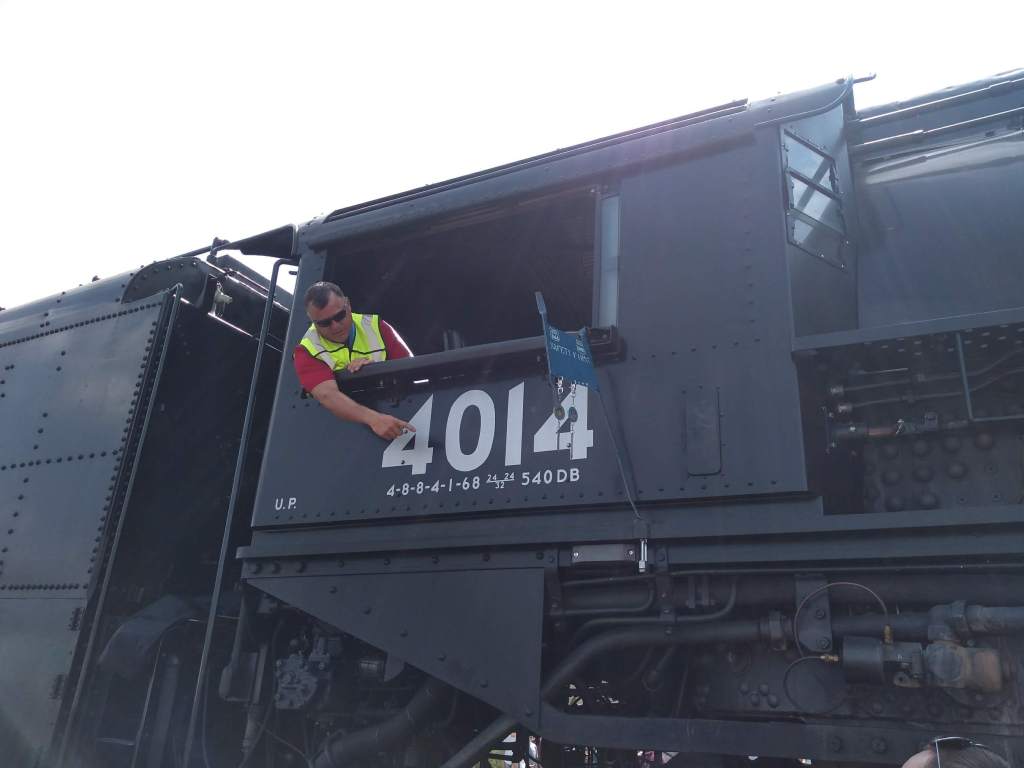
With a shiny yellow-and-gray streamlined passenger train in tow, the Union Pacific “Big Boy” No. 4014 steam locomotive rolled through the western suburbs Monday morning to the delight of railroad enthusiasts and casual observers alike.

Roughly two hundred years ago, steam locomotives opened up all kinds of possibilities. One opportunity involved the possibility of larger and further-flung suburbs: a resident outside could travel quickly in and out of the big city. It no longer took a day or more to use horses or a carriage. No more need to travel a long distance over poor roads. Large amounts of freight could be shipped overland from the interior to big cities.

The early railroad lines tended to connect important cities and locations to each other. Along these lines, residents gathered near stations. Lots were developed. Businesses moved there. Churches opened. Houses were built. Communities grew. Regular train service emerged.

Eventually, these railroad lines were dwarfed in importance by cars, trucks, roads, and highways. Many of the lines still exist but more people drive. Much suburban development since World War Two has happened between railroad lines as cars offered access to more land.

Amid the regular clatter of passenger and freight trains through suburbia, an occasional steam locomotive with a loud whistle and billowing smoke provides a reminder of an older era. Yet, that older era helped give rise to the automobile dominated suburbia of today.

From railroad easement to tax deduction during railroad merger to Millennium Park

Where did the land for Chicago’s Millennium Park come from?

In 1993, I went to work with Forrest Claypool in the Chicago Park District. I was responsible for the lakefront district. It always made no sense to me that there was this muddy, ugly hole right off Michigan Avenue. It also made no sense that if the Illinois Central Railroad owned that land, they would use it as a surface parking lot. You would think they would do something else with it. The other thing that stood out was that there was one track on the eastern edge with a single boxcar on it. It was just an eyesore. For a century, city and parks groups would try to buy the land, and the railroad would never sell it…

I did a title search. I just wanted to get to the bottom of it. I was sort of a zealot about the use of public land. I found out that the railroad didn’t own the land after all. It was always the city’s land. What the railroad had was an easement. So they could use the land for rail purposes, but they couldn’t build a building. They had no air rights. And to maintain the fiction of rail purposes, they kept the single track and the single boxcar. The railroad was happy to make some ancillary revenue as a parking operation. At this point, Forrest and I advised the mayor of what we had found. And [in 1996] the park district and the city Law Department together sued the railroad.

Without Randy Mehrberg’s discovery, none of this happens. Daley was in action mode almost immediately. As in: “Let’s go through the legal process here to get this thing done.” It was not until this sort of virgin land in the middle of the city became available that he saw that this was the chance.

The railroad was not terribly happy or receptive. But a funny thing happened: The Illinois Central was in the process of being sold to the Canadian National Railway. And I suggested to the railroad that instead of litigating with us, they make a donation to the city of all of their title and interest rights from Randolph Street to McCormick Place. They would get a nice tax deduction, and it would enhance their merger, because the purchase price was based on a multiple of earnings, and a large tax deduction would improve their earnings. We were able to negotiate that.

The area around the Chicago River and the lakefront was a shipping area with railroads converging and boats coming in and out. Yet, it sounds like it took a while to figure out what to do with all this space once transportation activity moved elsewhere. It is not as if Chicago stopped being a transportation center; the action shifted and this area eventually became a park.

Having been in Millennium Park many times, I do not recall seeing any documentation of the previous history of the land. If it is not marked, why not tell some of the story of railroads and other lakefront uses in the past to what the park is today? I am in favor of more resources for residents and visitors to learn and visualize what used to be where they are standing or looking. (Some of this could come from virtual reality or augmented reality devices but we are not there yet.)

Sprint, acronyms, and building infrastructure along railroad lines

I recently learned that the company named Sprint had an acronym for a name:

Photo by Pixabay on Pexels.com

Sprint also traces its roots back to the Southern Pacific Railroad (SPR), which was founded in the 1860s as a subsidiary of the Southern Pacific Company (SPC). The company operated thousands of miles of track as well as telegraph wire that ran along those tracks. In the early 1970s, the company began looking for ways to use its existing communications lines for long-distance calling.[22] This division of the business was named the Southern Pacific Communications Company.[29] By the mid 1970s, SPC was beginning to take business away from AT&T, which held a monopoly at the time.[22] A number of lawsuits between SPC and AT&T took place throughout the 1970s; the majority were decided in favor of increased competition.[29] Prior attempts at offering long-distance voice services had not been approved by the U.S. Federal Communications Commission (FCC), although a fax service (called SpeedFAX) was permitted.[30]

In the mid-1970s, SPC held a contest to select a new name for the company.[31] The winning entry was “SPRINT”, an acronym for “Southern Pacific Railroad Internal Networking Telephony”.[31]

This is clever. The acronym also hints at the history of the company that was partially born out of railroad operations. The railroad made all sorts of notable changes to the American landscape: it increased the speed of travel for passengers and goods, it connected far-flung places, and it brought activity to new places.

It also enabled other infrastructure. In the case of Sprint, the same right-of-way that carried train traffic could carry messages via telegraph. This substantially increased the speed of communication. Today, we think very little of messages and texts and information flying across geographies in seconds. That same railroad that allowed speeds significantly faster than horses or humans also made space for bits and data to speed around the world.

Put another way, could the online and smartphone world we know today have happened without telegraph and phone infrastructure that provided foundational space for new technology to take advantage of? I do not know the answer to this question but Sprint and other telecom companies made use of existing infrastructure to help bring about new technologies.

Adjusting rail transit to a decline in the 9-5 commuter

The Chicago region is built around a hub-and-spoke railroad system. But, what happens to those railroads when fewer people take the train into the city five days a week?

Photo by Josh Hild on Pexels.com

The 9 a.m.-5 p.m., five-days-a-week-in-an-office commuter is an endangered species on the brink of extinction. And that reality poses an existential crisis for transit agencies, especially commuter rails like Metra.

Now the agency’s post-pandemic recovery plans are coming into focus, and commuters could soon feel changes, from some increased fares to new ridership packages that will make a popular 10-ride card obsolete.

But perhaps the most interesting shift is Metra’s attempt to market itself as more than a vehicle to get white-collar workers downtown…

The plan is also focused on promoting non-downtown trips, which Metra sees as a growth opportunity. To encourage a trip to the zoo, for example, one-way tickets that don’t include a downtown starting point or destination would cost $3.75 regardless of distance…

Even if Metra wanted to add more frequent trains — which Gillis said it does — that change can’t happen overnight. Mixing up schedules would likely require infrastructure updates and new agreements with the freight railroads that share the tracks Metra trains travel on. All that would come at a cost, which may be out of reach for an agency barrelling toward a budgetary crisis.

One issue that is very difficult to address: is the railroad infrastructure in the Chicago region just not in the right places? The hub-and-spoke model worked for decades but more commuting is suburb to suburb. The region needs rail lines and other mass transit options that link suburbs and suburban job centers. Even just adding one or two dependable connector options between the Metra lines could be a big help. (See the proposed STAR Line.)

Another route to pursue: continue to encourage communities to build more transit-oriented development that can help create a larger residential base who can easily hop on and off railroad lines. I was recently on a suburban railroad line and saw a family with small kids hop on for three stops and get off. If more people can easily walk to a station, travel quickly and reliability, and find something interesting within a short walk a few stops away, they will do so. What might be good for local development can also be good for Metra.