Finding religion in group athletics

As more Americans eschew religion, they can search for meaning and community elsewhere. This includes exercising and moving with others:
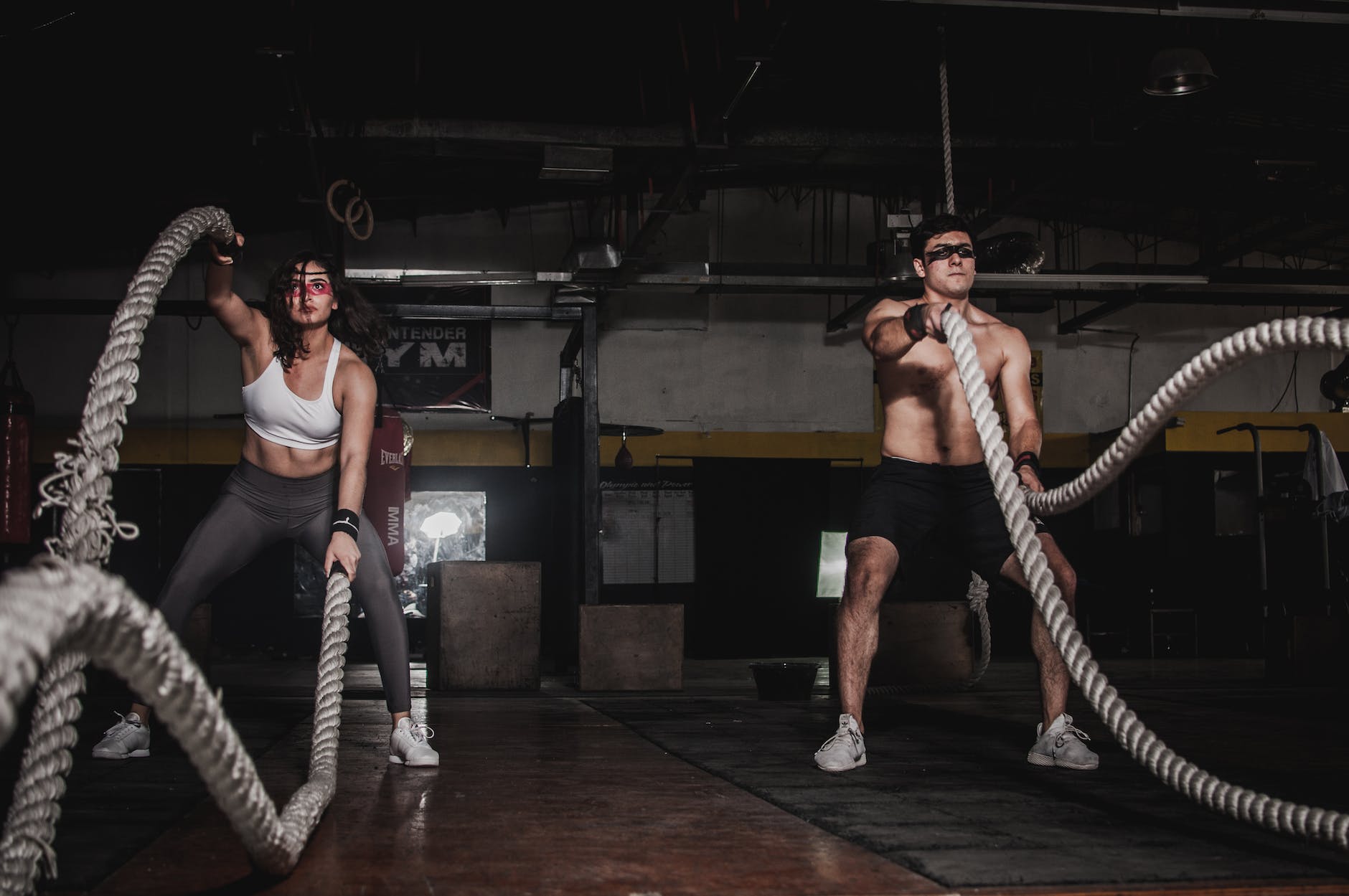
Photo by Leon Ardho on Pexels.com

Some readers mentioned fandom as a bonding mechanism — World Cup enthusiasts and participants in fantasy football leagues, for instance, are creating ongoing relationships. But mostly I heard from people who bonded through athletic activities. Some talked about clubs that formed organically in their neighborhoods or towns, like that Colorado hiking group. But many who answered the questionnaire I launched in April about moving away from organized religion talked about replacing their weekend worship with SoulCycle, CrossFit or Orangetheory, and finding friends and even some spiritual solace in those activities. (In case you’re wondering, I’m an Orangetheorist and a SoulCycle dropout, though I can’t say I’ve ever felt a metaphysical connection to either one.)…

Casper ter Kuile, the author of “The Power of Ritual: Turning Everyday Activities Into Soulful Practices,” studied CrossFit and SoulCycle when he was a student at Harvard Divinity School, and told me that he observed some of the “mutuality” that Johnson experienced when he talked to CrossFit devotees. CrossFitters write down their fitness goals on a whiteboard and, whether a goal is comparatively big or small, “goals are honored with the same amount of dignity and celebration.” There’s a feeling that you have the agency to meet your goals and that the community is also involved in your success. There’s also a lot of evangelizing for CrossFit that can parallel the outreach or recruitment aspect of religious worship…

SoulCycle even mimics some of the emotional beats and physical qualities of a church service. Ter Kuile and Thurston have described the “soul sanctuary,” where classes are held, and the way “Every SoulCycle ‘journey’ has a similar arc, which peaks during a hill ballad when riders turn up the resistance dial on their stationary bike and climb uphill in the dark.” The reader Susana Odriozola, 40, who lives in California and was raised Catholic, though she no longer goes to church, said that parts of the SoulCycle experience reminded her of going to Mass: They throw water out to you and you turn to your neighbors and greet them…

One part of churchgoing that’s tougher to satisfy with group fitness is the multigenerational inclusiveness of those spaces. You’re not going to bring a little kid to a CrossFit box. And though Schnurr told me that people bring their families hiking, her own experience is that some of her grandkids love it, but others, not so much. I’ve tried to drag my kids along on various hikes and climbs and, similarly, it’s not always a hit. Like me, Odriozola said she’s still trying to figure out how to give her children “spiritual strength without religion,” and that is an ongoing journey. And there are fitness spaces that are difficult to access or inaccessible for those who have mobility and health challenges.

Functional religion is an interesting topic. I have blogged about work replacing religion, politics looking like religion, and sports fandom mimicking religion.

Not mentioned here is the involvement of bodies in these activities. As sociologist Randall Collins suggests in Interaction Ritual Chains, the movement of bodies together and the emotional energy that develops is important. These physical activities help by asking people to move their bodies in sync. Religious activities do this as well; people do not gather and worship as a bunch of brains but they involve their bodies and emotions. Additionally, none of the stories in the piece above mention transcendence or interacting with forces/being beyond the people in the room.

How many of these groups/activities explicitly advertise these particular benefits? They cannot guarantee certain communal experiences but they could point to the potential for it to develop.

Collective effervesence: from Man U. vs. Man City to voting

An editorial in The Guardian suggests we seek out more moments of collective effervescence:

As every Mancunian football fan will tell you, tomorrow evening sees the most hotly awaited derby in Premier League history when Manchester City and Manchester United square up for the last time this season. Whatever the outcome, what we will witness in abundance – at least while the ball is in play – is what the father of sociology, Emile Durkheim, called “collective effervescence”, a ritually induced passion or ecstasy that cements social bonds.

Given the current Europe-wide epidemic of melancholia induced by various crises, financial and political, and not helped in the UK by an April deluge, predicted to last through May, the good news is that we are all about to experience opportunities for a veritable season of effervescence. We report on these pages how three giant puppets walking the streets of Liverpool as part of the 100th anniversary of the sinking of the Titanic have attracted 250,000 people on to the streets and raised the spirits of the city hugely. Over coming months, even arch cynics – those allergic to red, white and blue, republicans and lifelong couch potatoes – may find themselves succumbing, just a little, to communal and classless pleasures as, for instance, the celebrations connected to the Queen’s diamond jubilee gather traction. The Olympics become ever more imminent and the prospect of a gold medal or two potentially binds stranger to stranger regardless of income, ethnicity and background, in the alchemic way that victory in sport can…

Any festivity, inevitably in this day and age, comes saturated in commercialism. It will be difficult over the next several months to find a china cup and tea towel that isn’t festooned with crowns, coronets or concentric rings. Nevertheless, there will be events and occasions – many of them free –which will proof themselves again commodification and remain beyond the reach of the marketplace simply because they require only our time and interest….

This week sees London mayoral and local elections in addition to a referendum on elected mayors in 10 English cities. Inertia, rather than effervescence, is likely to mark the experience. But while dancing in the streets strengthens our collective sense of solidarity, we improve its health still further by exercising our hard-won right to vote. As Professor Michael Sandel pointed out in his Reith lectures on BBC’s Radio 4 in 2009: “The virtues in democratic life – community, solidarity, trust, civic friendship – these virtues are not like commodities that are depleted with use. They are, rather, like muscles that develop and grow stronger with exercise.”

Translation: while the world may look like it is in bad shape, there are still moments in which we can come together, advance the common good, strengthen relationships, and be part of something bigger than ourselves. It is interesting, however, to note that some of these examples require choosing one side or another. For example, will fans of Manchester United or Manchester City be celebrating the game of football together or hoping the other side loses disastrously? In voting, is everyone pursuing the common good or hoping their side gets enough political power to force the other side to kowtow to its interests? Perhaps there are still moments where people can come together in larger settings, such as at the Olympics (national pride? celebrating humanity?) or at large rock concerts or a few other places.

Also, I’m having a hard time imagining an American newspaper editorial invoking Emile Durkheim. Would many newspaper editors in the United States know who this is?

Why you should have had a Super Bowl party: to reinforce deep human bonds

A communication professor suggests that going to a Super Bowl party with friends is more than just eating food and hanging out: it is about building human bonds, particularly after tough times.

Sparks said there’s a wealth of medical evidence that human contact — particularly in social situations — can be therapeutic, reducing stress and giving people a comforting sense of belonging.

“It sounds silly in a way when we’re talking about Super Bowl parties, but I don’t think events like this should be underestimated,” Sparks said. “These are important social occasions that really have the potential to reinforce our deep human bonds. And the timing of this year’s Super Bowl is really quite nice. People are going to be wanting to come out and share stories about their experiences.”

From blizzards in the Midwest to Super Bowl parties. If people needed more reasons to have a party, this seems like a good justification.