The YWCA Metropolitan Chicago was the lead contractor for the pilot program, according to the report. In total, there were more than 700 in-person events while the application window was open. About 176,000 people applied for 5,000 slots. Participants were chosen through a lottery system, according to the report.
How many might apply for a second program?
A second city pilot, rebranded as the Chicago Empowerment Fund, is expected to launch sometime in 2025, according to the city’s proposed budget. The program will again serve 5,000 “low-income families and returning Chicago residents,” and provide $500 for 12 months, but more details about the qualifications weren’t available.
I would guess more people will apply than the 176,000 who applied the first time. I am basing this on the presence of the first program and the economic uncertainty many people feel.
If the number applying is indeed higher, the odds of any individual getting into the program decreases. The situation reminds me of the documentary Waiting for Supermanwhich effectively uses video of a lottery for a school – some students benefit, many do not – as a sign that the education system is not working as it should. At what point does Chicago or other organizations go for a larger and longer-lasting guaranteed income program?
Cash aid without conditions was considered a radical idea before the pandemic. But early results from a program in Stockton, Calif., showed promise. Then interest exploded after it became clear how much COVID stimulus checks and emergency rental payments had helped people. The U.S. Census Bureau found that an expanded child tax credit cut child poverty in half. That is, until the expansion ended and child poverty spiked.
Around the country, from big cities to rural counties, there’ve been more than 150 basic income pilots, and counting. Supporters say it works because people can spend the money on whatever they need most…
The pandemic also spurred cash aid because cities got their own pot of COVID relief money. Many are using that to fund guaranteed income pilots. Philanthropic donations are another major funding source, including from groups that have long organized direct cash payments to combat poverty in developing nations.
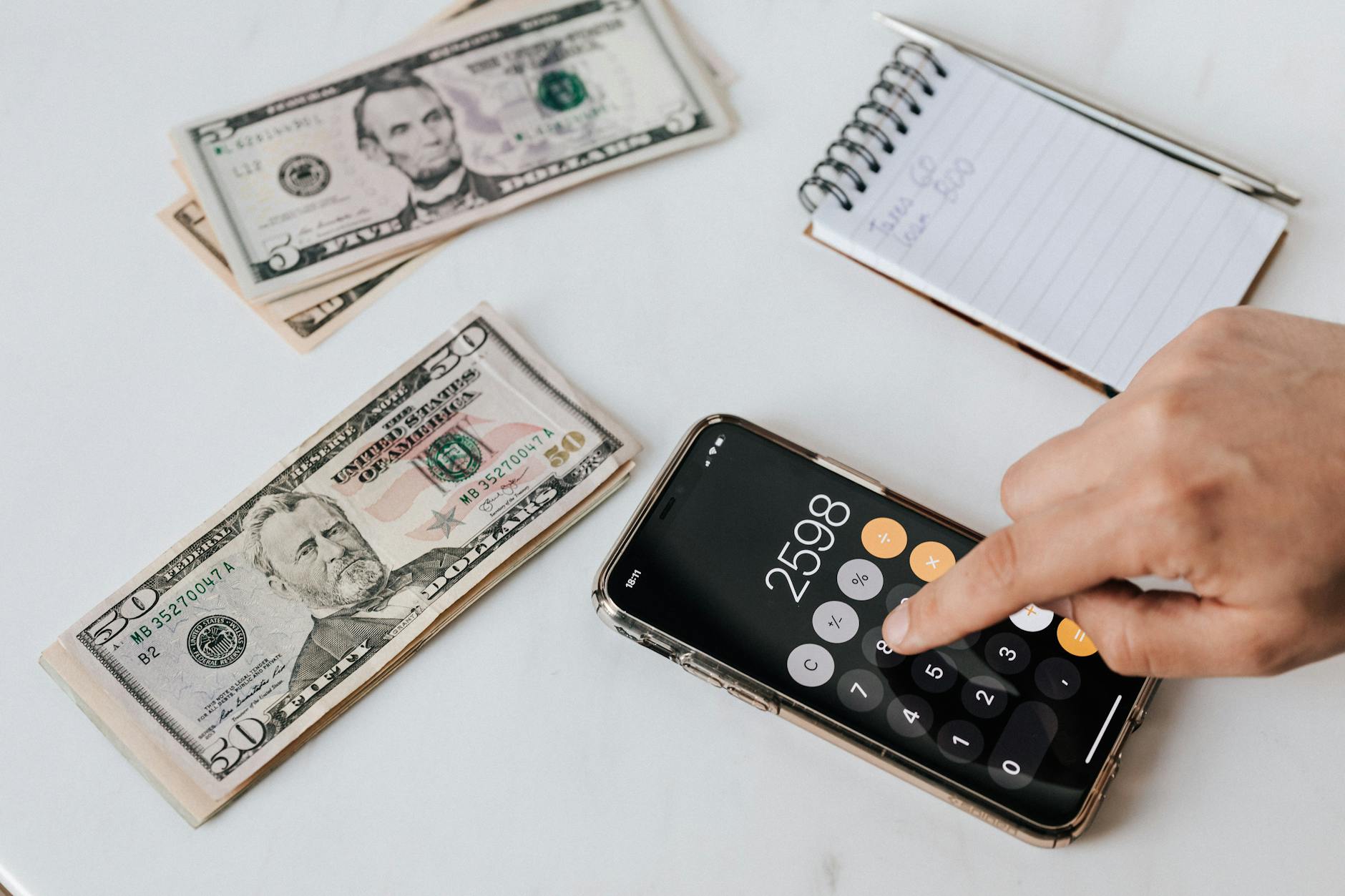
The pilots target low- to moderate-income people, from a few hundred to a few thousand households, and generally pay them $500 or $1,000 a month for a year or two.
Here is one way to think about such programs: the United States often focuses on helping people or social actors reach their top potential. Whether in education or in innovation, why not enable the top performers to be even better performers? But, another way to operate is to help raise the floor in areas like income so fewer people struggle. These programs seek to provide monies so that people with less income have more opportunities.
Given the outcomes of these programs plus some of the outcomes of the COVID-19 aid, my guess is that we will see more of this with hopefully positive outcomes for people and communities.
Pilot programs have sprung up across the country, from liberal strongholds such as Los Angeles and Baltimore to more centrist and conservative cities like Columbia, South Carolina; Birmingham, Alabama; and Gainesville, Florida. Just Income, the Florida program, also focused its stipends on formerly incarcerated individuals, with a rationale similar to Middleton’s. “It costs Floridians about $28,000 a year to hold someone in prison,” the director of the Gainesville program said in a press release earlier this year. “Alternatively, we’re investing just $7,600 directly to one of our valued neighbors, giving them a vital income floor.” In city after city and cohort after cohort — old, young, single parents, ex-convicts — universal basic income has improved health outcomes, raised employment, and bolstered childcare opportunities (and recipients have had consistently better outcomes than control groups).
According to Jefferson, guaranteed income — which she calls “unrestricted cash transfers” — impacts recipients’ lives almost immediately. Early results from her firm’s analysis, she said, “really show that cash can improve people’s financial stress and mental health remarkably and quickly.”
With more data at hand than theoretical projection, the evidence is overwhelming: Universal basic income is working nearly universally.
This article seems more interested in the political aspects of such programs working in both Democratic and Republican states and then wondering if there is political appetite for larger-scale programs.
I am interested in the place-based aspects of these programs. Does success across a range of cities mean that it could or should work in all American cities? Some programs or contexts might lead to particular successes or difficulties. Is there a model or two that can be emulated or do programs need to be tweaked?
Is the success limited to cities or would similar programs in metropolitan regions or rural areas get similar results? Disadvantage and lack of resources can be found across American contexts.
If places do not matter as much regarding effectiveness, does that mean a federal program would be more effective? Or, if there are local contexts that matter, could the federal government provide monies to states or municipalities to distribute?
It would also be interesting to see a timeline across different locations of when larger programs might roll out.
President Joe Biden promised jobs and better access to education in an appeal that may resonate with suburban swing voters during a historic trip to McHenry County College.
“America is back,” Biden said Wednesday, promising to fund transportation through an infrastructure package that faces opposition in Congress…
During his remarks, the president touted the infrastructure program and the American Families Plan, which includes checks of up to $300 for eligible families starting this month.
“That’s good for families and is good for the economy and it will create more jobs,” said Biden, who repeated the word “jobs” several times during his speech.
Infrastructure often refers to physical structures operating in the background of society. Electricity, gas pipelines, power plants, roadways and mass transit lines. I would guess many people do not think about these much until there is a problem or it becomes very visible. As a recent example, I drove down a highway that had a pipeline pass over the roadway. While I know that pipelines are essential, I do not think about them much until I hear about them on the news (the recent pipeline ransomware, the Keystone Pipeline, etc.).
The Biden administration is pushing to include more human capital elements in its infrastructure plan. In terms of the essential pieces for society to function, jobs, health care, and other benefits are indeed important. Particularly in the era of the knowledge economy and more attention paid to inequality, including a more human element to infrastructure would hold some appeal.
At the same time, I wonder if the goals of the Biden administration fall more into the category of human rights. Should people have a right to a job, which provides income and worthwhile activity? Should there be a right to good affordable housing? A right to Internet access?
Perhaps the political calculation is that moving toward a conversation of human rights is a bridge too far. Americans have resisted the right to housing or public housing. But, call it infrastructure and housing is not guaranteed but rather an important foundation for society. On the other hand, electric lines and gas lines are essential for everyday living yet are they a right? Is the difference that infrastructure might require a cost while rights are supposed to be free or really cheap?
Given the current public conversations, this may be the way societies are headed: people should have more rights. Universal basic income might be the next area where this occurs: jobs are not enough and people should be able to have a guaranteed income source to have a decent life.
For now, American political leaders will debate exactly what infrastructure means. At the least, there will be acknowledgement that numerous building blocks of social life must be in place for desired outcomes.
Stockton is one of many Bay Area cities on the fringe of the wealth accumulating in Silicon Valley and San Francisco. The Central Valley city went bankrupt in 2012, and for decades it has been trying to diversify its agriculture-based economy…
Tubbs is coordinating an effort to test a new way to sustain residents: universal basic income, or UBI. For one year, several dozen Stockton families will get $500 a month, no strings attached.
Dorian Warren co-chairs the Economic Security Project, which is contributing $1 million to the initiative. He said the goal is to gather data on the economic and social impacts of giving people a basic income.
In addition to tracking what residents do with the money, Warren said they will be monitoring how a basic income affects things like self-esteem and identity.
While the commentary I’ve seen so far on this story focuses on the long-term viability of universal basic income, I would raise another issue: how much of a test can $500 a month provide? That is not a big sum at all. Stockton is a relatively average place to live regarding costs and quality of life – see here and here. How far can $500 stretch, particularly for those that have a family and/or do not have a decent full-time job? That amount would not pay for an average rent or it could take some work to get food and essentials for a family for a month.
One of the larger questions that will need to be answered about universal basic income involves the amount of money provided. At least in the experiments I have seen thus far, the money is not necessarily meant to be the primary source of income. Yet, isn’t this supposed to provide a floor of income so that everyone can survive? If it is a smaller amount like $500 a month, it is one income source among several that an individual or family would need to put together. I would guess that many would say an extra $500 a month would be helpful but would it make enough of a meaningful difference for the people who need it most?



 Legally Sociable