Updating a water tower, painting a smiley face on a water tower

What is involved in upgrading a water tower? Here is one suburban example:
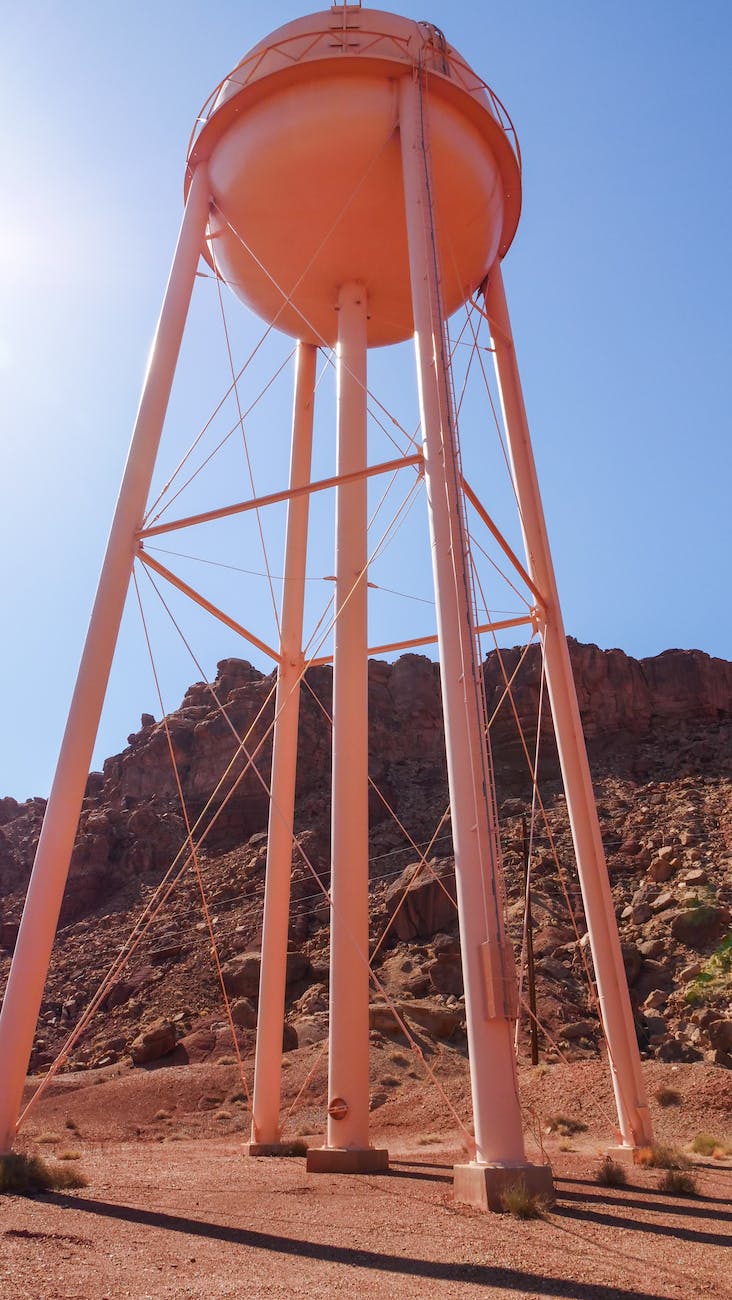
Photo by Kindel Media on Pexels.com

The project will include sandblasting the exterior and interior of the tower and applying new coatings inside and out. There also will be some landscaping work with new perimeter fencing.

The assessment also recommended foundation repairs, replacing the original valves, and installing new hatches, gaskets and a submersible mixer.

In addition to removing the tower’s outdated ladder system, workers will install new safety railing and fall protection equipment.

“We’re kind of excited for the face-lift that’s coming to the tower,” Patel said. “It does its job, but the paint job will make it more appealing for pedestrians downtown.”

Sounds good?

This did remind me of part of James Howard Kunstler’s TED Talk “The Ghastly Tragedy of Suburbia” where he discusses a unique water tower within American sprawl:

He says:

By the way, this doesn’t help. Nobody’s having a better day down here because of that.

We have at least a few water towers in the area that include the logo or motto of a suburban community. Why not use them as advertising? This is a different approach than painting a smiley face to presumably attempt to improve people’s days or help them feel better about infrastructure.

“Ugliest new build McMansion ever”?

Take a look at this McMansion in Vienna, Virginia:

A quick analysis of the home based on the four traits of McMansions:

1. Absolute size. This home seems to have at least 3,000 square feet.

2. Relative size. Quite a difference between this home and the mid-20th century ranch home next door. It is hard to know for sure from the picture but this new home could be a teardown.

3. Poor architectural design and quality. The home has some interesting proportions, ranging from the relatively bland sided area above the front doorway to the popping-out balconies at each corner of the front. It is bulging in all the wrong places. (I would be interested to know whether these two second-story corners mean that these are separate suites, each with their own balcony.)

4. Tied to other social issues like consumption and sprawl. The suburban aspect is clearly implied by this picture, particularly with the looming water tower in the background. (The water tower is reminiscent of this famous photo from Plano, Texas.) Compared to the home next door, this new McMansion does look excessive. Sadly, the same angle that helps invite comparison to the home next door and the water tower also blocks our view of the likely large garage in the back.

Is this the worst designed McMansion ever? There are a good number of contenders for this crown. Just look at these 10 McMansions from New Jersey

Iconic image of American McMansions from Plano, Texas

I’ve seen this picture of a Plano, Texas McMansion numerous times around the Internet:

DeanTerryPlanoTXMcMansionI’ve wondered at the origin of this photo and now I see: see this image and others from the same area as part of Dean Terry’s Flickr stream with the photos originating from his 2007 documentary Subdivided.

What makes this particular McMansion photo stand out? Some reasons:

1. The home has a “typical” McMansion design: brick exterior, multi-gabled roof, clearly a big home, lots of big windows in the front at various levels, a two-story foyer.

2. The surrounding area: the looming water tower, the big power lines out nearby, a neighborhood of similar sized houses with little evidence of anyone being around. (Some of the later photos in the Flickr set illustrate this further: the home backs up to a wide right-of-way for power lines and that water tower really is huge.) Setting the picture beneath a stop sign and lamppost seems to add to the ominousness of the photo.

3. This is Texas, a place where everything is big, including the homes, water towers, and sky. And not just any part of Texas: Plano is a booming suburb in the Dallas-Fort Worth metropolitan area that went from just 17,872 people in 1970 to 259,841 people in 2010. That is explosive, sprawling suburban growth.

Now, I may just have to get my hands on this documentary to see more of the home and its context…